Table of contents (9 sections)
Chengdu to Xi’an: A Two-City Panda Route for Seeing Both Subspecies
Most travellers who want to see giant pandas in China pick one city and stop there. Chengdu, usually. That works — but it only shows you one of China’s two panda subspecies.
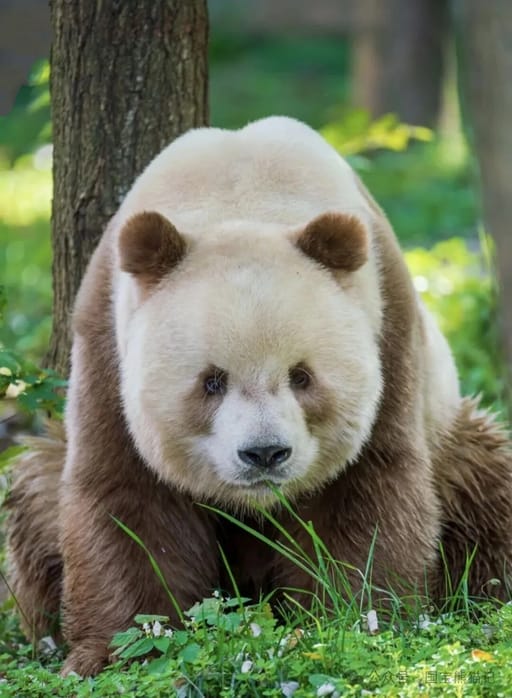
This route does something different. It links Chengdu (成都), in Sichuan province, with Xi’an (西安), in Shaanxi province, so you can see both the Sichuan subspecies and the Qinling subspecies in a single trip — including Qi Zai (七仔), the only brown giant panda currently in captivity anywhere in the world.
Three quick answers before we go further:
- How long? Four days minimum; five to six if you want to breathe.
- What do you see in Xi’an that you can’t see in Chengdu? A different subspecies — and Qi Zai.
- Can you run it in reverse? Yes; the high-speed line works both ways. But one detail — the Qinling park closes on Mondays — makes Xi’an-first harder to schedule, which is why most people go Chengdu first.
This is a route guide, not a park guide. For opening hours and ticketing at each individual site, follow the links to those pages.
Why This Route Is Worth It — It’s Two Species, Not Two Cities
A city that has pandas is not interchangeable with any other city that has pandas. Chengdu and Xi’an are on this list for one specific reason: they sit on opposite sides of a real biological divide.
Two subspecies, one species
Giant pandas are not uniform across their range. Taxonomists recognise two subspecies: the Sichuan subspecies — the nominate form, Ailuropoda melanoleuca melanoleuca — and the Qinling subspecies, Ailuropoda melanoleuca qinlingensis, formally described in 2005.
The Qinling panda is generally described as having a smaller, rounder skull, a shorter muzzle and larger molars than its Sichuan relative; the Sichuan panda is usually described as longer in the head with a more pronounced muzzle. The two also differ in coat colour: Sichuan pandas show a black chest patch over a white belly, while Qinling pandas typically carry a dark brown chest patch and brownish tones in the belly fur. Qinling is also the only region in China where brown giant pandas have ever been recorded.
How long the two lineages have been apart is debated — published estimates range from roughly 10,000–12,000 years to several hundred thousand years — so treat any single figure with caution. What is not in dispute is that Qinling is a distinct, recognised subspecies, and that it is the rarer of the two in the wild. For the habitat side of that split — how two mountain ranges produced two different animals, and why brown pandas exist at all — see Minshan vs. Qinling: How Two Mountain Ranges Shape Different Pandas.
What lives in Sichuan vs. what lives in Qinling
Sichuan’s captive population is far larger. That is why the household names — the breeding bases around Chengdu and the Wolong area — are all on the Sichuan side.
The Qinling population is smaller. The most recent national panda survey put the wild Qinling population at about 345 animals, and the captive Qinling population is a fraction of Sichuan’s. There is one place where the public can see them: the Qinling Four Rare Animals Science Park (秦岭四宝科学公园) in Zhouzhi County (周至县), Shaanxi.
That asymmetry is the entire point of this route.
Qi Zai, the one brown panda in captivity
The park currently holds Qi Zai (七仔), pedigree number 802, a male born in 2009. He was rescued as a roughly two-month-old cub near Foping (佛坪) in the Qinling mountains in November 2009 — noticeably pale brown rather than the usual black and white. Earlier brown pandas have been recorded, but none of the others are alive today, which makes him the only brown giant panda currently in captivity.
His colour makes him a genuine scientific curiosity: the reason brown pandas occur has not been settled, and researchers continue to study it.
You can read his full profile here: Qi Zai.
One caveat, and it matters: no park can guarantee that you will see a particular animal on a particular day. Pandas get moved between facilities, and they get sick. What we can say is that the park currently holds him.
The Route at a Glance
Suggested split
- Chengdu: 2–3 days. The Chengdu Research Base of Giant Panda Breeding (成都大熊猫繁育研究基地) is the marquee site; Dujiangyan Panda Valley (都江堰熊猫谷) is the smaller, calmer alternative. Some people do both.
- High-speed rail: about 3.5–4.5 hours from Chengdu to Xi’an.
- Xi’an: 1–2 days. Half of that goes to the Qinling park; the rest belongs to the city.
Total: four days if you move fast, five to six if you would rather not sprint.
Can you do it in reverse?
Yes. The Chengdu–Xi’an high-speed line is bidirectional, and trains are frequent in both directions. If you are flying into Xi’an rather than Chengdu, running the route backwards is perfectly workable.
The catch is Mondays. The Qinling Four Rare Animals Science Park is closed on Mondays, public holidays excepted. Go Xi’an-first and you are locking the park to a fixed weekday with very little slack. Building Chengdu first gives you room to shift days around. That is why the default order in this article is Chengdu → Xi’an.
Where this fits
This article covers one route in depth. If you are still deciding which bases to visit at all, start with the full guide to seeing pandas in China, and use the map of panda places to see how they cluster geographically.
The Chengdu Leg
Two days in Chengdu is enough to see pandas well. Three is comfortable.
The big base. The Chengdu Research Base of Giant Panda Breeding is what most visitors mean when they say “the Chengdu panda base”. It is a large site with a large population, it works best early in the morning, and it is the busiest panda destination in the country.
The quieter option. Dujiangyan Panda Valley is roughly an hour’s drive from central Chengdu, smaller and far less frantic. If you want a calmer visit and are willing to trade scale for quiet, this is the one.
Ticketing, booking windows and opening hours for both are covered on their own pages. This article deliberately does not repeat them, because they change more often than the route itself.
One note if you are tempted to extend into Wolong: the Wolong facility that is open to visitors is Shenshuping (神树坪). Hetaoping (核桃坪), despite sounding like a second visitor site in some listings, is not open to the public.
Getting from Chengdu to Xi’an
The high-speed railway between the two cities opened in December 2017, and it made this leg genuinely easy.
Stations. Trains run from Chengdu East Railway Station (成都东站) to Xi’an North Railway Station (西安北站). Chengdu East is the main origin; a small number of services start elsewhere in the city, so read your own ticket rather than assuming.
Frequency and duration. Dozens of D- and G-class services run daily. The fastest take about 3 hours 10 minutes; most take between 3.5 and 4.5 hours. Budget four hours and you will rarely be wrong.
Fares. Second class runs roughly ¥263–316 depending on the train; first class roughly ¥420–510. (Checked 2026-10-28. Fares float by train, season and seat class — confirm on the official booking channel.)
How to book. Use the official China Railway channel, 12306, or its app. You will need your passport details exactly as they appear on your travel document. Do not buy through a third-party reseller unless you have a specific reason to; the official channel is the one that can actually sort out problems.
Getting from Xi’an to Zhouzhi — The Part Everyone Underestimates
This is the single most important practical point in this article.
The Qinling Four Rare Animals Science Park is not in Xi’an. It is in Zhouzhi County (周至县), beside Louguantai (楼观台) — about 70–80 km southwest of central Xi’an, and roughly one to one and a half hours by road. If you plan your day as though the park were a city attraction, you will lose most of it.
There is no direct official shuttle from Xi’an North Railway Station to the park. These are the options that actually work:
1. Train to Huyi, then taxi. Take a short high-speed hop from Xi’an North to Huyi Station (鄠邑站) — about 20 minutes — then a taxi or pre-arranged car from Huyi to Louguantai, roughly 30–60 minutes. The station is small and has no real bus interchange, so expect to negotiate a taxi or arrange a car in advance. Many independent travellers use this option, and it usually beats sitting in city traffic.
2. Taxi or ride-hailing from central Xi’an. Roughly 70–80 km each way, 1–1.5 hours depending on traffic. Expect somewhere in the region of ¥80–150 one way, more when traffic is bad. Return trips are often arranged with the same driver.
3. Bus from the Xi’an bus station. Buses toward Zhouzhi / Tanjiazhai (谭家寨) leave from the city’s Xi’an Bus Station (西安市汽车站); ask to get off at Louguantai. The ride takes around 1 hour 40 minutes and costs around ¥20. It is the cheapest option, but it drops you about 2 km from the park gate — a walk, or a short local lift, at the end.
4. Driving yourself. Follow the expressway to the Laoyukou (涝峪口) exit, then roughly 20 km west to Louguantai. About an hour from the city, with reliable parking at the park.
A fifth thing exists and should be treated as a bonus rather than a plan: a small shuttle runs between the Louguantai resort area and the park on weekends and public holidays, roughly 09:00–16:00. It is infrequent and widely described as hard to catch. Do not build your day around it.
Schedules for every one of these options change without much notice. Confirm on the day.
The Xi’an Leg: Qinling Four Rare Animals Science Park
Qinling Four Rare Animals Science Park is the only public-facing part of the Qinling Giant Panda Research Centre (秦岭大熊猫研究中心). The research centre itself is a working scientific institution — it is not a second visitor attraction, and it is not something you can tour. If a listing suggests otherwise, the listing is wrong.
Opening days. Closed on Mondays, with the exception of national public holidays. This is the single most common planning mistake on this route, and it has caught out a great many visitors.
Hours. In peak season (March–November) the park opens at 09:00, with last entry at 16:30. In low season (December–February) it opens at 09:30 and closes at 16:30, with last entry at 16:00. Note that sources disagree slightly on the peak-season closing time — some say 17:00, some 17:30 — so treat the last-entry time of 16:30 as the number that actually shapes your day. (Checked 2026-10-28.)
Tickets. ¥30 in peak season, ¥20 in low season, with half-price tickets for students and certain other groups. Booking is online and real-name, through the park’s official WeChat account; there is no staffed ticket window on site. Book before you travel, not when you arrive. (Checked 2026-10-28.)
The pandas. The park holds around a dozen giant pandas, plus red pandas, golden snub-nosed monkeys, takin and crested ibis — the “four rare animals” of the park’s name. Among the pandas is Qi Zai. Photography and video are fine; keep your voice down and never attempt to feed anything.
Pairing it with the city. The park sits beside Louguantai, a Taoist cultural site in its own right, so a morning at the park and an afternoon around Louguantai works well. We would not try to squeeze the park into a day that also includes central Xi’an’s main sights — the drive alone eats three hours of your day.
Time and Budget
Days. Four days is the practical minimum: two in Chengdu, one travel day, one for the Qinling park. Five to six days lets you add a second Chengdu site and a proper half-day in Xi’an.
A sample five-day outline
- Day 1 — arrive in Chengdu. Settle in. No pandas today.
- Day 2 — Chengdu pandas. The base early, before the crowds and before the heat; Dujiangyan in the afternoon if you want both.
- Day 3 — train to Xi’an. A mid-morning departure puts you in Xi’an by early afternoon and leaves the evening free.
- Day 4 — Qinling. The whole day belongs to the Zhouzhi round trip. Book the park ahead, and make sure it is not a Monday.
- Day 5 — Xi’an. City walls, the Muslim Quarter, the Terracotta Army if you have the appetite — or fly home.
With a sixth day, add either a second Chengdu site or a slower half-day at the start.
Tickets. For one person: Chengdu base ¥55, Dujiangyan Panda Valley ¥55 (optional, if you do both), and the Qinling park ¥30 peak / ¥20 low season. That is roughly ¥85–140 in entry fees for the whole route. (Checked 2026-10-28.)
The real cost is time, not money. Budget at least three hours door-to-door for a Zhouzhi round trip from central Xi’an, more if you use the bus. This is the figure people underestimate, and it is why the route needs a full day rather than a half.
On “the best time”. There is no single best month. Pandas are more active in cooler weather, so spring and autumn are usually pleasant; summer is hot and the animals are often less energetic. That is a general tendency, not a rule — and it does not override the fact that the park closes on Mondays and that peak and holiday crowds are real.
Five Things Travellers Get Wrong
1. “The Qinling park is in Xi’an.” It is not. It is in Zhouzhi County, about 70–80 km out. See the transport section above.
2. “I’ll just go on Monday.” The park is closed on Mondays except on national public holidays. Plan around it.
3. “The Qinling Giant Panda Research Centre is another place to visit.” It is not. The research centre is a scientific institution; the science park is its public-facing site. They are related, not separate attractions.
4. “Panda Valley is the Chengdu base.” Different places, different locations, different booking rules. Dujiangyan Panda Valley and the Chengdu Research Base of Giant Panda Breeding are two separate sites.
5. “Wolong’s Hetaoping base is open.” It is not. Of the Wolong facilities, Shenshuping is the one open to visitors; Hetaoping does not admit the public.
And one more, because it costs people a wasted day. There are two similarly named sites in Shaanxi: the Qinling Four Rare Animals Science Park in Zhouzhi County, which is the one described here, and a separate “Qinling Four Rare Animals” attraction in Yang County, Hanzhong. They sit in different cities with different ticketing. Check the address before you buy.
Closing
The case for this route is not that Chengdu and Xi’an both have pandas. It is that they have different pandas — two recognised subspecies, one of which has a single publicly accessible home, and one brown animal that exists nowhere else in captivity.
Get the sequence right, respect the Monday closure, and give the Zhouzhi leg a full day. That is the whole trick.

Pandacommon Editorial Team
Pandacommon is a global knowledge project documenting giant pandas, habitats, and conservation history. We combine verified data with engaging storytelling to build a deeper archive of the panda world.
Learn more about our mission →Tags in this article
Questions readers often ask
How many days do you need for a Chengdu to Xi'an panda trip?
Four days is the practical minimum: two in Chengdu, one travel day, and one full day for the Qinling park in Zhouzhi County. Five to six days lets you add a second Chengdu site and a proper half-day in Xi'an.
What can you see in Xi'an that you cannot see in Chengdu?
A different subspecies. Chengdu and the surrounding Sichuan bases hold the Sichuan subspecies, Ailuropoda melanoleuca melanoleuca. The Qinling Four Rare Animals Science Park in Zhouzhi holds the Qinling subspecies, A. m. qinlingensis, which has a smaller, rounder skull and brownish chest fur. The park also holds Qi Zai, the only brown giant panda currently in captivity.
Is the Qinling panda park inside Xi'an city?
No. The Qinling Four Rare Animals Science Park sits in Zhouzhi County beside Louguantai, about 70-80 km southwest of central Xi'an and roughly one to one and a half hours by road. There is no official shuttle from Xi'an North Railway Station, so budget a full day rather than a half.
When is the Qinling panda park closed?
Mondays, except on national public holidays. The change took effect on 14 October 2024. This is the most common planning mistake on the route.
Can you run the route from Xi'an to Chengdu instead?
Yes. The high-speed line runs both ways and trains are frequent. But the Monday closure makes Xi'an-first harder to schedule, which is why Chengdu first is the safer default.
How do you get from Xi'an to the Qinling panda park?
There is no direct official shuttle. The practical options are a 20-minute high-speed hop from Xi'an North to Huyi followed by a 30-60 minute taxi to Louguantai; a direct taxi or ride-hailing car from the city, about 70-80 km; a bus from Xi'an Bus Station toward Zhouzhi, around 1 hour 40 minutes and about CNY 20, dropping you roughly 2 km from the gate; or driving yourself via the Laoyukou expressway exit.