Table of contents (10 sections)
How Much Is a Giant Panda Worth? Price, Cost and Value Are Three Different Things
Key Fact: Giant pandas have never been sold on any market. International commercial trade is prohibited under CITES Appendix I, and China retains legal ownership of every individual. What foreign zoos pay is an annual conservation fee, not a purchase price. The largest costs lie in long-term specialised care, and the greatest values — ecosystem protection and cultural significance — cannot be transacted at all.
Key Takeaways
- There is no sale price for a panda. Any headline claiming “a panda is worth X million dollars” is describing an annual conservation fee, not a transfer of ownership. Every panda outside China remains Chinese property, and cubs born abroad go back.
- The fee is often not the largest cost. Bamboo cold-chain supply, climate-controlled enclosures and specialist veterinary teams are permanent commitments that frequently exceed what is paid to China.
- “Priceless” is not a rhetorical evasion. The umbrella-species effect protects forest ecosystems that supply water and store carbon for hundreds of millions of people. Forcing those benefits into a single price tag produces conclusions that are not just imprecise but wrong in direction.
1. How Much Does a Giant Panda Cost?
You cannot buy one. That is a legal fact at two levels.
First, the giant panda (Ailuropoda melanoleuca) has been listed on CITES Appendix I since 1984, the convention’s strictest category, which prohibits commercial international trade in the species and its derivatives (National Forestry and Grassland Administration, 2026). No zoo or private entity can legally purchase a panda across borders. Second, within China all giant pandas — wild and captive — are state property. Since the gift-panda era ended in 1982, China has not transferred ownership of any panda to a foreign entity.
What exists instead is a system of international cooperative research agreements administered by the China Wildlife Conservation Association (CWCA). The clearest public terms come from the Smithsonian’s National Zoo, which signed a 10-year agreement in 2024. Its announcement states the arrangement plainly:
“In line with all zoos outside of China that care for and exhibit giant pandas, NZCBI will pay a $1 million annual fee to the CWCA in support of these projects. Federal funding will not be used and has never been used to pay this fee.” — Smithsonian’s National Zoo, 15 October 2024
That fee is not rent for an animal. The same announcement describes payments to CWCA as supporting habitat restoration, laboratory equipment for panda reproduction, conservation research and maintenance of protected areas. The U.S. Fish and Wildlife Service has required since 1998 that a significant portion of panda loan funds go to in-situ conservation (U.S. Fish and Wildlife Service, 1998).
All cubs born overseas are Chinese property from birth and must return. Multiple outlets report a one-time cub fee commonly cited at $400,000–$600,000, but neither the Chinese government nor host zoos publish a standardised public cub tariff. That figure is a widely reported industry norm, not a fixed official price — a distinction the table below preserves.
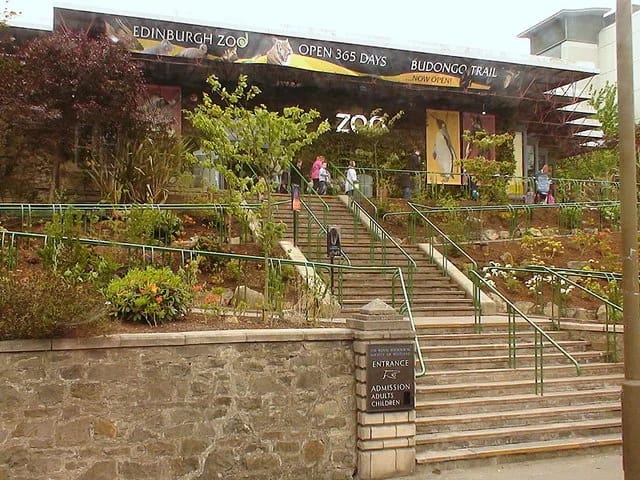
Two worked examples show how the arrangement plays out. Tian Tian (studbook 569, female, born 2003) and Yang Guang (studbook 564, male, born 2003) arrived at Edinburgh Zoo in December 2011 under a 10-year agreement later extended by two years because of COVID-19, and returned to China in December 2023 (China Daily, 2023). No cub was born despite repeated attempts. Yuan Meng (studbook 1094, male, born 4 August 2017) at ZooParc de Beauval was the first giant panda born in France; he returned to the Chengdu Research Base in 2023 (SCIO, 2023).
| Contract term | Standard provision | Source |
|---|---|---|
| Ownership of adults | Retained by China; never transferred | Smithsonian, 2024; CITES Appendix I |
| Ownership of cubs | Chinese property from birth | Smithsonian, 2024 |
| Annual fee | $1,000,000, paid to the CWCA | Smithsonian, 2024 |
| Standard agreement length | 10 years | Smithsonian, 2024 |
| Cub repatriation | Returns to China; cub fee widely reported at $400,000–$600,000, no official tariff | Multiple reports |
| Required fund use | Habitat restoration, reproduction research, protected areas | Smithsonian, 2024; USFWS, 1998 |
None of these figures is the price of a panda. A fee buys participation in a conservation and research programme — not title to an animal.
2. The Economics of Panda Conservation
Fees are one funding stream of three: international cooperation fees, Chinese central and provincial budgets, and social donations.
The China Conservation and Research Center for the Giant Panda (CCRCGP), a national institution under the National Forestry and Grassland Administration, holds a central government budget covering captive breeding, wild-release training, veterinary care and genetic management (CCRCGP, 2025). The Giant Panda National Park, established in 2021, spans 22,000 square kilometres across Sichuan, Shaanxi and Gansu, bringing roughly 72% of wild pandas under unified protection; protected habitat has expanded from 1.39 million to 2.58 million hectares (NFGA, 2026).
There is no single consolidated public figure for total annual Chinese government spending, because budgets are split across national park administrations, forestry bureaus, research centres and reserves. The absence of a “cost per panda” number is itself meaningful: conservation operates at ecosystem scale, not individual-animal pricing.
By the end of 2025 the global captive population reached 808 individuals, up from a handful in the 1980s, while the wild population stood at roughly 1,900, recovering from about 1,114 in the 1985–1988 trough (NFGA, 2026). The species was downlisted from Endangered to Vulnerable on the IUCN Red List in 2016 (IUCN, 2016).
3. What Does It Cost to Care for One Panda?
Day-to-day cost is dominated by one biological fact: pandas eat enormous quantities of bamboo and are extremely selective about it.
The Smithsonian reports an adult consumes 32–45 kg (70–100 lb) of bamboo daily. Pandas retain a carnivore’s digestive system and extract only about 17% of bamboo’s nutrition, so they feed for 10 to 16 hours a day (Smithsonian, 2025). San Diego Zoo supplies roughly 45 kg (100 lb) per animal daily across several species, grown on six dedicated acres, from which the pandas select preferred parts themselves (San Diego Zoo Wildlife Alliance, 2024).
That supply chain is expensive. Bamboo must be harvested daily, refrigerated and delivered in multiple species to match seasonal preference. For zoos outside bamboo’s native range, cold-chain import costs can exceed the value of the bamboo itself.
Pandas receive at least annual comprehensive health examinations and are susceptible to digestive obstruction, dental disease and age-related conditions; newborns need round-the-clock monitoring through their first months (NFGA, 2026).
Housing is a separate, one-off capital outlay that runs into millions. Adelaide Zoo spent A$8 million on its purpose-built panda facility ahead of Wang Wang and Funi’s arrival (The West Australian, 2010). San Francisco Zoo budgeted US$8 million in 2024 to convert an existing lion habitat, noting that a from-scratch build would have cost closer to US$20 million (SF Standard, 2024). Conversion is cheaper but not free: Edinburgh adapted its former gorilla enclosure for about £250,000 before the 2011 arrival (The Telegraph, 2011).
| Cost category | Magnitude | Data availability | Source |
|---|---|---|---|
| Bamboo consumption | 32–45 kg per adult per day | Public, confirmed | Smithsonian; San Diego Zoo |
| Annual fee to CWCA | $1,000,000 | Public, official | Smithsonian, 2024 |
| Purpose-built enclosure | A$8M (Adelaide); US$8M–20M (San Francisco) | Reported per project | The West Australian, 2010; SF Standard, 2024 |
| Enclosure conversion | ~£250,000 (Edinburgh) | Reported per project | The Telegraph, 2011 |
| Veterinary care per animal per year | No consolidated public figure | Not disclosed | — |
| Per-animal keep cost at Chinese bases | No standardised public metric | Not disclosed | — |
| Chinese spend per wild panda | Fragmented across budgets | Not consolidated | — |
There is no authoritative universal “cost per panda” applicable across institutions. Any claim to a single global figure should be treated with scepticism — including, notably, claims about total annual programme costs at individual zoos, which are rarely published in full.
4. The Economic Value to Local Communities
Pandas are powerful tourism anchors. The Chengdu Research Base, together with Dujiangyan Panda Valley, received 11.94 million visitors in 2023, generating RMB 462 million (~US$65 million) in ticket revenue plus RMB 192 million (~US$27 million) in other on-site revenue (The Paper, 2024, citing official base data). This is an ensemble attraction effect, not a value attributable to any single animal.
For scale: Chengdu drew more visitors in 2023 than the Louvre, which received 8.86 million (TEA/AECOM, 2024). Ya’an’s Bifengxia base recorded 178.6% year-on-year visitor growth in the same period (The Paper, 2024).
A useful international comparison: mountain gorilla trekking permits in Rwanda cost US$1,500 per foreign visitor for a one-hour visit, with fees earmarked for conservation (Xinhua, 2024). That demonstrates charismatic species can generate revenue exceeding direct conservation costs — but only under strict visitor limits.
The tension is real. More visitors mean more conservation revenue, but excessive visitation stresses animals. Edinburgh Zoo drew over 600,000 visitors a year during Tian Tian and Yang Guang’s stay (China Daily, 2023), which required timed entry and careful enclosure design. Tourism value and animal welfare pull in opposite directions, and the permit model exists precisely to hold them in balance.
5. The Ecological Value
The case for panda conservation extends well beyond ticket sales.
A Current Biology study led by Wei Fuwen of the Chinese Academy of Sciences estimated that panda reserves generate US$2.6–6.9 billion per year in combined ecosystem service value — roughly 10 to 27 times the cost of maintaining them (Wei et al., 2018). The analysis priced provisioning services (crops, grazing, water supply, firewood), regulating services including flood and runoff management, sediment and nutrient retention, carbon sequestration, and cultural services.
Three mechanisms carry most of that weight. First, the umbrella species effect: pandas need extensive, connected forest, so reserves designed around them also shelter takin, golden snub-nosed monkeys, red pandas, musk deer, Asiatic black bears and hundreds of other species. A 2024 study drawing on data from over 78% of panda habitat confirmed the panda works as an effective — though not universally protective — umbrella (Li et al., 2024). Second, carbon sequestration in bamboo and montane forest. Third, water regulation: the reserves overlap the upper Yangtze watershed, which supplies and regulates freshwater for hundreds of millions downstream, with direct consequences for agriculture, hydropower and flood control.
One caveat matters more than the headline number. Ecosystem valuation methods differ substantially, and the same forest can yield estimates varying several-fold depending on which services are counted and how they are priced. The 10–27x return is one credible estimate, not an objective price.
6. Can You Put a Price on a Giant Panda?
The three-part distinction resolves into a direct answer.
Price does not exist. The animal has never been for sale under the modern regime. Any statement that “a panda costs $X million” refers to a fee, a maintenance cost, or nothing at all.
Cost exists and can be measured. The $1 million annual fee is documented. Enclosure construction runs into millions and is reported project by project. National park and breeding centre budgets are real fiscal outlays. These are the costs of keeping pandas alive and viable, borne by a mix of international fees, Chinese public budgets and donations.
Value cannot be fully captured by a number. Ecosystem services are estimated in billions per year, but those estimates strain monetary valuation: people protected from flooding receive no bill; sequestered carbon is not traded at full social cost; existence value — the willingness to pay simply to know pandas survive — appears on no ledger.
There is a deeper problem. Applying a single discount rate to all ecosystem services can produce paradoxical results, implying that converting forest to agriculture or mining yields higher returns. That happens not because protection is worth less, but because markets systematically underprice long-run, diffuse public goods such as biodiversity, watershed stability and climate regulation. These values were never designed to circulate as commodities.
The conclusion is not the lazy claim that pandas are priceless. It is more precise: the things you can put a price tag on are not the panda itself — they are the costs of allowing the panda to exist. The parts that resist pricing — co-protection of ecosystems, hydrological stability, the symbolic proof that conservation can work — are the parts that constitute genuine value.
A panda is not an asset to be appraised. It is a living node in an ecological, institutional and cultural network, and the only honest answer is to describe that network rather than stamp a dollar figure on it.
Frequently Asked Questions
Can you buy a giant panda? No. International commercial trade has been prohibited under CITES Appendix I since 1984, and China retains ownership of every captive panda worldwide. Zoos host pandas only under fixed-term research agreements; private ownership is illegal everywhere.
How much does China spend protecting pandas? There is no single consolidated public total across all agencies and provinces. Investment is substantial — the Giant Panda National Park alone covers 22,000 square kilometres — but budgets are split among park administrations, forestry bureaus, research centres and reserves. The absence of a per-animal figure reflects ecosystem-scale rather than individual-animal accounting.
How much does it cost to feed a panda? An adult eats 32 to 45 kilograms of bamboo a day. Total feeding cost depends entirely on the supply chain: San Diego Zoo grows bamboo on six dedicated acres, while zoos outside the bamboo belt import it chilled. No authoritative global figure for annual food cost per panda is published.
Why are pandas so valuable? Pandas operate on several dimensions at once. Economically they anchor tourism — the Chengdu Research Base recorded 11.94 million visitors in 2023. Ecologically they function as an umbrella species, and the reserves built around them generate an estimated US$2.6–6.9 billion a year in ecosystem services. Culturally they are the most recognisable conservation symbol in the world. Only the tourism component appears in market transactions.
How much does a zoo pay to host pandas? The Smithsonian’s National Zoo pays a $1 million annual fee to the China Wildlife Conservation Association under a 10-year agreement signed in 2024, and states that this is in line with what every zoo outside China pays. Cubs born at the zoo remain Chinese property and return to China. Purpose-built enclosures are a separate capital cost: Adelaide Zoo spent A$8 million on its panda facility.
Is a panda worth more alive than in a zoo? The question mixes categories. Every zoo panda is alive, and captive individuals underpin research, genetic management and the conservation funding that flows through the loan system. But the largest measurable economic value comes from the wild habitat that panda conservation protects — an estimated US$2.6–6.9 billion a year in ecosystem services, roughly 10 to 27 times the cost of maintaining those reserves.
Explore Further
- Panda diplomacy: eighty years of state gifts and research loans
- Where the conservation money goes: following a donation to the forest
- Adopting a panda: symbolic gifts and corporate sponsorship
- Chengdu Research Base and the economics of panda tourism
- Panda habitat as a carbon sink: the hidden climate value of bamboo forest
- How big is the largest giant panda? Size and weight explained
Sources
- Smithsonian’s National Zoo and Conservation Biology Institute (2024, 15 October). Giant Pandas Arrive at Smithsonian’s National Zoo and Conservation Biology Institute From China. https://nationalzoo.si.edu/news/giant-pandas-arrive-smithsonians-national-zoo-and-conservation-biology-institute-china — A-level. Source of the quoted $1 million annual fee, the CWCA arrangement, and the statement that federal funding has never paid the fee.
- Smithsonian’s National Zoo and Conservation Biology Institute (2024). Giant Panda FAQs. https://nationalzoo.si.edu/animals/giant-panda-faqs — A-level.
- Smithsonian’s National Zoo and Conservation Biology Institute (2025). Giant Panda: Food and Eating Habits. https://nationalzoo.si.edu/animals/giant-panda — A-level.
- National Forestry and Grassland Administration of China (2026). CITES Appendices I, II, III. https://www.forestry.gov.cn/ — A-level.
- National Forestry and Grassland Administration of China (2026, June). Giant panda population and national park report. https://www.forestry.gov.cn/lyj/1/zrgjgy/20260606/674259.html — A-level. 22,000 km², 808 captive, ~1,900 wild, habitat expansion.
- Wei, F., Costanza, R., Dai, Q., Stoeckl, N., Gu, X., Farber, S., Nie, Y., et al. (2018). The Value of Ecosystem Services from Giant Panda Reserves. Current Biology 28(13): 2132–2139. — A-level.
- China Conservation and Research Center for the Giant Panda (2025). Central department budget. https://www.forestry.gov.cn/ — A-level.
- IUCN Red List of Threatened Species (2016). Ailuropoda melanoleuca (Giant Panda), Vulnerable. https://www.iucnredlist.org/species/712/121745669 — A-level.
- San Diego Zoo Wildlife Alliance (2024). Bamboo cultivation and consumption. https://sandiegozoowildlifealliance.org/story-hub/2024/07/28/homegrown — A-level.
- U.S. Fish and Wildlife Service (1998). Giant panda permit policy. https://www.govinfo.gov/content/pkg/FR-1998-08-27/pdf/98-23074.pdf — A-level.
- Li, S., et al. (2024). The effectiveness of using giant panda as a surrogate for protecting sympatric species. Biological Conservation. https://pubmed.ncbi.nlm.nih.gov/38134503 — A-level.
- China Daily (2023, 5 December). Giant panda pair back to China from Britain. https://www.chinadaily.com.cn/a/202312/05/WS656ed769a31090682a5f18ea.html — B-level.
- State Council Information Office (2023, 25 July). Home set for French-born panda. http://english.scio.gov.cn/internationalexchanges/2023-07/25/content_94929723.htm — B-level.
- The Paper (2024, 26 June). Chengdu Research Base 2023 visitor and revenue data. https://www.thepaper.cn/newsDetail_forward_27864621 — B-level.
- Xinhua (2024, 26 January). Rwanda gorilla conservation permit pricing. https://english.news.cn/20240126/df6d3edf1f564784984a1733a21e8bc0/c.html — B-level. Confirms US$1,500 standard rate for foreign visitors.
- The West Australian (2010). Giant pandas make public debut at Adelaide Zoo. https://thewest.com.au/travel/giant-pandas-make-public-debut-ng-ya-225006 — B-level. A$8 million purpose-built facility.
- The San Francisco Standard (2024, 5 December). San Francisco Zoo panda habitat cost. https://sfstandard.com/2024/12/05/panda-new-home-sf-zoo/ — B-level. US$8 million conversion versus ~US$20 million new build.
- The Daily Telegraph (2011, 29 May). British giant pandas to get tunnel of love and nursery. https://www.telegraph.co.uk/news/uknews/scotland/8545231/British-giant-pandas-to-get-tunnel-of-love-and-nursery.html — B-level. ~£250,000 conversion of the former gorilla enclosure.
- TEA/AECOM (2024). Theme Index and Museum Index. — B-level. Louvre 8.86 million visitors, 2023.

Dr. Mei Zhang
Spatial Ecology & Conservation Editor
Spatial ecologist using GIS, remote sensing, and satellite imagery to study panda population dynamics, habitat connectivity, and conservation effectiveness at landscape scales.
View full profile →Tags in this article
Questions readers often ask
Can you buy a giant panda?
No. International commercial trade has been prohibited under CITES Appendix I since 1984, and China retains ownership of every captive panda worldwide. Zoos host pandas only under fixed-term research agreements; private ownership is illegal everywhere.
How much does China spend protecting pandas?
There is no single consolidated public total across all agencies and provinces. Investment is substantial — the Giant Panda National Park alone covers 22,000 square kilometres — but budgets are split among park administrations, forestry bureaus, research centres and reserves. The absence of a per-animal figure reflects ecosystem-scale rather than individual-animal accounting.
How much does it cost to feed a panda?
An adult eats 32 to 45 kilograms of bamboo a day. Total feeding cost depends entirely on the supply chain: San Diego Zoo grows bamboo on six dedicated acres, while zoos outside the bamboo belt import it chilled. No authoritative global figure for annual food cost per panda is published.
Why are pandas so valuable?
Pandas operate on several dimensions at once. Economically they anchor tourism — the Chengdu Research Base recorded 11.94 million visitors in 2023. Ecologically they function as an umbrella species, and the reserves built around them generate an estimated US$2.6–6.9 billion a year in ecosystem services. Culturally they are the most recognisable conservation symbol in the world. Only the tourism component appears in market transactions.
How much does a zoo pay to host pandas?
The Smithsonian's National Zoo pays a $1 million annual fee to the China Wildlife Conservation Association under a 10-year agreement signed in 2024, and states that this is in line with what every zoo outside China pays. Cubs born at the zoo remain Chinese property and return to China. Purpose-built enclosures are a separate capital cost: Adelaide Zoo spent A$8 million on its panda facility.
Is a panda worth more alive than in a zoo?
The question mixes categories. Every zoo panda is alive, and captive individuals underpin research, genetic management and the conservation funding that flows through the loan system. But the largest measurable economic value comes from the wild habitat that panda conservation protects — an estimated US$2.6–6.9 billion a year in ecosystem services, roughly 10 to 27 times the cost of maintaining those reserves.