Table of contents (9 sections)
Malaysia’s Panda Daughters: The Story of Nuan Nuan, Yi Yi and Sheng Yi
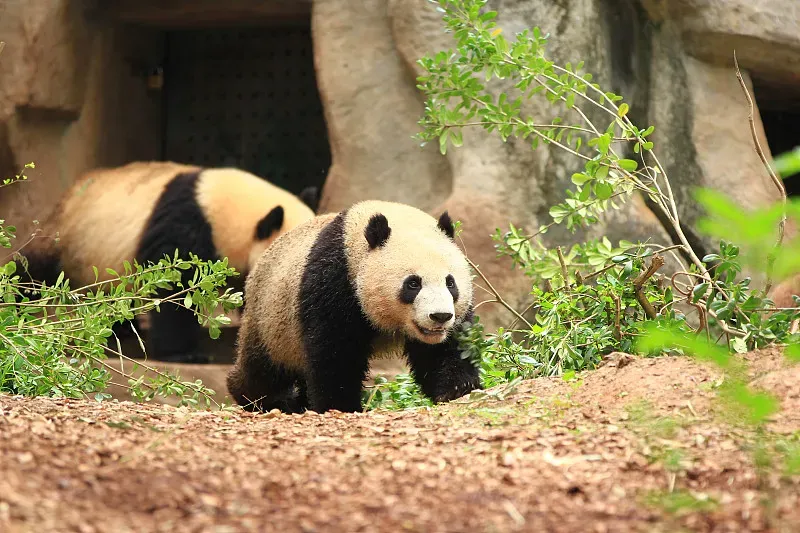
Key Fact: Between 2015 and 2021, Zoo Negara in Kuala Lumpur achieved something remarkable: three giant panda births in five years. Nuan Nuan (2015), Yi Yi (2018), and Sheng Yi (2021) — all daughters of Xing Xing and Liang Liang — made Malaysia one of the most successful overseas panda breeding programs in the world. Their names, chosen through national public contests, formed a linguistic arc of diplomatic warmth: from “warmth” to “friendship” to “rising friendship.” Each cub, under the loan agreement’s return clause, eventually returned to China — but their births transformed Malaysia from a panda host into a panda success story.
Key Takeaways
-
Malaysia achieved three panda births in five years — an extraordinary record for a tropical facility. No other overseas panda program has matched this density of births in such a climatically challenging location.
-
The daughters’ names form a deliberate diplomatic narrative — Nuan Nuan (warmth), Yi Yi (friendship), Sheng Yi (rising friendship) — reflecting improving Malaysia-China relations.
-
Malaysia’s success challenges the assumption that tropical pandas cannot breed. The key variable is not climate but individual panda compatibility and facility management.
The Arrival
Xing Xing (male) and Liang Liang (female) arrived at Zoo Negara in Kuala Lumpur in 2014 — part of a 10-year loan agreement marking 40 years of diplomatic relations between Malaysia and China. The zoo had invested heavily in panda infrastructure: a climate-controlled enclosure complex designed to maintain 18-22°C and 55-65% humidity year-round, the same technology described in our article on tropical panda cooling. The cost was approximately MYR 50 million (€10 million).
The pair had been selected by the studbook management team for their genetic compatibility. Liang Liang, born in 2006 at the Chengdu Research Base, was already known as a calm and responsive female. Xing Xing, born in 2005 at the same facility, had been assessed as a confident and food-motivated male. They were considered a promising pair — but nobody predicted they would become one of the most successful breeding pairs in overseas panda history.
| Year | Event | Significance |
|---|---|---|
| 2014 | Xing Xing and Liang Liang arrive at Zoo Negara | First pandas in Malaysia |
| 2015 | Nuan Nuan born (August 18) — Malaysia’s first panda | National celebration |
| 2017 | Nuan Nuan returns to China (age 2) | Early return at China’s request |
| 2018 | Yi Yi born (January 14) | Second birth — confirms program success |
| 2021 | Sheng Yi born (May 31) | Third birth — Liang Liang at age 15 |
| 2023 | Yi Yi returns to China (age 5) | Timed with diplomatic anniversary |
| 2024-25 | Sheng Yi scheduled to return | Completes the trilogy |
The Parents
Xing Xing (meaning “Star”) — the male — was the more confident of the pair. His keepers described him as food-motivated and relaxed, showing little stress during veterinary procedures. He adapted quickly to Zoo Negara’s climate-controlled environment and was a reliable breeder across all three mating seasons.
Liang Liang (“Lovely”) — the female — was the heart of Malaysia’s breeding success. She demonstrated strong maternal instincts across three births, nursing each cub attentively and responding well to the twin-swapping protocol described in our article on panda twin survival. Her calm temperament during cub-rearing was exceptional: she showed no signs of the agitation or rejection that some first-time mothers display. Liang Liang is one of the most successful breeding females in recent overseas panda history.
| Trait | Xing Xing | Liang Liang |
|---|---|---|
| Sex | Male | Female |
| Studbook | sb847 | sb848 |
| Birth year | 2005 | 2006 |
| Arrival in Malaysia | 2014 | 2014 |
| Personality | Confident, food-motivated | Calm, attentive mother |
| Breeding role | Sire | Dam (3 cubs) |
Nuan Nuan (2015): The First Daughter
August 18, 2015. Liang Liang gave birth to a female cub — the first panda born in Malaysia. The birth was announced on national television. A public naming contest drew thousands of entries. The winning name: Nuan Nuan (暖暖), meaning “warmth” — a reflection of the warm relationship between Malaysia and China.
Nuan Nuan grew rapidly under the standard neonatal care protocols. She was a single birth (not a twin), which simplified early care. She opened her eyes at 48 days, took her first steps at 90 days, and accepted solid bamboo at approximately 8 months — all within normal developmental ranges.
Nuan Nuan returned to China in November 2017 at age two — earlier than the standard four-year return age, at China’s request. Her departure was a national news event. Zoo Negara reported a noticeable attendance decline in the months following her departure — evidence of the public’s attachment to “their” panda.
Yi Yi (2018): The Friendship Cub
January 14, 2018. Liang Liang gave birth again — another female. The naming contest this time drew over 10,000 entries. The winner: Yi Yi (谊谊), meaning “friendship.”
Yi Yi’s birth confirmed that Malaysia’s first panda birth was not a fluke — the breeding program was working. Zoo Negara’s keeper team, trained in China and now experienced with their own facility, had mastered the protocols. Yi Yi was a slightly larger cub than her sister at birth (158 grams vs 145 grams) and developed at a similar pace.
Yi Yi stayed in Malaysia until age five — longer than Nuan Nuan’s two years, attending the diplomatic calendar. Her departure in 2023 was timed to coincide with the 10th anniversary of the Malaysia-China Comprehensive Strategic Partnership. Her farewell ceremony was attended by Chinese and Malaysian diplomats, zoo officials, and hundreds of members of the public.
Sheng Yi (2021): The Rising Star
May 31, 2021. Liang Liang, at age 15 — entering the later years of her reproductive life — gave birth to her third daughter. The naming contest, held during the COVID-19 pandemic with online voting, produced the name Sheng Yi (升谊), meaning “rising friendship” — a continuation of the linguistic arc, a statement that the relationship was still ascending.
Sheng Yi was born during a period of diplomatic sensitivity between Malaysia and China. Her name — deliberately positive, deliberately forward-looking — served the same subtle diplomatic function that panda names have served historically. The “rising friendship” message was picked up by news media in both countries and framed as evidence of resilient bilateral ties despite political differences.
| Detail | Nuan Nuan | Yi Yi | Sheng Yi |
|---|---|---|---|
| Birth date | Aug 18, 2015 | Jan 14, 2018 | May 31, 2021 |
| Name meaning | Warmth | Friendship | Rising friendship |
| Birth weight | ~145g | ~158g | ~152g |
| Return to China | 2017 (age 2) | 2023 (age 5) | 2024-25 (age 3-4) |
| Liang Liang’s age at birth | 9 | 12 | 15 |
The Naming Contests
Each of Malaysia’s panda daughters was named through a nationwide public contest — a deliberate strategy to engage the Malaysian public with the panda program and generate media coverage. The contests were organized by Zoo Negara in partnership with the Ministry of Natural Resources and the Chinese Embassy.
The naming contests served multiple purposes: they generated sustained media attention for the panda program, created public ownership of the cubs, and provided a diplomatic platform for messaging about Malaysia-China relations. The winning names — warmth, friendship, rising friendship — were not coincidental. They formed a deliberate narrative arc managed through coordination between the zoo, the Ministry of Foreign Affairs, and Chinese diplomatic representatives.
Tropical Breeding Success: Why Malaysia Succeeded
Malaysia’s achievement — three cubs in five years from a single pair — is remarkable, particularly given the tropical climate. The facilities described in our article on tropical panda cooling maintain the necessary microclimate, but other tropical facilities (Singapore’s River Wonders, Chiang Mai Zoo) have not matched Zoo Negara’s breeding record.
The difference appears to be individual panda compatibility rather than facility quality. Xing Xing and Liang Liang demonstrated strong mutual interest during breeding seasons, with natural mating attempts observed multiple times. Their hormonal cycles aligned consistently — not always the case even in genetically compatible pairs. Liang Liang’s maternal temperament was exceptional: she accepted the twin-swapping protocol without agitation and maintained consistent milk production across three cubs.
Malaysia vs Singapore
| Metric | Zoo Negara (Malaysia) | River Wonders (Singapore) |
|---|---|---|
| Panda pair | Xing Xing (sb847) + Liang Liang (sb848) | Kai Kai (sb1208) + Jia Jia (sb1224) |
| Climate | Tropical (3°N) | Equatorial (1°N) |
| Cooling technology | Climate-controlled indoor + shaded outdoor | Climate-controlled indoor + shaded outdoor |
| Births | 3 (2015, 2018, 2021) | 0 |
| First birth | 2015 (year 2 of loan) | N/A |
| Public naming contests | Yes (all 3 cubs) | N/A |
The comparison suggests that when the panda pair is compatible and the female has strong maternal instincts, tropical panda breeding can succeed. When compatibility is less optimal — as appears to be the case with Singapore’s pair — even identical cooling infrastructure cannot guarantee reproduction.
Frequently Asked Questions
Are Xing Xing and Liang Liang still in Malaysia?
Yes. Both parents remain at Zoo Negara under their current loan agreement. Liang Liang has reached an age where further breeding is unlikely, but the pair continue as conservation ambassadors.
Will there be more panda births in Malaysia?
Given Liang Liang’s advancing age, further births are unlikely from this pair. Future Malaysian panda births would depend on new loan agreements and new breeding pairs. The experience gained from the three daughters — keeper expertise, veterinary knowledge, cub-rearing protocols — remains an institutional asset for any future program.
What is the Malaysian public’s attitude toward the panda program?
Strongly positive. The three births generated sustained public affection for the pandas. The naming contests created a sense of public ownership. Zoo Negara attendance increased by approximately 30-40% during the peak panda years, and panda-related merchandise remains popular.
How does Malaysia’s program compare to other Southeast Asian facilities?
Malaysia is the most successful breeder among Southeast Asian panda programs. Thailand’s Chiang Mai program produced one cub (Lin Bing, 2009) over 20 years. Singapore’s River Wonders has not yet produced surviving cubs. Malaysia’s three cubs in five years is unmatched in the region. In November 2025, Indonesia joined the region’s panda club with the birth of Rio, its first homegrown cub, at Taman Safari Indonesia.
Dr. Mei Zhang
Spatial Ecology & Conservation Editor
Spatial ecologist using GIS, remote sensing, and satellite imagery to study panda population dynamics, habitat connectivity, and conservation effectiveness at landscape scales.
View full profile →Tags in this article
Questions readers often ask
How did Malaysia achieve three panda births in five years?
Malaysia's breeding success rests on: (1) climate-controlled facilities that replicate Sichuan conditions despite the tropical location; (2) a keeper team trained at Chinese breeding centers; (3) precise hormonal monitoring enabling timed artificial insemination; (4) the exceptional maternal abilities of Liang Liang, who proved to be an outstanding mother across three births.
What do the names Nuan Nuan, Yi Yi, and Sheng Yi mean?
Each name was chosen through public contests and carries diplomatic significance: Nuan Nuan (暖暖) means 'warmth,' reflecting the warmth of Malaysia-China relations. Yi Yi (谊谊) means 'friendship.' Sheng Yi (升谊) means 'rising friendship,' representing the growing bonds between the two nations.
Where are the three daughters now?
All three have returned to China under the loan agreement's return clause. Nuan Nuan returned in 2017, Yi Yi in 2023, and Sheng Yi is scheduled to return by 2025. Upon return, they enter the Chinese panda management system at the Bifengxia Base.
Why has Singapore not achieved panda births while Malaysia has?
This is an interesting puzzle. Both facilities use similar climate-control technology in similar tropical conditions. The difference likely comes down to individual panda compatibility — Xing Xing (sb847) and Liang Liang (sb848) at Zoo Negara have demonstrated strong natural breeding behavior, while Kai Kai and Jia Jia at Singapore's River Wonders have not yet achieved successful conception despite multiple AI attempts.