The library turns the archive into context: biology, conservation systems, cultural history, and beginner-friendly introductions that help users move beyond isolated facts.
Articles
127
across all tracks
Featured
6
editorial picks
Categories
3
clear reading tracks
RSS
1
feed for new posts
Library step 2
Follow what is worth reading next
Start with the freshest long-form articles, then use RSS only if you want a lightweight subscription path.
How to Become a Panda Keeper: More Than Just Shoveling Poo
Becoming a panda keeper is statistically harder than gaining admission to many elite universities — annual acceptance rates at the Chengdu Research Base are below 5%. This article explores the education, physical demands, emotional resilience, and daily realities of panda keeping, featuring profiles of keepers who describe their work as 'the most difficult, least glamorous, and most meaningful job in animal care.'
Bifengxia Base: The First Stop for Every Returning Overseas Panda
Nestled in the misty mountains above Ya'an, Sichuan, the Bifengxia Panda Base is the quiet epicenter of the global panda diaspora — the place every overseas-born panda first encounters when it returns to China. With its cool climate, abundant bamboo, and specialized quarantine facilities, Bifengxia has processed every major panda homecoming of the modern era, from Tai Shan in 2010 to Fu Bao in 2024.
How We Know There Are 1,864 Wild Pandas: The Four National Surveys That Counted Every One
Every panda conservation statistic — '1,864 wild pandas,' '16.8% population increase,' '11.8% habitat expansion' — traces back to a single source: China's four national giant panda surveys. Conducted over 40 years, these are the most comprehensive wildlife censuses ever undertaken for a single species. This article explains how they work, why they take years, and how methodology evolved from measuring bamboo bite-marks to extracting DNA from droppings.
Tucked into the forested foothills outside Chengdu, the Dujiangyan Giant Panda Rescue and Disease Control Center is unlike any other panda facility in the world. It is not a breeding center. It is not a tourist attraction. It is a hospital and a retirement home — the place where aging pandas, retired breeders, and returning overseas celebrities spend their final years in quiet, forested enclosures with specialized geriatric care. Mei Xiang, Tian Tian, Bai Yun, and Pan Pan all ended their journeys here. This is the story of the world's only panda nursing home.
K-Panda Fever: How Everland Turned Fu Bao Into a Korean National Icon
In 2016, Ai Bao and Le Bao arrived at Everland in South Korea as diplomatic gifts. In 2020, they produced Fu Bao — the first panda born in Korea — and ignited a cultural phenomenon that transformed Korean panda keeping into a national obsession. This article traces how Everland's media strategy, the emotional bond between keeper Kang Cheol-won and Fu Bao, and the Korean public's embrace of 'panda parenting' created the most intense panda fandom outside China.
Historic Wild Panda Rescues: Basi, Qi Zai, and Other Survivors
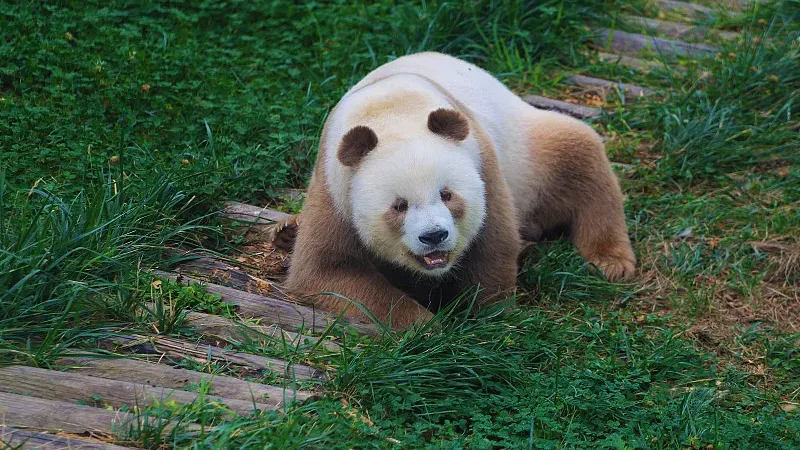
Some of the most consequential pandas in conservation history were not born in captivity — they were found dying in the wild. Basi, pulled from an icy river in 1984, lived to age 37 and became the model for the 1990 Asian Games mascot. Qi Zai, discovered as an abandoned brown cub in 2009, became the world's only captive brown panda. This article tells the stories of wild pandas saved by human intervention — and the rescue infrastructure that makes their survival possible.
Panda Conservation Success Stories: How China Saved the Giant Panda
Panda conservation is measurable, not mythical: the wild population climbed from roughly 1,100 in the 1980s to 1,864 in the Fourth National Survey, occupied habitat expanded 11.8%, and about 67 fragmented reserves merged into one 27,000 km² Giant Panda National Park. This is the story of the four interventions — the 1998 logging ban, Grain-to-Green, reserve consolidation, and anti-poaching — that moved those numbers.
What Sound Does a Panda Make? The Complete Panda Sound Library & Meaning Decoder
Pandas bleat like sheep, bark like dogs, and chirp like birds. This sound library decodes all 12 panda vocalizations — what each sounds like, what it means, and when pandas use it.
On November 27, 2025, a tiny panda cub was born at Taman Safari Indonesia in Bogor — the first giant panda ever born on Indonesian soil. Named Satrio Wiratama ('noble knight') personally by President Prabowo Subianto, and known to the world as Rio, this cub is the son of Cai Tao and Hu Chun, the pair that arrived from China in 2017. His birth after four natural mating attempts and four artificial inseminations marks a historic milestone for panda conservation in Southeast Asia.
Why Pandas Need Bamboo Corridors: The Genetic Case
Fragmentation has split the wild panda population into 33 isolated subpopulations, 22 of them with fewer than 30 pandas — below the threshold for long-term genetic viability. This is the genetic case for bamboo corridors: how drift erodes small isolates, how non-invasive fecal DNA analysis reads the decline, and why a corridor is a gene-flow pipeline rather than just a path. Under the Giant Panda National Park, 7 key corridors are designated, 6 implemented, and 13 previously isolated populations reconnected.
Where Do Wild Pandas Live? The Complete Panda Habitat Guide
Wild pandas live in six mountain ranges across three provinces of southwestern China — Minshan, Qionglai, Qinling, Liangshan, Daxiangling, and Xiaoxiangling — each with its own bamboo palette, elevation band, and conservation pressures. This guide maps the full habitat system: how elevation, bamboo species, and climate make a patch habitable, the fragmentation reality of 33 isolated subpopulations, and the corridor network under the Giant Panda National Park that is reconnecting them. Name the range, and you begin to know the habitat.
Panda Habitat Corridors: Conservation Success and What the Data Shows
Camera traps have recorded panda activity in restored corridor zones, and the Giant Panda National Park has now implemented six of its seven designated key corridors, reconnecting 13 previously isolated local populations. This is the conservation success report: what the corridor network has achieved since the 2016 IUCN downlisting, the three levels of effectiveness evidence, and what scaling the program means. Companion piece to our article on why wildlife corridors are vital.
The International Studbook: How Big Data Prevents Panda Inbreeding
Every captive giant panda on Earth is recorded in a single global database — the International Studbook — which tracks lineage, calculates genetic relatedness, and determines each year's breeding recommendations. This article explains how studbook managers use population genetics software to maintain 90% genetic diversity across 700 captive pandas, making the panda breeding program one of the most mathematically sophisticated conservation efforts in history.
The Giant Panda Genome Project: How DNA Sequencing Transformed Conservation
In 2009, an international team led by BGI-Shenzhen published the first complete giant panda genome — a 2.4 billion base-pair blueprint that revealed why pandas lost the taste for meat, how they digest bamboo with bacterial help, and why their genetic diversity offers hope for survival. This article follows the science from Jing Jing's blood sample to today's conservation genomics, covering TAS1R1 umami pseudogenization, the Illumina sequencing revolution, and what the genome means for the species' future.
Panda Habitat as Carbon Sink: The Hidden Climate Value of Bamboo Forests
The bamboo forests protected for pandas store an estimated 2-3 billion tons of carbon across the Giant Panda National Park's 27,000 square kilometers — an ecosystem service worth $200-750 million annually in carbon sequestration alone. This article examines how panda conservation doubles as climate action, why bamboo forests rival tropical rainforests in per-hectare carbon storage, and how China's carbon market is creating new economic incentives for habitat protection.
How to Trace Any Giant Panda's Family Tree: The Studbook Guide
Every captive giant panda on Earth has a unique studbook number that maps directly to its parents, grandparents, offspring, and location history. This guide teaches you how to use the PandaCommon database to trace any panda's lineage — from Fu Bao back to Pan Pan in three generations — and explains what the studbook numbers reveal about genetic relationships, breeding history, and the hidden family connections that link pandas across continents.
A Rare Infection, A Sudden Death: The Chlamydia Case at Chimelong
In May 2026, Guangzhou Chimelong Safari Park confirmed that Jia He (家和, studbook #972), a 10-year-old male giant panda, died from heart failure caused by a pulmonary chlamydia infection — a diagnosis so unusual that it may be the first documented fatal chlamydia case in a giant panda worldwide. This article examines the clinical timeline, the microbiology behind the infection, the investigation into possible transmission sources, and the broader implications for captive panda health management at one of China's largest panda facilities.
The Ultimate Panda Documentary Guide: 50+ Films Every Panda Lover Needs to Watch
A curated global guide to over 50 panda documentaries spanning seven decades, seven thematic categories, and ten countries — from Pan Wenshi's raw Qinling field recordings in the 1990s to the 2024 Korean theatrical release Goodbye, Grandpa. Every film is verified, reviewed, and linked to the real pandas, keepers, and breeding centers behind the footage.