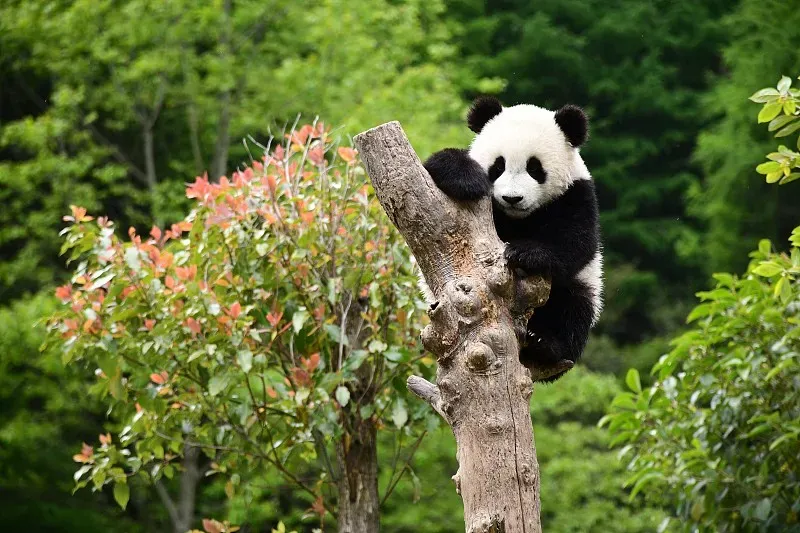
Table of contents (10 sections)
Dujiangyan: The World’s Only Panda Nursing Home
Key Fact: On a quiet forested hillside outside Chengdu, the Dujiangyan Giant Panda Rescue and Disease Control Center serves a function that no other panda facility in the world performs. It is not a breeding center (though it has the capability). It is not a public attraction (though limited visitor access exists). It is a hospital and a retirement home — the world’s only dedicated geriatric care facility for giant pandas. Here, the most famous pandas of the modern era — Mei Xiang and Tian Tian from Washington, Bai Yun from San Diego, Pan Pan the patriarch of the species — spend their final years in quiet, forested enclosures with specialized care for arthritis, dental disease, vision loss, and the other ailments of old age. The center is the final chapter in the panda life cycle: the place where hero pandas retire with dignity.
Key Takeaways
-
Dujiangyan is the only facility on earth dedicated to geriatric panda care — no breeding center, public zoo, or research institution has replicated its model of specialized end-of-life care.
-
The center treats conditions that most panda facilities never encounter — geriatric dentistry, arthritis management, cancer treatment, and palliative care for animals that have outlived their wild counterparts by a decade or more.
-
Every famous panda who returns from overseas in old age spends their final years here — Mei Xiang, Tian Tian, Bai Yun, and others have made Dujiangyan the final destination of the global panda diaspora.
The Road to the Nursing Home
The road to Dujiangyan winds through the low mountains northwest of Chengdu — gentle slopes covered in bamboo and broadleaf forest, the air cooler and cleaner than in the Sichuan Basin below. The base appears not as a cluster of concrete buildings but as a series of enclosures scattered through the forest, connected by narrow paths that wind between bamboo thickets and ancient trees. The temperature is consistently 5-8°C cooler than Chengdu. The only sounds are running water, birds, and the occasional crunch of bamboo being eaten.
This is not a facility designed for visitors. It is designed for its residents: pandas who have outlived their breeding years, pandas who have returned from decades overseas, pandas whose bodies are wearing down after 25 or 30 years of life. At Dujiangyan, the pace of life matches the needs of its elderly inhabitants — quiet, slow, and medically meticulous.
The center opened in 2015 as an expansion of the earlier Chengdu panda rescue network, but its role expanded rapidly. The first wave of overseas returnees — pandas born in the 1990s who had spent 15-20 years abroad — were arriving in China at advanced ages. The existing breeding centers were not equipped for geriatric care. Dujiangyan, with its hillside location, cooler climate, and purpose-built veterinary facilities, became the default destination.
The Residents
Dujiangyan houses three distinct populations, each with different care requirements:
Retired breeders. These are pandas who have completed their reproductive contributions to the species. Females past breeding age (typically 20+), males whose genetics are already well-represented in the population. They spent their prime years at Chengdu or Bifengxia, producing the cubs that sustain the captive population. At Dujiangyan, they are rewarded with quiet enclosures, softened bamboo diets, and the absence of the breeding-season stresses they experienced for decades. A retired breeding female who spent 15 years producing cub after cub now spends her days napping in sun patches and eating at her own pace.
Returned overseas pandas. Pandas who spent 10-25 years at foreign zoos and returned at the end of their loan agreements. These pandas — including Mei Xiang and Tian Tian from the Smithsonian, Bai Yun from San Diego — represent a unique geriatric challenge: they are elderly, they have lived in very different environments (different climates, different bamboo species, different keeper languages), and they require a careful transition period before settling into retirement. Some arrive with health problems that developed during their overseas years — dental issues from different bamboo textures, arthritis from different enclosure surfaces.
Medical patients. Pandas recovering from surgery, illness, or injury. Dujiangyan’s veterinary hospital is the most advanced panda medical facility in the world, equipped with MRI, CT, endoscopy, and full surgical theater. Pandas from across China’s panda network are transferred here when they develop conditions beyond the capability of their home facility.
The Geriatric Medicine of Pandas
Elderly pandas develop a predictable set of age-related conditions. Dujiangyan’s veterinary team has developed specialized protocols for each.
Dental Care — The Most Common Challenge
A panda’s molars are designed for crushing bamboo — one of the toughest plant materials in the world. After 20+ years of daily bamboo consumption, the牙齿 wear down to the point where chewing becomes painful and inefficient. Dental disease is the single most common geriatric condition in captive pandas.
Dujiangyan’s solution is three-tiered. First: dietary modification. Stalks are cut into shorter, thinner sections. Shoots (softer than stalks) are prioritized over mature bamboo. For pandas with advanced wear, keepers prepare a specially formulated soft diet — a warm panda cake gruel mixed with fruit puree, vitamins, and nutritional supplements, served in a consistency that requires minimal chewing.
Second: routine dental examinations under light sedation, including X-rays to assess root health and jawbone density. Third: when necessary, dental surgery — extraction of irreparably damaged teeth, treatment of abscesses, management of oral infections.
Arthritis and Mobility
Osteoarthritis is the second most common condition. Pandas carry 80-120 kg on relatively short limbs, and decades of walking, climbing, and the repetitive sitting posture of bamboo eating take a toll on hip and knee joints.
Dujiangyan’s enclosures are designed for mobility-challenged residents: heated indoor areas for cold weather (arthritis flares in cold), ramps instead of steps, padded resting surfaces, and easy access to food and water without requiring climbing. Physical therapy is administered through targeted enrichment — puzzle feeders that require gentle movement, scent trails that encourage short walks.
Pharmacological management includes anti-inflammatory medication and, in advanced cases, pain management protocols adapted from human geriatric medicine. The center has collaborated with Sichuan University’s medical school to adapt human osteoarthritis treatments for panda physiology.
Vision and Hearing Loss
Elderly pandas commonly develop cataracts and age-related hearing loss. Keepers compensate by using vibration cues (tapping on enclosure surfaces) and scent markers to guide pandas to food and water. The enclosures are arranged to minimize hazards — no sharp corners, no elevated platforms that a visually impaired panda could fall from.
End-of-Life Care
When a panda’s quality of life declines to the point where treatment cannot restore comfort, Dujiangyan’s veterinary team faces the most difficult decision in panda medicine. The center has developed an End-of-Life Assessment Protocol: a structured evaluation of mobility, appetite, pain levels, and social engagement that guides the decision-making process.
Pan Pan (studbook #001) died at Dujiangyan in December 2016 at age 31. His final months were managed under this protocol: cancer had been detected in his abdomen, and the veterinary team made the decision to prioritize comfort over aggressive treatment. He received pain management, dietary support, and round-the-clock monitoring. When his condition deteriorated to the point where he stopped eating and showed signs of distress, the team made the decision to euthanize. His body underwent necropsy, contributing to the scientific understanding of geriatric panda pathology.
A Day at the Nursing Home
| Time | Activity | Detail |
|---|---|---|
| 6:30 AM | First keeper check | Visual assessment of each panda — posture, breathing, mobility |
| 7:00 AM | Morning feeding | Softened bamboo for elderly pandas; nutritional gruel for those with severe dental wear |
| 9:00 AM | Health rounds | Veterinary team visits each panda; blood pressure, temperature, weight |
| 10:00 AM | Enrichment | Gentle puzzle feeders, scent trails, heated sunning platforms |
| 12:00 PM | Rest period | Enclosures are kept quiet; pandas nap |
| 2:00 PM | Afternoon feeding | Second bamboo delivery; supplements administered |
| 3:00 PM | Physical therapy | Targeted exercise for arthritic individuals |
| 5:00 PM | Evening observation | Keeper notes food intake, behavior, any signs of discomfort |
| 7:00 PM | Final check | Night keeper logs observations |
Famous Residents
| Panda | Studbook | Born | Arrived at Dujiangyan | Notable For |
|---|---|---|---|---|
| Pan Pan | #001 | ~1985 | 2015 (transferred in old age) | Patriarch of 25% of captive pandas; died 2016 at 31 |
| Bai Yun | #381 | 1991 | 2019 (returned from San Diego) | Mother of 6 cubs; San Diego’s most famous panda |
| Mei Xiang | #473 | 1998 | 2023 (returned from Smithsonian) | Mother of 4 surviving cubs in Washington DC |
| Tian Tian | #483 | 1998 | 2023 (returned from Smithsonian) | Mei Xiang’s companion; 23 years at National Zoo |
Did You Know?
Dujiangyan’s geriatric protocols are studied by human hospitals. The center’s collaboration with Sichuan University’s medical school has produced research on osteoarthritis management, dental wear patterns, and palliative care that has applications beyond panda medicine. A paper on panda geriatric dentistry, published in the Journal of Zoo and Wildlife Medicine, has been cited in human dental implant research.
The necropsy rate at Dujiangyan is 100%. Every panda that dies undergoes a full post-mortem examination. The resulting data — spanning decades and dozens of individuals — constitutes the world’s most comprehensive dataset on panda aging and pathology.
Some Dujiangyan residents outlive their wild counterparts by 15 years. Wild pandas rarely survive past 18-20. The average age at death at Dujiangyan is approximately 26 — meaning captive geriatric care adds 6-10 years to the panda’s natural lifespan.
The center’s soft diet formula took three years to develop. Geriatric panda gruel must meet specific nutritional requirements: high fiber (for gut health), controlled calcium (for kidney function), supplemented vitamins B12 and D (deficiencies common in elderly pandas), and a texture that requires no chewing. The current formula is the result of 27 iterations.
The Center in Context
| Category | Dujiangyan | Chengdu Base | Bifengxia | Wolong |
|---|---|---|---|---|
| Primary function | Geriatric care + hospital | Breeding + tourism | Quarantine + transition | Breeding + research |
| Average resident age | 22-30 years | 3-20 years | 2-18 years | 2-20 years |
| Public access | Limited | High | Low (quarantine) | Moderate |
| Vet-to-panda ratio | Highest | Medium | Medium-high | Medium |
| Annual intake | 5-15 new residents | 15-25 cubs | 3-8 returnees | 10-20 cubs |
Frequently Asked Questions
Is Dujiangyan the only panda retirement facility in the world?
Yes — and this is one of the most remarkable facts about the global panda conservation network. No other country or facility has created a dedicated geriatric care center for pandas. When pandas at foreign zoos reach advanced ages, they continue to live at the same facilities, receiving care adapted to their individual needs. But there is no equivalent of Dujiangyan anywhere else — a facility designed from the ground up for the specific medical and environmental needs of elderly pandas.
How much does it cost to care for an elderly panda?
Geriatric care is significantly more expensive than standard panda husbandry. The specialized diet (including imported bamboo shoots, nutritional supplements, and medical formulations) costs approximately 3-5 times more per panda than the standard bamboo diet. The veterinary staffing ratio — one full-time veterinarian per 3-4 elderly pandas — is approximately double the ratio at breeding centers. The total annual cost per geriatric panda at Dujiangyan is estimated at 200,000-400,000 RMB ($28,000-$56,000 USD).
Can pandas be released from Dujiangyan back to the wild?
No — and this is a defining characteristic of the facility. Dujiangyan’s residents are either too old (geriatric pandas cannot adapt to wild conditions), too medically dependent (many require daily medication and dietary support), or too habituated to humans (pandas that have spent decades in captivity cannot learn wild survival skills). Dujiangyan is an end-of-life facility, not a rehabilitation center. Rewilding candidates are housed at separate facilities, most notably at the Wolong and Chengdu bases.
What is the most difficult part of working at Dujiangyan?
Keepers and veterinarians consistently identify the emotional toll as the hardest aspect of the work. Pandas at Dujiangyan die, and the staff have formed bonds with these animals over years of daily care. The death of Pan Pan in 2016, after months of cancer treatment, was described by staff as “losing a member of the family.” The center provides counseling support for staff and rotates assignments so that no single keeper bears the full emotional weight of end-of-life care.
Will Dujiangyan’s model be replicated?
There are discussions about establishing similar geriatric care facilities at the Giant Panda National Park’s planned medical centers, particularly as the first generation of rewilded pandas reaches old age. However, no concrete plans have been announced. For now, Dujiangyan remains unique — the world’s only place where hero pandas go to retire.
At Dujiangyan, an old female panda — Mei Xiang, returned from Washington after 23 years abroad — sits in a patch of afternoon sun. She eats softened bamboo slowly, her worn teeth no longer capable of the crushing force she once commanded. She does not know she is famous. She does not know she is retired. She simply eats, and sleeps, and lives out her days in the quiet forest foothills, cared for by keepers who have dedicated their careers to ensuring that the final chapter of a panda’s life is as dignified as the first.
Call to Action
Explore the complete life cycle of a captive panda from birth to retirement, learn about Pan Pan’s extraordinary genetic legacy, or discover how Bifengxia Base prepares returning pandas for their final transfer to Dujiangyan.
Dr. Sarah Hartwell
Habitat & Ecology Editor
Conservation biologist specializing in habitat assessment, climate change impacts, GIS-based conservation planning, and bamboo corridor restoration. Reviews all habitat and ecology content.
View full profile →Tags in this article
Questions readers often ask
What is the Dujiangyan Panda Base?
The Dujiangyan Giant Panda Rescue and Disease Control Center, opened in 2015, functions as both China's premier panda hospital and the world's only dedicated retirement home for aging pandas. Located in the foothills of the Qionglai Mountains outside Chengdu, it combines advanced veterinary facilities with quiet, forested enclosures designed for elderly animals. It houses three categories of residents: retired breeding pandas who have completed their reproductive contribution, overseas returnees who have come back to China after decades abroad, and medical patients recovering from illness or injury.
Which famous pandas live or have lived at Dujiangyan?
Dujiangyan has housed many of the most historically significant pandas in their later years. Mei Xiang (studbook #473) and Tian Tian (studbook #483) moved there after their return from the Smithsonian National Zoo in 2023. Bai Yun (studbook #381), the legendary mother of the San Diego Zoo breeding program, spent her final years here after her return in 2019. Pan Pan (studbook #001), the most genetically prolific panda in history and the patriarch of 25% of the captive population, died here in 2016. The base serves as the final home for pandas whose contributions to the species — genetic, diplomatic, or scientific — have been completed.
How old are the pandas at Dujiangyan?
Dujiangyan's residents range from approximately 18 to 33 years old. In human terms, these pandas are in their 70s to 90s. The oldest panda ever housed at Dujiangyan was Pan Pan, who died at 31 — the equivalent of approximately 90-95 human years. In the wild, pandas rarely live past 18-20 years. The extended lifespan of Dujiangyan's residents reflects the high level of medical care, including specialized geriatric nutrition, dental management, arthritis treatment, and around-the-clock monitoring by veterinary staff.
What medical problems do elderly pandas face?
The most common geriatric conditions in pandas include: severe dental wear (pandas' molars wear down from decades of bamboo consumption, eventually making chewing difficult or impossible), osteoarthritis (particularly in hips and knees, exacerbated by pandas' heavy body weight), vision and hearing loss, kidney disease, and cancer (Pan Pan died of carcinoma in 2016). Dujiangyan's veterinary team manages these conditions through a combination of dietary modification (softened bamboo, nutritional gruel), pain management, physical therapy, and environmental adaptation (heated floors, ramps, padded resting areas).
Can the public visit Dujiangyan?
Limited public access exists through a separate viewing area, but Dujiangyan is fundamentally not a tourist facility like the Chengdu Research Base. The retirement and medical enclosures are closed to visitors to minimize stress on elderly and ill animals. Public visiting hours are restricted, and the experience is deliberately quiet and contemplative — a deliberate contrast to the crowds and activity of Chengdu. Visitors who do come experience a very different atmosphere: quieter, more medical, more respectful of the pandas' need for rest.
What happens when a panda at Dujiangyan dies?
Every panda that dies at Dujiangyan undergoes a full necropsy (animal autopsy) to determine cause of death and contribute to veterinary knowledge. The results are recorded in the panda's lifelong medical file — some files span 30+ years — and shared with the Chinese Association of Zoological Gardens and international partners. Genetic samples may be preserved in biobanks such as the San Diego Zoo's Frozen Zoo. The body is handled with the same dignity that human hospitals accord their deceased patients. Some pandas are cremated; others have their skeletons preserved for educational and research purposes.