Table of contents (12 sections)
Caring for Senior Pandas: How 100-Year-Old Pandas Live Out Their Days
Key Fact: A giant panda ages approximately three human years for every calendar year. A 20-year-old panda is a senior citizen — equivalent to a human in their 60s, with worn teeth, stiffening joints, and declining sensory acuity. A 30-year-old panda is a centenarian, among the oldest individuals of any bear species in captivity. The geriatric care program at the Dujiangyan Giant Panda Rescue and Disease Control Center represents the most advanced elderly animal care program in the world — managing hypertension with medication, replacing worn teeth with specialized soft diets, performing cataract surgery, and providing the quiet, comfortable enclosures where pandas can age with dignity.
Key Takeaways
-
Pandas age rapidly in human terms — 3:1 ratio — meaning every year brings significant physiological changes that require careful management.
-
Eight FAQ-level health concerns emerge in senior pandas — teeth, joints, digestion, vision, immune function, kidneys, blood pressure, and potential cognitive decline — each requiring a specialized care protocol.
-
The longevity gap between wild (15-20 yrs) and captive (25-30 yrs) pandas is the starkest measure of conservation success — every year of extended life is a year of continued genetic contribution and behavioral knowledge.
How Old Is Old for a Panda?
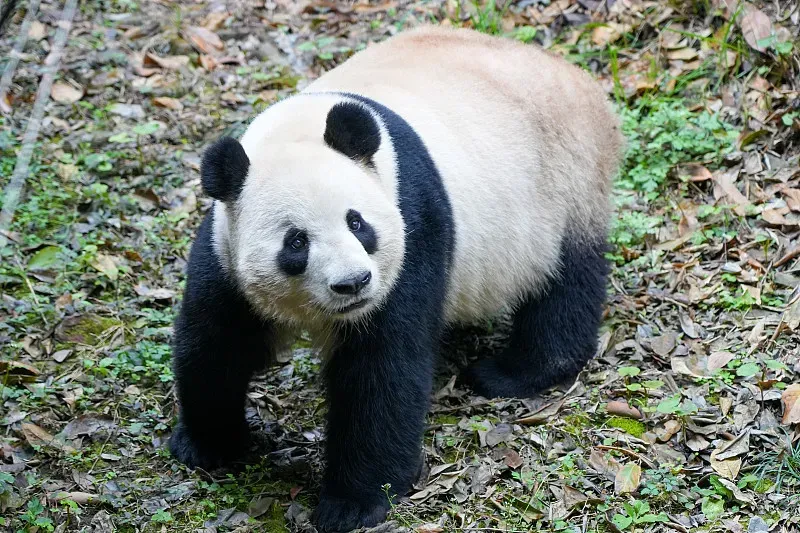
In a quiet, forested enclosure at the Dujiangyan base, a 28-year-old female panda sits in a patch of morning sun. Her fur is still thick but thinned around the muzzle and eyes — the first visible sign of age. Her keeper approaches with a basket: not the tough, woody bamboo stalks that younger pandas crush effortlessly, but short, tender sections of bamboo shoot, specially selected for their softness. Her teeth, after nearly three decades of grinding bamboo fiber, are worn nearly flat. She can no longer handle the stalks she ate in her youth.
She takes the softened bamboo in her paws — the same pseudo-thumb grip she has used since cubhood — and chews slowly. The keeper watches her jaw movements carefully, noting any hesitation, any sign of dental discomfort. This panda is not ill. She is old. And in the world of panda conservation, caring for the old has become as important as breeding the young.
The rule of thumb in panda gerontology is the 3:1 ratio: one panda year equals approximately three human years. The life stage classification used by veterinary programs distinguishes five phases:
| Life Stage | Panda Age | Human Equivalent | Key Characteristics |
|---|---|---|---|
| Cub | 0-2 years | 0-6 years | Dependent on mother, milk to bamboo transition |
| Juvenile | 2-5 years | 6-15 years | Independent, social learning, sub-adult size |
| Adult | 5-18 years | 15-54 years | Breeding prime, peak physical condition |
| Senior | 18-25 years | 54-75 years | First age-related changes: tooth wear, activity decline |
| Geriatric | 25+ years | 75+ years | Multiple system decline, specialized care required |
The acceleration of aging after 20 is dramatic. A panda that seems vigorous at 18 may, by 22, show significant decline in mobility, appetite, and sensory function. This compressed aging timeline means that geriatric care cannot be reactive — it must anticipate age-related changes before they become crises.
The Aging Panda’s Body: What Breaks Down
Giant panda geriatric medicine addresses a predictable set of age-related conditions, each requiring its own management strategy.
Teeth. This is the most universal and consequential age-related condition. A panda’s molars, designed to crush bamboo for 12-16 hours daily, accumulate abrasive wear from the silica in bamboo cell walls. By age 20, the enamel may be worn through entirely, exposing the softer dentin beneath. By 25, teeth may be fractured or missing. Periodontal disease — infection of the gum tissue and bone supporting the teeth — compounds the mechanical wear, causing loosening and loss of remaining teeth. Our article on panda dental health explores the lifelong battle between tooth enamel and bamboo.
Joints. Weight-bearing joints — hips, knees, shoulders — accumulate decades of mechanical stress. Osteoarthritis is nearly universal in pandas over 20. Senior pandas move more slowly, climb less, spend more time resting in lateral recumbency, and show stiffness when rising after prolonged rest. Veterinary management includes anti-inflammatory medication (non-steroidal anti-inflammatory drugs, or NSAIDs, adapted from human and canine protocols), enclosure modifications (gentler slopes, heated sleeping platforms, soft bedding), and, in some cases, physical therapy and hydrotherapy.
Digestion. The delicate gut microbiome that enables the panda’s bamboo-based diet — the Clostridium and Ruminococcus species that ferment cellulose — becomes less efficient with age. Senior pandas show reduced fiber-digestion capacity, meaning they extract fewer nutrients from the same bamboo volume. This is compounded by decreased appetite and reduced chewing efficiency from worn teeth. The net effect is gradual weight loss — the most common early warning sign that a senior panda is entering a decline phase.
Vision. Cataracts — opacification of the lens — are common in pandas over 20. Panda eyes are structurally similar to human eyes, and age-related cataract formation follows a comparable pattern. The condition progresses slowly and, in most cases, does not cause complete blindness because pandas rely more heavily on smell and hearing than vision. However, advanced cataracts that disrupt the lens capsule can cause secondary glaucoma and pain, necessitating surgical intervention. Cataract surgery — phacoemulsification with intraocular lens implantation — has been performed successfully on several pandas at Dujiangyan and Chengdu, using human-grade surgical equipment. The post-operative regimen requires the panda to tolerate daily eye drops, a behavior trained through the same positive reinforcement protocols used for voluntary medical cooperation.
Immune function. Age-related immunosenescence — the gradual weakening of the immune system — makes senior pandas more vulnerable to infections, particularly respiratory infections during winter and gastrointestinal infections following dietary transitions. Veterinary management includes preventive vaccination protocols adapted for geriatric animals, reduced exposure to potential pathogens, and aggressive treatment of minor infections that could become serious in a younger panda.
Did You Know? The most common cause of death in geriatric captive pandas is not a single disease but a cascade: declining dental function → reduced food intake → weight loss → immunocompromise → infection → organ failure. Veterinary geriatric care focuses on interrupting this cascade at the earliest possible stage.
Why Bamboo Becomes Harder to Eat
One of the most important concepts in panda geriatric care — and one that ordinary readers find immediately intuitive — is the vicious cycle of tooth wear and malnutrition.
As a panda’s molars wear down, the chewing surface becomes flatter. The ridges and crests that once sheared through bamboo fiber are gradually erased. A panda with healthy molars can process a kilogram of bamboo in approximately 15-20 minutes of chewing. A panda with worn molars requires 40-60 minutes for the same kilogram — and still extracts less nutrition because the bamboo is less thoroughly macerated.
The reduced chewing efficiency has two consequences: the panda must spend more time eating to consume the same volume (cutting into resting and foraging time), and the panda absorbs fewer calories per unit of bamboo eaten. The net effect is a caloric deficit that slowly erodes body condition.
In a wild panda, this deficit is irrecoverable. The panda cannot switch to soft food. Its teeth cannot regenerate. The cycle progresses: less efficient chewing → less nutrition → weaker body condition → reduced ability to compete for the best bamboo patches → even less food → death.
In captivity, the cycle can be interrupted at multiple points: bamboo can be cut into smaller sections, soft shoots can be prioritized over tough stalks, and eventually the panda can be transitioned to a blended or liquid diet that bypasses chewing entirely.
Case Study: Basi — From Drowning Rescue to 37-Year Record
No panda embodies the potential of geriatric care more vividly than Basi (巴斯), a female rescued from the Binglang River in Sichuan in November 1984 — one of the approximately 50 pandas saved during the 1983 bamboo flowering crisis. She was approximately one year old, emaciated, and drowning when a local villager pulled her from the water.
Basi spent her entire long life at the Fuzhou Panda Rescue Center (now part of Fuzhou Panda World), where she received geriatric care that was pioneering for its time. Her longevity record — 37 years — was certified by Guinness World Records as the oldest captive giant panda living at the time of her death in September 2017.
Her geriatric management included several landmark interventions:
Cataract surgery. Basi underwent successful cataract surgery in 2002 at approximately age 18, the first such procedure performed on a giant panda in China. The surgery restored functional vision and demonstrated that human cataract surgical techniques could be adapted for panda eyes.
Dietary modification through dental decline. As her teeth wore naturally over decades, Basi’s keepers progressively modified her diet: from whole bamboo stalks to cut sections, to softened shoots, to a specially formulated liquid diet in her final years. The transition was managed over approximately 5 years, with each change introduced gradually to avoid digestive upset.
Intensive monitoring. In her final decade, Basi received weekly health assessments, including weigh-ins, blood draws, and veterinary examinations. Her blood pressure was monitored regularly. Her kidney function was tracked through blood chemistry panels.
Basi’s 37 years demonstrated that a panda rescued from the brink of starvation in the wild could, with appropriate geriatric care, live more than three decades in captivity — exceeding the lifespan of most wild pandas by a factor of two.
Case Study: Xin Xing — The Matriarch of Chongqing
Xin Xing (新星), the matriarch of the Chongqing Zoo panda population, matched Basi’s record at 38 years when she died in December 2020. Her longevity was particularly significant because she was a successful breeding female: she produced 36 cubs over her lifetime, making her one of the most genetically influential pandas in the captive population.
Xin Xing’s geriatric care program at Chongqing Zoo included many of the same elements as Basi’s program at Fuzhou: soft-food transition in her late 20s, cataract monitoring, arthritis management, and intensive health screening in her final decade. Her continued good health into her mid-30s demonstrated that advanced age and breeding success were not mutually exclusive — Xin Xing produced her last cub at age 23, equivalent to a human in her late 60s.
Her genetic legacy, combined with her extreme longevity, makes Xin Xing one of the most important pandas in the history of the species’ captive management. Every panda carrying Xin Xing’s lineage carries genes from a panda that lived to 38 — a potential longevity advantage that may be increasingly valuable as the captive population ages.
The Dujiangyan Model: A Retirement Home for Pandas
The Dujiangyan Giant Panda Rescue and Disease Control Center, opened in 2015, is unique among panda facilities — neither a breeding center nor a public zoo, but a hybrid of hospital and retirement community. Its design reflects its specialized mission:
The hospital wing. A fully equipped veterinary facility with examination rooms, surgical suites, diagnostic imaging (X-ray, ultrasound, CT), a blood chemistry laboratory, and isolation wards for infectious disease cases.
The retirement enclosures. Individual or paired enclosures in a quiet, forested section of the base, designed for elderly animals. Features include gentler slopes (to accommodate arthritic joints), heated indoor areas, soft bedding, easy access to water, and proximity to keeper stations for frequent monitoring.
The special diets kitchen. Dujiangyan’s dietary program is among the most sophisticated in zoo medicine. The facility prepares bamboo of specified softness, grinds panda cakes into easily digestible forms, prepares liquid diets for pandas with severe dental problems, and formulates calorie-dense nutritional supplements for weight maintenance.
Monitoring protocols. Senior pandas at Dujiangyan receive more frequent health monitoring than breeding adults: weekly weigh-ins, monthly blood panels, and quarterly comprehensive examinations. The intensity reflects the compressed panda aging timeline — a problem that develops over months in a young adult can develop over weeks in a geriatric animal.
How Zoos Worldwide Care for Aging Pandas
The Dujiangyan model is the most advanced, but it is not the only approach to geriatric panda care. International zoos that house pandas have developed their own geriatric protocols adapted to their facilities and veterinary expertise.
| Component | Dujiangyan | International Zoo Model | Wild Panda |
|---|---|---|---|
| Dental care | Routine exams, soft-food transition, dental procedures under anesthesia | Dental exams during routine health checks | No intervention |
| Joint management | NSAIDs, enclosure modification, heated platforms | NSAIDs, weight management | No intervention |
| Vision care | Cataract surgery, eye drop compliance training | Cataract monitoring, no surgery | No intervention |
| Dietary modification | Progressive softening through 5 stages | Bamboo cut modification, supplement cake | No modification possible |
| Health screening | Weekly weigh-ins, monthly blood panels | Annual exams, targeted screening | No screening |
| Cognitive enrichment | Routine stability, environmental enrichment | Enrichment rotation, keeper familiarity | Environmental complexity |
Can Pandas Develop Dementia?
The question of whether giant pandas can develop dementia — a condition formally known as age-related cognitive decline — is increasingly relevant as more pandas reach advanced geriatric ages. Systematic research on panda cognition has been limited compared to dogs, primates, and cetaceans. However, several factors suggest cognitive aging is a real phenomenon:
- Geriatric pandas occasionally show behavioral changes consistent with cognitive decline: disorientation in familiar enclosures, altered sleep-wake cycles, reduced responsiveness to keepers’ voices, and decreased engagement with enrichment items.
- The panda brain is structurally similar to other carnivore brains that do exhibit age-related cognitive changes.
- A post-mortem study of one geriatric panda’s brain revealed amyloid plaques similar in structure to those associated with Alzheimer’s disease in humans.
The practical implication for keepers is that geriatric pandas benefit from routine stability: consistent keeper assignment, predictable feeding schedules, and familiar enclosure layouts. Significant changes (new enclosure, new keeper, transport to another facility) are particularly stressful for senior pandas and may trigger rapid decline.
Panda-specific dementia screening protocols do not yet exist. This is an active area of veterinary research, and several facilities are collaborating on cognitive assessment tools adapted from canine and primate models.
Life Expectancy: Wild vs Captive
| Environment | Average Lifespan | Maximum Recorded | Primary Limiting Factor |
|---|---|---|---|
| Wild | 15-20 years | ~22 years | Dental wear, injury, disease, starvation |
| Captive (pre-2000) | 18-22 years | 28 years | Limited geriatric protocols |
| Captive (modern) | 25-30 years | 38 years (Jia Jia) | Comprehensive geriatric care |
| Captive (theoretical max) | — | 35-40 years | Extrapolated from other ursids |
The dramatic improvement in captive lifespan — from approximately 20 years before modern geriatric care to 30+ years today — demonstrates that the primary constraint on panda longevity is not genetics but management. A panda in the wild is limited by its teeth and its environment. A panda in captivity, with teeth managed through dietary modification, joints managed through medication, and infections treated aggressively, can survive decades longer.
Frequently Asked Questions
At what age is a panda considered “geriatric” in a veterinary sense?
Most facilities classify pandas as geriatric at age 25+, roughly equivalent to a human aged 75+. Some particularly well-cared-for pandas may not show significant age-related changes until 27-28, while others — especially those with early dental trauma or reproductive complications — may begin declining at 20-22. The transition to geriatric status is determined by clinical assessment rather than calendar age alone.
How do keepers monitor pain in geriatric pandas?
Pandas are stoic animals that hide discomfort. Keepers rely on subtle behavioral changes: slower movement, changes in sleeping posture (avoiding pressure on sore joints), reduced appetite, changes in grooming behavior, and decreased vocalization. Activity monitoring using video surveillance systems allows keepers to detect changes in movement patterns that may indicate pain. Objective pain assessment scales, adapted from canine and feline medicine, are used during veterinary examinations.
What happens to a panda’s quality of life in extreme old age?
Quality of life assessment is an essential component of geriatric care. Facilities use structured assessment tools that score mobility, appetite, social interaction, and response to keepers. When quality of life declines below an acceptable threshold — typically when a panda shows persistent pain unresponsive to treatment, complete loss of appetite, or inability to maintain body condition despite dietary intervention — euthanasia may be considered as a humane option.
Can regular breeding extend or reduce a female panda’s lifespan?
The relationship between reproduction and longevity in pandas is not fully understood, but the available evidence suggests that breeding neither extends nor significantly shortens lifespan. Xin Xing produced 36 cubs and lived to 38. Other females that never bred have also reached their mid-30s. The physiological demands of pregnancy and lactation are significant, but the nutritional and veterinary support provided to breeding females appears to compensate.
Do international zoos retire their pandas to Dujiangyan?
Yes — this has become standard practice. Pandas that have completed their breeding or exhibition tenure at international zoos are frequently transferred to Dujiangyan for retirement. Notable examples include Mei Xiang (returned from the Smithsonian National Zoo in 2023 after 23 years), Tian Tian, and several pandas returned from European and Japanese facilities. Dujiangyan has become the designated retirement community for pandas that have served their diplomatic and breeding roles abroad.
Your Turn
Every senior panda in a retirement enclosure at Dujiangyan embodies a choice that conservation made: to care for the old as carefully as we breed the young. Basi’s 37 years, Xin Xing’s 38, Jia Jia’s world record — these are not biological outliers. They are the product of accumulate knowledge, modified diets, cataract surgeries, and keepers who noticed the subtle signs of decline early enough to intervene. The question that remains unanswered is whether the next generation of geriatric pandas — those benefiting from the full range of modern veterinary care — can push beyond 40. If you are interested in the medical infrastructure that supports these senior pandas, read our article on common panda diseases and veterinary care.
Dr. Lin Chen
Conservation Genomics Editor
Conservation geneticist specializing in giant panda genomics, molecular ecology, and evolutionary biology. Validates all genetics and genome-related content on Panda Common.
View full profile →Tags in this article
Questions readers often ask
How long do pandas live?
In the wild, pandas typically live 15-20 years. In captivity, with veterinary care, controlled diet, and protection from predators and accidents, pandas regularly live 25-30 years. The oldest panda on record was Jia Jia, who lived to age 38 at Ocean Park Hong Kong — equivalent to over 110 human years. The oldest male was Pan Pan, who died at age 31.
What health problems do older pandas face?
Senior pandas face many of the same age-related conditions as elderly humans: worn and broken teeth from decades of chewing tough bamboo, cataracts and vision loss, arthritis in weight-bearing joints, hypertension (high blood pressure), kidney decline, digestive inefficiency, immune system weakening, and dental infections. The geriatric care program at Dujiangyan manages all of these conditions through specialized diet, medication, and regular health monitoring.
What is the Dujiangyan Panda Base?
The Dujiangyan base, officially called the Dujiangyan Giant Panda Rescue and Disease Control Center, functions as both a panda hospital and a retirement home. It houses senior pandas, pandas recovering from illness or injury, and pandas preparing for rewilding release. Its combination of advanced veterinary facilities, quiet forested enclosures, and specialized keeper expertise makes it the premier destination for pandas entering their final years.
Can pandas develop dementia?
The research is still emerging. Cognitive aging in pandas has not been as systematically studied as in dogs or primates. However, geriatric pandas occasionally show behavioral changes consistent with cognitive decline: disorientation, altered sleep-wake cycles, reduced responsiveness to keepers, and changes in social behavior. These symptoms are managed empirically through environmental enrichment and routine stability, but formal panda dementia screening protocols do not yet exist.
What is the oldest age a panda can reach?
The current verified records are Jia Jia (38 years, female) and Pan Pan (31 years, male). Theoretical maximum lifespan for a panda in optimal captive care is estimated at 35-40 years, based on extrapolation from other ursids. No panda has yet reached 40, but with improving geriatric care, the record may fall within the next decade.
Why do wild pandas die younger than captive pandas?
Wild pandas face three cumulative challenges: (1) dental wear without dietary modification — they cannot switch to soft food when teeth wear out; (2) no veterinary care for injuries, infections, or parasites; (3) seasonal bamboo scarcity that can push a weakened animal over the threshold. A wild panda that loses condition in autumn may not survive winter. Captive pandas receive compensatory care at every stage of decline.
Do male and female pandas have different life expectancies?
In captivity, female pandas tend to live slightly longer than males. The top five oldest recorded pandas are all female (Jia Jia 38, Basi 37, Xin Xing 38, Mei Mei 36, Kang Kang 36). The oldest male, Pan Pan, died at 31. This female longevity advantage is common among mammals and may reflect the reproductive investment trade-off: males compete more intensely and sustain more injuries.
What happens when a geriatric panda can no longer eat bamboo?
When a senior panda's teeth are too worn to process bamboo, keepers transition to a specially formulated liquid or semi-liquid diet. This includes blended panda cake (a high-fiber biscuit), fruit and vegetable purees, nutritional supplements, and, in some cases, tube feeding. Several geriatric pandas at Dujiangyan have been maintained on soft diets for 2-3 years before succumbing to other age-related conditions. The switch to soft food is not a death sentence — it is a managed stage of geriatric care.