Table of contents (6 sections)
Smithsonian’s 50-Year Panda Story: From Ling-Ling to Xiao Qi Ji
Key Fact: For 50 years, from April 1972 to November 2023, the Smithsonian National Zoo in Washington D.C. hosted giant pandas without interruption — the longest continuous panda presence in the Western world. Over those five decades, Ling-Ling and Hsing-Hsing became American cultural icons, Mei Xiang and Tian Tian produced five surviving cubs, and the zoo’s panda research program contributed foundational science to global panda conservation — including advances in reproductive endocrinology, neonatal care, and behavioral enrichment. When the panda enclosure fell empty in November 2023, it was not simply the end of a zoo exhibit. It was the end of an era in American cultural history.
Key Takeaways
-
The Smithsonian hosted pandas for 50 continuous years — the longest panda presence in the Western world, spanning two pairs of adult pandas and five surviving cubs.
-
The zoo’s research program was globally consequential, advancing panda reproductive science, cub care protocols, and behavioral enrichment techniques now used at panda facilities worldwide.
-
The farewell in 2023 ended an era. The empty panda enclosure at the Smithsonian became a symbol of shifting Sino-American relations — and a reminder that the panda’s presence in America is conditional, not permanent.
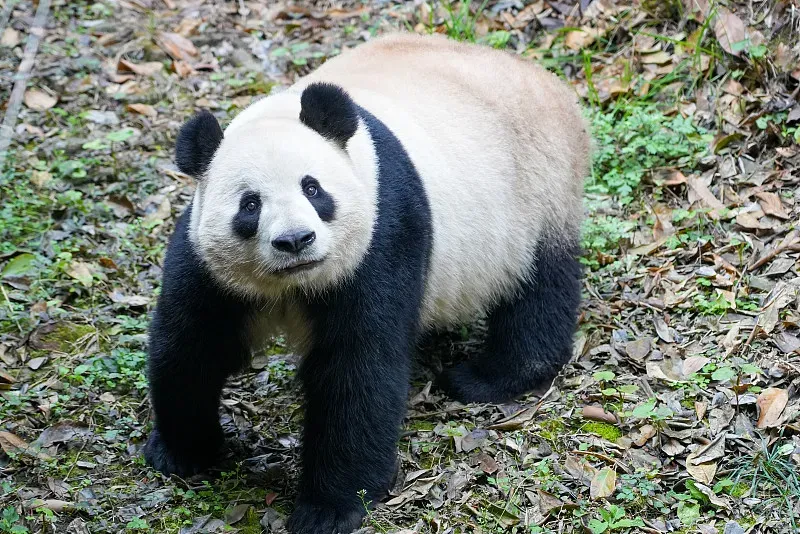
The panda enclosure at the Smithsonian National Zoo is quiet now. The bamboo has been removed. The pool is drained. The climbing structures — logs, platforms, and rope nets that generations of pandas used as beds, scratching posts, and vantage points — stand empty in the Washington humidity.
The silence is not just the absence of animal sounds. It is the absence of a 50-year continuity that began with a diplomatic handshake between Richard Nixon and Zhou Enlai, survived the Cold War’s final decades, weathered every shift in Sino-American relations, and ended, quietly, on a November morning in 2023 when a FedEx cargo jet lifted off from Dulles Airport carrying the last Smithsonian pandas back to China.
Phase One: Ling-Ling and Hsing-Hsing (1972-1999)
The story begins where all modern panda diplomacy begins: with Pat Nixon’s comment about a pack of Panda-brand cigarettes at the Great Hall of the People in Beijing, February 1972. Zhou Enlai, hearing the First Lady’s enthusiasm for the animal on the cigarette tin, reportedly said, “I will give you two.” Two months later, on April 16, Ling-Ling (a female, name meaning “darling little girl”) and Hsing-Hsing (a male, “bright star”) arrived at the National Zoo.
The public response was immediate and overwhelming. Approximately 20,000 visitors lined up on the first day of public viewing. The first year saw over one million visitors — the largest attendance surge in the zoo’s 83-year history. The Washington Post ran daily panda updates. The pandas appeared on the covers of Time and Newsweek. Ling-Ling and Hsing-Hsing were not zoo animals — they were celebrities, diplomats, proof that the Cold War could produce something other than tension.
For 20 years, the zoo attempted to breed them. Ling-Ling conceived five times. Five times, the pregnancy failed — miscarriages, stillbirths, cubs that died within days. The reproductive failures, heartbreaking for keepers and the public, yielded critical scientific knowledge about panda reproductive biology — knowledge that would eventually enable the successful captive breeding programs of the 2000s.
Ling-Ling died in 1992 at age 23. Hsing-Hsing died in 1999 at age 28. Their bodies were preserved by the Smithsonian’s taxidermy department and remain in the museum’s collection — the only giant pandas in any American museum. The empty enclosure after Hsing-Hsing’s death was the first moment in 27 years that Washington had no pandas. It would not remain empty long.
Phase Two: Mei Xiang, Tian Tian, and the Panda Family (2000-2023)
In December 2000, under the new research loan model (no longer gifts), Mei Xiang (beautiful fragrance) and Tian Tian (more and more) arrived at the Smithsonian — a young breeding pair whose genetic compatibility had been calculated through the International Studbook system described in our article on the panda studbook and genetic management.
On July 9, 2005, Mei Xiang gave birth to Tai Shan — the first panda cub born at the National Zoo to survive beyond infancy. His name, chosen by online vote from over 200,000 submissions, means “peaceful mountain.” The nation celebrated. Tai Shan’s first public appearance drew a queue that wrapped around the zoo. His every sneeze, documented by the panda cam, became news. When he returned to China in 2010 under the return clause explored in our article on overseas-born panda homecomings, his departure was covered by every major American network, and his crate was escorted to the airport by a police motorcade normally reserved for visiting heads of state.
Three more cubs followed: Bao Bao (2013, “precious treasure”), Bei Bei (2015, “precious”), and Xiao Qi Ji (2020, “little miracle”). Each birth was a national event. Each return to China was a national farewell. The Smithsonian’s Giant Panda Cam, a 24-hour live video feed of the panda enclosure, became one of the most-viewed animal webcams in the world — peaking during cub season when millions of viewers watched newborns nurse and nap.
Did You Know? Xiao Qi Ji’s name — “Little Miracle” — was chosen during the COVID-19 pandemic, when his birth in August 2020 felt like a small defiance of a difficult year. Approximately 135,000 people voted in the naming contest, and the name reflected the collective sentiment: that against the backdrop of a global crisis, a baby panda was a small, bright, improbable gift.
The Science: What the Smithsonian Gave Back
Beyond the celebrity and the crowds, the Smithsonian’s panda program produced research that shaped global panda conservation. The zoo’s reproductive science team — working closely with Chinese colleagues — made fundamental contributions to understanding panda estrus cycles, optimizing artificial insemination timing, and developing the urinary hormone monitoring protocols now used at panda breeding facilities worldwide.
The zoo’s veterinary team pioneered neonatal panda care techniques — temperature-controlled incubators, specialized feeding formulas, 24-hour cub monitoring protocols — that dramatically increased cub survival rates both in Washington and, through knowledge transfer, at Chinese breeding centers.
The zoo’s behavioral research team advanced the science of panda enrichment — the toys, puzzles, and environmental complexity that keep captive pandas mentally stimulated. The enrichment techniques developed at the Smithsonian are now standard practice globally, as explored in our article on the science of environmental enrichment for pandas.
The Farewell
The pandas’ departure in November 2023 was not unexpected — the loan agreement’s expiration had been approaching for years — but it was nonetheless wrenching. Fans traveled from across the country for a final glimpse. The zoo held “Panda Palooza,” a nine-day farewell celebration that drew record crowds. The panda cam, which had been running since 2000, shut down. The bamboo supplier for the zoo, which had been delivering 600 kilograms of bamboo weekly for 23 years, made its final delivery.
The empty enclosure became a symbol — of the conditional nature of panda diplomacy, of the shifting currents of Sino-American relations, of the fact that a half-century of presence does not guarantee permanence.
As of 2026, negotiations between the Smithsonian and the China Wildlife Conservation Association are ongoing. The enclosure is maintained in ready condition. The bamboo supplier remains on standby. The panda cam infrastructure remains in place, its URLs still active, transmitting a blank screen. The empty enclosure is not a tomb — it is a waiting room.
Frequently Asked Questions
Will pandas return to the Smithsonian?
Negotiations are ongoing, and the Smithsonian has publicly stated its strong desire to host pandas again. Whether pandas return depends on the diplomatic relationship between the United States and China — pandas in Washington have historically been present when relations are warm and absent when they are not. The empty enclosure may fill again, or it may remain a memorial to what was.
Where are Mei Xiang, Tian Tian, and Xiao Qi Ji now?
All three are at the Bifengxia Base in Sichuan, China. Mei Xiang and Tian Tian, both in their mid-twenties, are in the geriatric care program at Bifengxia — their health monitored, their diet adjusted for age, their enclosure designed for comfort rather than breeding. Xiao Qi Ji, now a young adult, is being evaluated for integration into the Chinese breeding program.
What was the Smithsonian’s greatest scientific contribution to panda conservation?
The development of reliable urinary hormone monitoring to predict the extremely narrow panda fertility window — 24-72 hours annually — is considered the zoo’s most consequential scientific contribution. This technique, developed through years of daily urine collection from Mei Xiang, is now standard practice at panda breeding facilities worldwide and has directly enabled the captive breeding successes of the past two decades.
The panda enclosure at the Smithsonian is empty but not abandoned. The keepers still check it daily. The cameras are still powered. The bamboo supplier’s phone number is still posted on the zoo’s bulletin board. The 50-year story is not over. It is paused — waiting, like Washington itself, for the diplomatic currents to shift and the pandas to come home.
Dr. Mei Zhang
Spatial Ecology & Conservation Editor
Spatial ecologist using GIS, remote sensing, and satellite imagery to study panda population dynamics, habitat connectivity, and conservation effectiveness at landscape scales.
View full profile →Tags in this article
Questions readers often ask
When did the first pandas arrive at the Smithsonian?
Ling-Ling and Hsing-Hsing arrived at the Smithsonian National Zoo on April 16, 1972, as a gift from China following President Nixon's historic visit. They were the first pandas in the United States since the 1940s, and their arrival triggered a nationwide 'panda-monium' — long queues, record zoo attendance, and intense media coverage that established the panda as a permanent fixture of Washington D.C. culture.
How many panda cubs have been born at the Smithsonian?
Five cubs have been born at the Smithsonian, all to Mei Xiang and Tian Tian: Tai Shan (2005), Bao Bao (2013), Bei Bei (2015), and Xiao Qi Ji (2020). An additional cub was stillborn in 2012. Tai Shan was the first panda cub born at the National Zoo to survive beyond infancy. Xiao Qi Ji, born during the COVID-19 pandemic, was the last.
Why did the pandas leave the Smithsonian in 2023?
The loan agreement for Mei Xiang, Tian Tian, and their surviving cub Xiao Qi Ji expired in 2023. Despite extensive negotiations between the Smithsonian and the China Wildlife Conservation Association, the agreement was not renewed. The precise reasons are diplomatic rather than logistical — part of the broader evolution of Sino-American panda diplomacy discussed in our article on [80 years of panda diplomacy](/library/culture/panda-diplomacy-80-years-history/).