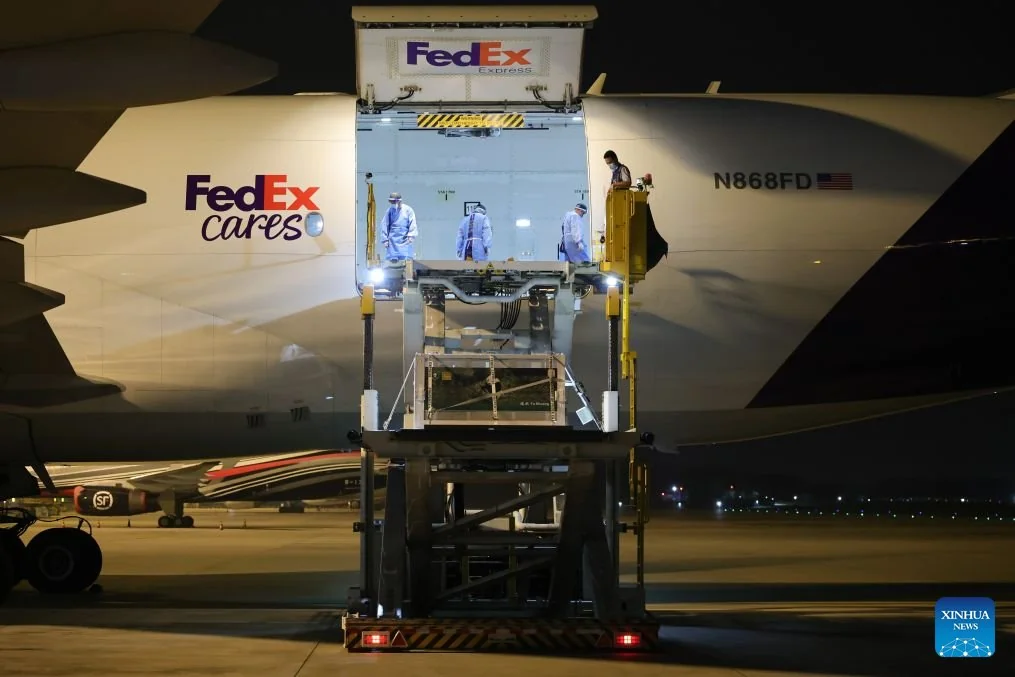
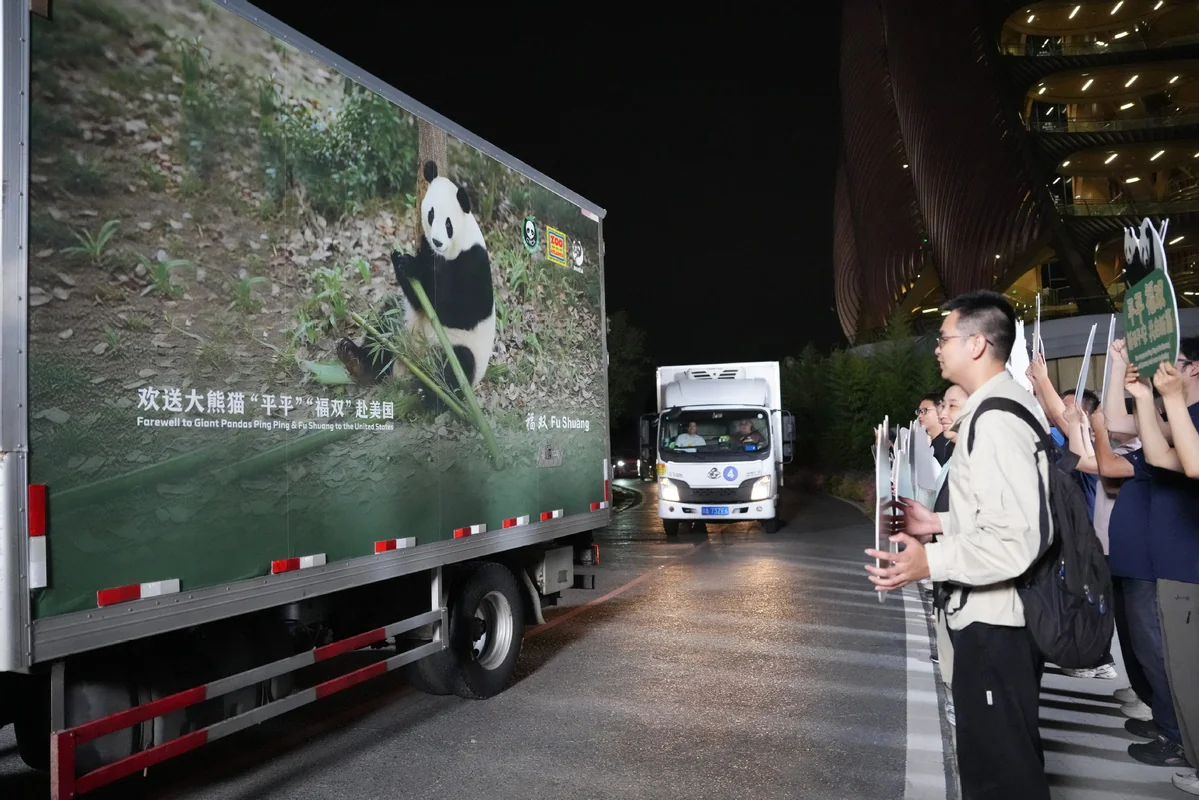
At 02:55 on September 27, 2026, giant pandas Ping Ping (平平, studbook 1230) and Fu Shuang (福双, studbook 1250) departed from Chengdu Shuangliu Airport aboard a charter flight bound for Zoo Atlanta, opening a 10-year period of residence in the United States. Before departure, the Chengdu Research Base of Giant Panda Breeding held a send-off ceremony for the two pandas.
Ping Ping is male, born March 17, 2020, with large, dark, boldly defined eye rings; he is stocky and agile, an especially good climber who often rests in the forks of tree branches. Fu Shuang is female, born October 18, 2020, with a fluffy tuft of fur on her crown and a full, slightly protruding forehead; she is round, quick-reacting, and highly adept at locating the enrichment food keepers hide around the enclosure.
To safeguard the intercontinental transport, the Chinese team prepared a detailed plan — fresh bamboo shoots, bamboo, apples and emergency medicines loaded, transport-acclimation training completed in advance, and cabin temperature and humidity held within the pandas' comfort range during the flight. A senior American veterinarian and keeper accompanied the pair on board, while two batches of Chinese veterinarians and keepers traveled ahead to the zoo to prepare.
After arrival, Ping Ping and Fu Shuang will undergo quarantine and inspection; Chinese personnel will stay at the zoo through the quarantine period to conduct stress-adaptation and behavior training.
Since December 2025, Chinese experts and Zoo Atlanta had held a series of online and offline meetings on the enclosure upgrade, with Chinese technical guidance defining standards for facilities, husbandry, food supply and health care. In mid-September 2026, Chinese experts carried out on-site acceptance of the remodeled exhibits: expanded indoor activity space, new climbing frames, rock platforms and pools, and an upgraded monitoring system. Atlanta's Chengdu-like climate allows local, year-round fresh harvest of edible bamboo.
The two pandas arrive after more than 20 years of China–Zoo Atlanta conservation cooperation: over 30 joint research projects, 50+ papers, and 5 litters with 7 cubs surviving — the best result of China's giant panda breeding cooperation with Europe and the United States.