A Day in the Life: The Emotional Bond Between Keepers and Pandas
Key Fact: Panda keepers are not simply feeders and cage-cleaners — they are the primary sensory bridge between captive pandas and their environment. Research shows that pandas handled by their primary keeper exhibit 30-40% lower cortisol levels than pandas handled by unfamiliar staff, can distinguish their keeper’s voice from other humans, and, in documented cases, actively seek physical proximity to keepers they trust. This bond, built on daily repetition across years, may be the least-studied but most consequential factor in captive panda welfare.
Key Takeaways
-
Panda keeping is physically demanding, scientifically rigorous labor. The romanticized image of cuddling pandas obscures the reality: daily bamboo processing, enclosure cleaning, behavioral monitoring, and medical training that requires years to master.
-
The keeper-panda bond is real and measurable. Pandas exhibit measurably lower stress levels with familiar keepers, recognize individual voices and scents, and form attachments that meet criteria for a caregiving bond — one of the most significant cross-species relationships in modern zoology.
-
This bond drives conservation outcomes. Keepers who know individual pandas intimately catch health problems earlier, design better enrichment, and manage breeding introductions more successfully than those relying solely on standardized protocols. The emotional dimension of keeping is not a distraction from science — it is a prerequisite for it.
At 4:37 AM, the Bifengxia Panda Base is dark except for the fluorescent glow of the bamboo preparation shed. The air inside the shed carries the sharp, green scent of freshly cut arrow bamboo — a smell somewhere between cut grass and raw cucumber, with an undertone of wet earth from the stems that were harvested the previous afternoon in the base’s cultivation plots.
Inside the shed, a keeper we’ll call Zhang — he prefers not to give his full name, saying the pandas should be the story — is working through a pile of bamboo stalks taller than himself. His machete moves in a practiced rhythm: slice the stalk into 40-centimeter sections, strip the outer husk from the tender shoots, check each section for signs of fungal spotting or discoloration, discard any that don’t pass. By the time the first guests arrive at the base at 8:30 AM, Zhang will have processed 200 kilograms of bamboo. This is the part of panda keeping that nobody posts on social media.
He’s been doing this for eleven years — a career path explored in our guide on how to become a panda keeper.
Morning: The Bamboo Hours
Zhang’s morning is a three-hour sprint of quiet, repetitive labor. The bamboo that arrived the previous evening — harvested from the base’s own plantations, supplemented by contract farms in the surrounding villages — must be inspected, cut, washed, and delivered to each enclosure before the pandas wake.
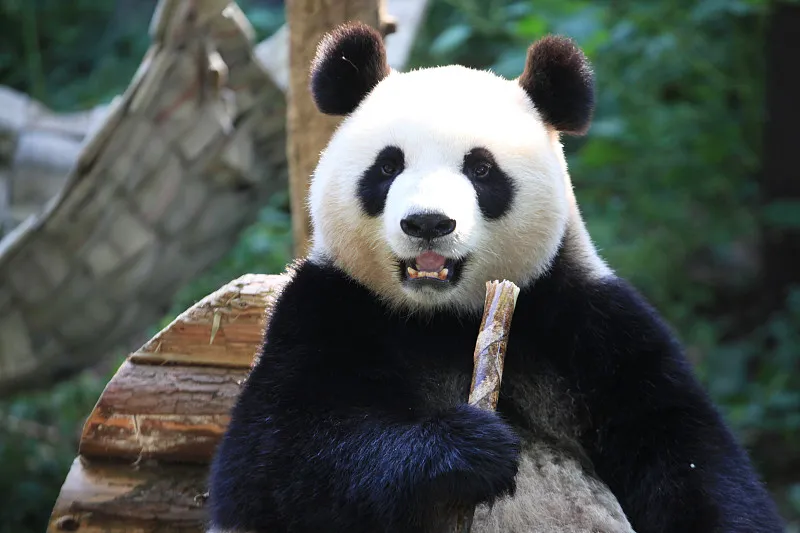
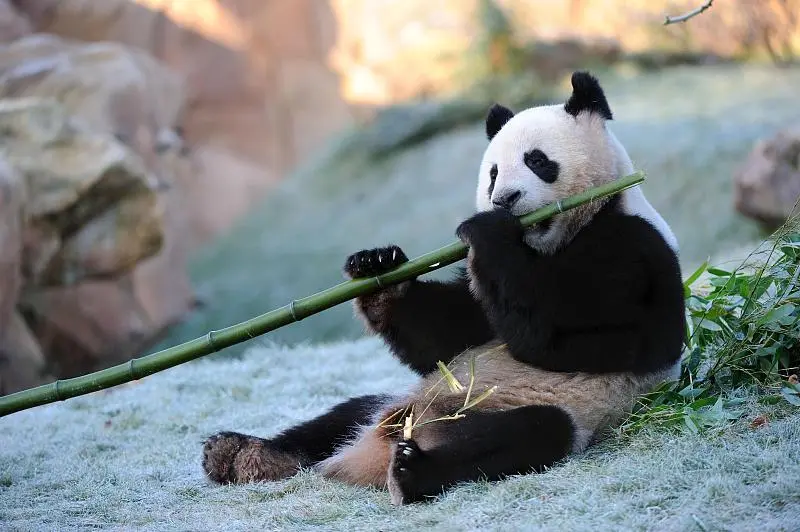
Pandas in captivity eat four to five times a day: early morning, mid-morning, early afternoon, late afternoon, and sometimes an evening snack. The first feeding is the most important — pandas emerge from sleep hungry, and the quality of that first bamboo delivery sets the tone for their entire day. Wilting stalks, bamboo cut too coarsely, or the wrong species (pandas have clear individual preferences between Bashania, Fargesia, and Phyllostachys species) can trigger food refusal that lasts for hours.
Zhang knows each animal’s preferences. The 14-year-old female in enclosure 7 prefers Fargesia robusta new shoots — the tender, pale-green tips that emerge in spring — and will ignore older, woodier stalks. The 6-year-old male in enclosure 12 is less discriminating but eats faster, wolfing through his bamboo in 45 minutes what takes other pandas two hours. The elderly male in enclosure 3, at 24 years old — roughly equivalent to a human in their early 70s — needs his bamboo cut into shorter, 20-centimeter sections because his teeth are too worn to handle longer stalks. This dental accommodation mirrors the geriatric care strategies discussed in our article on senior panda geriatric health.
The knowledge is granular, accumulated through years of daily observation. There is no manual for it.
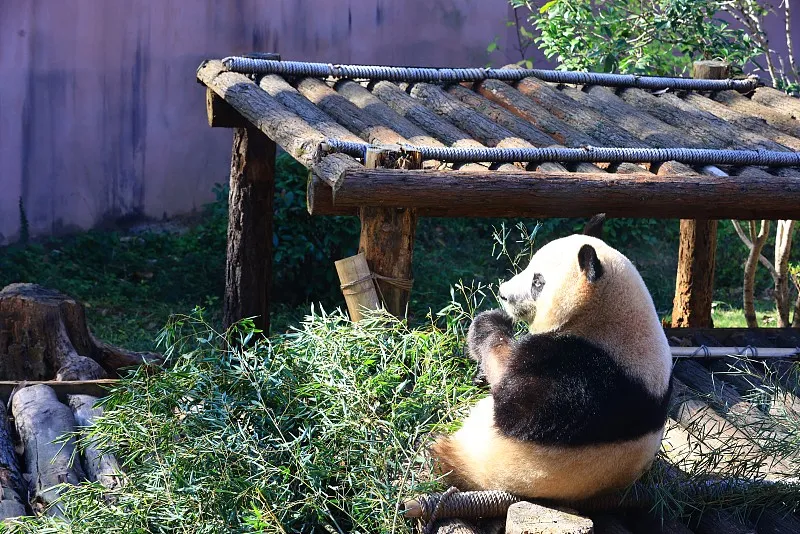
By 7:00 AM, the bamboo has been distributed. The pandas are eating — the soft, rhythmic crunch of mastication audible from the keeper corridor as each animal settles into its morning routine. Zhang walks the corridor slowly, checking each enclosure. He’s not just looking for uneaten bamboo; he’s reading the animals. A panda sitting with its back to the viewing window is normal. A panda pacing the enclosure perimeter, pausing, pacing again — that’s a sign of stress that requires attention. A panda lying on its back with all four paws in the air — that’s contentment, and Zhang allows himself a small, private smile when he sees it.
Mid-Morning: Medical Training and the Apple Bargain
Between 9:00 and 11:00 AM, the keeper’s role shifts from provisioner to medical collaborator. This is the behavioral training window — the period when pandas are awake, fed, and calm enough to participate in the non-invasive health checks that have become central to modern captive panda management.
The technique is called positive reinforcement training, and it operates on a simple principle: if a panda voluntarily offers a body part for examination, it receives a slice of apple or a piece of panda cake — the nutritional supplement biscuits discussed in our wowotou and panda cake nutrition guide. Over weeks and months, the panda learns to associate medical handling with reward, and the need for anesthesia — which carries risks for any large mammal — is dramatically reduced.
Zhang runs through the sequence with the female in enclosure 7. He approaches the barrier — a steel mesh with a small rectangular opening at panda-chest-height — and calls her name. She pads over, scenting the air. He holds up an apple slice.
“Paw,” he says in Mandarin. After a pause, she extends her left forepaw through the opening. Zhang gently grasps it, pressing his thumb against the main pad to check for abrasions, then examines each of the five true digits and the radial sesamoid — the pseudo-thumb discussed in our anatomy of the panda’s pseudo-thumb — for signs of swelling or injury. He releases the paw. She receives the apple slice and chews it with her head tilted slightly, a posture Zhang has learned signals satisfaction.
Next: “Ear.” She turns her head to present her left ear. Zhang examines the external auditory canal — pandas are prone to ear infections in humid Sichuan summers — and finds it clean. Another apple slice.
“Open.” She opens her mouth wide enough for Zhang to peer at her molars. Panda dental health is critical; worn or cracked teeth can lead to food refusal and rapid weight loss, and tooth wear patterns are examined more fully in our article on panda dental health and bite force. Her teeth look good. Another apple slice.
The entire examination takes four minutes and involves zero physical restraint, zero stress vocalizations, and zero anesthesia. This is the quiet triumph of behavioral training — a procedure that would have required four keepers, a dart gun, and a recovery period just 20 years ago is now completed by one person with a pocket full of apple slices.
Did You Know? The standard assumption is that zoo animals simply “tolerate” medical handling. But panda keepers report something different: after several years of positive reinforcement training, many pandas appear to enjoy these interactions. They approach the barrier voluntarily when their keeper arrives. They vocalize in greeting — the bleating “baa” sound explored in our guide to panda vocalizations — a sound associated with friendly social contexts in wild pandas. The line between “trained compliance” and “voluntary social interaction” grows blurry with time. These same health check techniques are explained for younger readers in our panda vet checkup guide.
Afternoon: Enrichment and the Art of Keeping a Panda Interested
The afternoon shift is about psychology. A panda that has eaten its fill by noon faces a long stretch of hours with nothing to do — and boredom in captive pandas manifests as stereotypic behavior: repetitive pacing, head-bobbing, excessive grooming. This is not a sign of poor care; it is a sign of an intelligent animal with insufficient stimulation.
Environmental enrichment — the deliberate introduction of novel objects, puzzles, scents, and challenges into the enclosure — is the keeper’s primary tool against boredom. At the Chengdu Research Base, the enrichment team maintains a rotating inventory of approximately 200 enrichment items: bamboo puzzle feeders, ice blocks with embedded fruit, burlap sacks scented with cinnamon or peppermint oil, PVC tubes with hidden apple slices, and heavy-duty rubber balls too large for a panda to bite through.
Zhang sets up the afternoon enrichment rotation. For the young male in enclosure 12 — energetic, curious, prone to dismantling enrichment objects within 20 minutes — he hangs a puzzle feeder from an overhead cable, forcing the panda to stand on its hind legs to reach it. The feeder is a perforated plastic cylinder containing apple pieces and bamboo shoots; the panda must rotate the cylinder with its paws to align the holes and release the treats. It’s a cognitive challenge disguised as a snack.
For the elderly male in enclosure 3, the enrichment is gentler: a burlap sack sprayed with dilute peppermint extract and placed in a patch of afternoon sun. The old panda sniffs the sack, rolls onto his back, and drapes it across his belly — a self-soothing behavior Zhang has documented in his observation logs. The difference in enrichment strategy between the young and old pandas reflects the wider principle from our article on environmental enrichment science: enrichment must be individually tailored to each animal’s age, physical capability, and cognitive status.
The work of enrichment is never finished. What interests a panda today may bore it tomorrow, and the enrichment team is in constant competition with the animals’ intelligence. At one facility, keepers discovered that a particular male had learned to recognize the sound of the enrichment cart’s wheels on the concrete corridor — and would begin anticipating novel enrichment items before they even appeared, reducing the element of surprise that makes enrichment effective. The keepers now rotate cart types and approach routes.
Evening: The Quiet Observation
The final shift begins at 4:00 PM as the base’s visitors stream toward the exit. The pandas, who have spent the tourist hours largely indifferent to the human audience beyond their enclosures, settle into their evening rhythms. Some nap. Some eat a final round of bamboo. Some simply sit, motionless, staring at a fixed point — a behavior that looks like meditation but is likely a form of sensory assessment, smelling the evening air as temperatures drop and new scents emerge from the cooling forest.
Zhang uses the evening hours for his observation log — a practice that dates back to the earliest days of scientific panda keeping. He records food intake (by weight), defecation frequency and consistency, social interactions (if any), unusual behaviors, and any signs of physical discomfort. These logs, maintained daily for every panda at every major Chinese facility, form what may be the most comprehensive longitudinal behavioral database for any captive mammal species — 30 years of daily records across hundreds of individual animals.
The logs have revealed patterns invisible to casual observation. Pandas at the Chengdu Base are more active on overcast days than on sunny days. They eat approximately 12% more bamboo during the week following a heavy rain, possibly because rain triggers new bamboo shoot emergence. They show a statistically significant increase in social vocalizations during the breeding season months of March through May, even among non-breeding individuals. These insights emerge only from patient, cumulative observation — the kind of work that cannot be automated or accelerated.
The Emotional Dimension: What Keepers Don’t Talk About
Ask a panda keeper about the emotional dimension of the job, and most will deflect to conservation talking points. Panda keeping is not about personal attachment, they’ll say; it is about species preservation. Every panda in captivity is a genetic asset, a potential contributor to the captive breeding population, a data point in the long project of understanding and protecting the species.
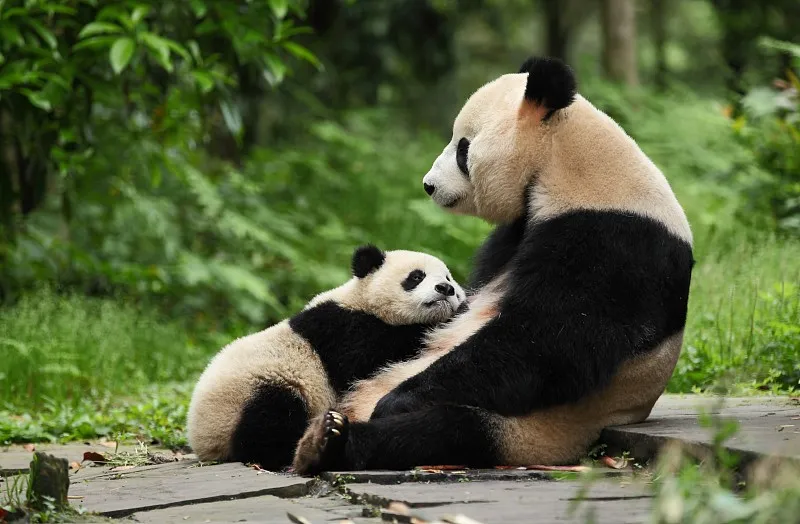
But watch a keeper during a cub separation — when a 12-month-old panda is removed from its mother’s enclosure for weaning — and the rational framework strains. The mother panda vocalizes — a high, keening sound that is not one of the 12 standard panda vocalizations described in ethology textbooks but something closer to a moan. The cub, in a separate enclosure, refuses food for the first 24 hours. The keeper knows this is necessary: extended maternal dependency reduces the captive breeding rate, and breeding rate determines the genetic viability of the population. The keeper also knows that the mother and cub are both, in this moment, suffering.
The emotional dimension of panda keeping rarely appears in scientific literature. But it surfaces in quieter ways: in the way keepers talk about “my pandas” rather than “the pandas in my enclosure,” in the careful detail with which they describe individual personalities, in the photographs they keep on their phones — not for public sharing but for private memory — of a panda they raised that has since been transferred to another facility or returned to China from overseas.
As examined in our article on the psychological healing power of pandas, the keeper-panda bond is bidirectional. Pandas recognize and respond to individual keepers. Keepers, in return, form attachments that resemble — in the language of attachment theory — a caregiving bond: the deep, protective attachment that a human caregiver forms with a dependent being. That this bond crosses species lines should not surprise us. But the depth of the bond — the quiet grief of a cub departure, the private joy of a successful medical training session, the accumulation of eleven years of daily observation that Zhang carries in his memory — remains, for the most part, unspoken and unsung.
Frequently Asked Questions
How many pandas does a single keeper care for?
Typically, a keeper is responsible for 1-3 adult pandas, depending on the animals’ needs. Cubs require more intensive care, and during cub season (July-September), the ratio shifts to approximately one keeper per mother-cub pair. The workload is physically demanding enough that most keepers work six-day shifts followed by one day of rest during peak seasons.
Do keepers ever enter the enclosure with the pandas?
With adults, almost never — adult pandas are too strong and unpredictable for direct contact to be safe. Keepers interact through barrier mesh during feeding and medical training. The exception is with very young cubs (under six months), who may be handled directly for health checks and supplementary feeding, always with at least two keepers present.
What is the salary for a panda keeper in China?
Starting salaries at major bases range from approximately 5,000-8,000 RMB ($700-$1,100 USD) per month for entry-level positions, which is modest relative to the physical demands and educational requirements. Senior keepers with 10+ years of experience earn approximately 12,000-18,000 RMB per month. Keepers consistently describe their motivation as vocational rather than financial — they do the work because they want to work with pandas, not because the salary is competitive.
This article draws on interviews with current and former keepers at the Chengdu Research Base of Giant Panda Breeding, Bifengxia Base, and Everland (South Korea), behavioral observation records from the China Conservation and Research Center, and published research on human-animal attachment in zoo settings.