Table of contents (9 sections)
Ran Ran’s Journey to Belgium: One Panda, a 55-Year Friendship, and the Lei Lei Dynasty
Key Fact: In October 2026, China announced that Ran Ran (冉冉, #1062) — a nine-year-old female born at the Hetaoping Wild-Training Base and the wild-trained mother of twins — would travel to Pairi Daiza in Brugelette, Belgium. She replaces Hao Hao (好好, #741), who returned home in December 2025 for medical care, and becomes the companion of the resident male Xing Hui (星徽, #745), her cousin. The move keeps alive a China–Belgium panda partnership that began in 2014 and was announced in the year the two countries marked 55 years of diplomatic relations.
Key Takeaways
-
Ran Ran is not a typical “diplomatic panda.” She was raised through a wild-training programme, was once a candidate for release into the wild at Guanshan in Jiangxi, and gave birth to wild-sired twins in 2023. Her arrival in Belgium brings a panda with genuine wild-behaviour experience into a zoo setting.
-
Her role is explicitly non-breeding. The official announcement stressed that there is no breeding plan between Ran Ran and Xing Hui — the two are cousins, and her job is companionship and cooperative research. This is a quiet but important shift in how panda loans are framed.
-
The Belgium story is now three generations deep. Hao Hao and Xing Hui arrived in 2014; their cub Tian Bao was the first panda born in Belgium in 2016, followed by the twins Bao Di and Bao Mei in 2019. Ran Ran’s arrival extends a programme that has already produced three Belgian-born pandas.
The Panda Who Is Going to Belgium
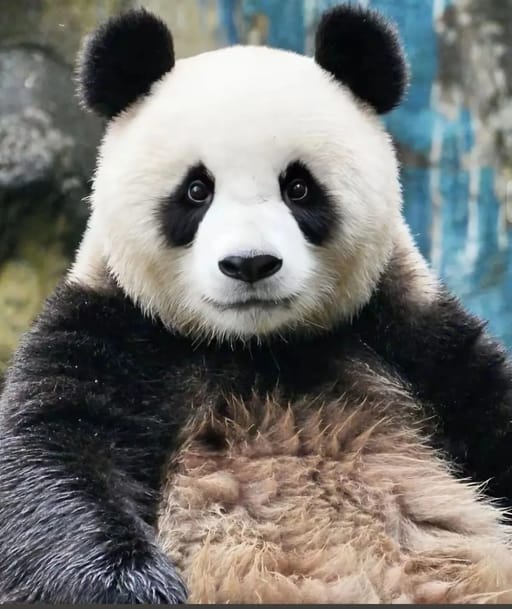
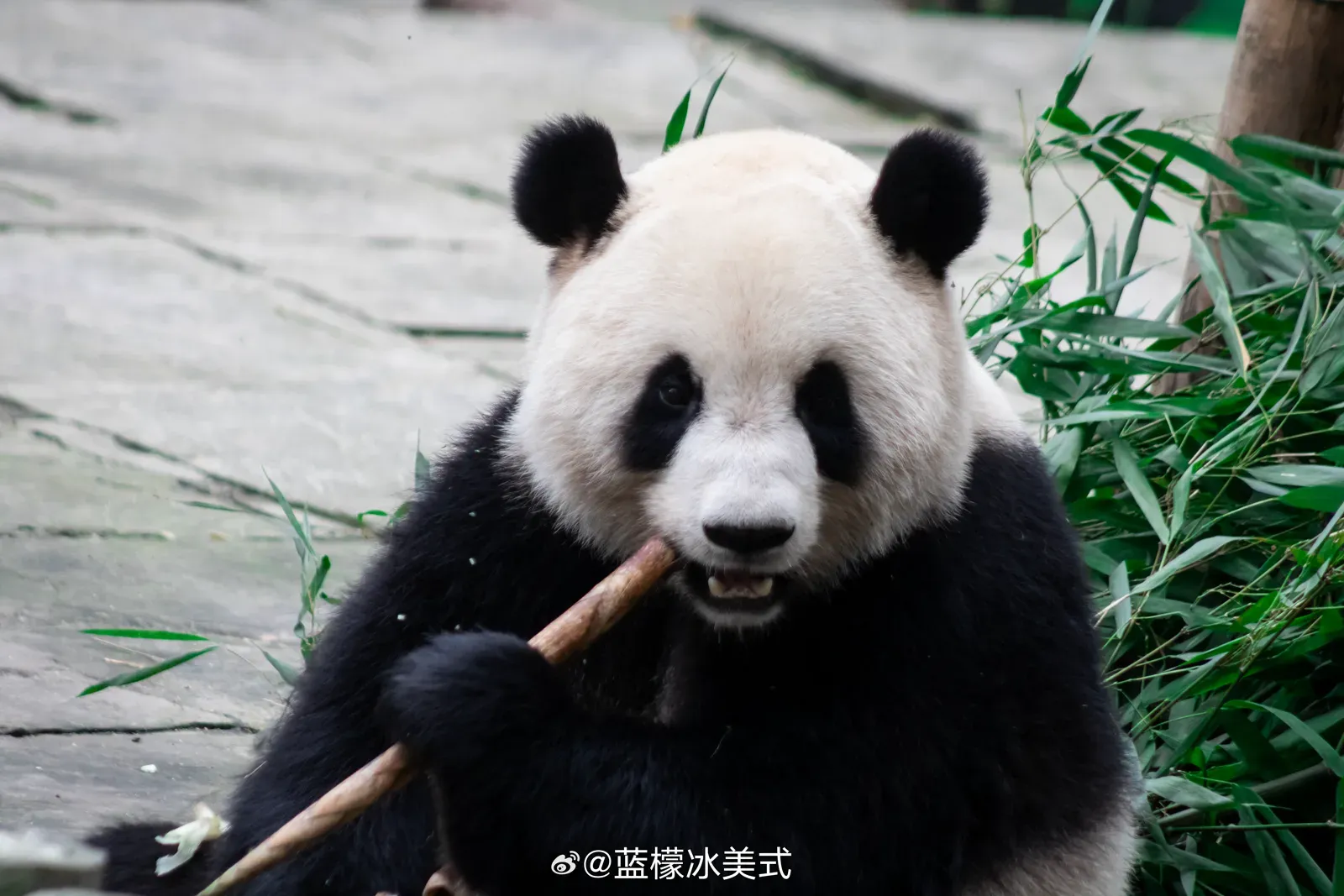
Ran Ran was born on May 31, 2017, at the Hetaoping Wild-Training Base — the CCRCGP facility in Wolong built around the idea that a cub raised with minimal human contact, alongside its mother, might one day survive in the wild. At just 33 days old she moved with her mother, Long Xin (龙欣, #516), into a phase-one wild-training enclosure. Fans would later call her a “richly coloured beauty” (浓颜系) — crisp black-and-white fur, a round face, long legs — but her early life was less about looks than about learning to be a panda.
By December 2019 she had completed the programme and was named one of the candidates for the giant-panda reintroduction trial at the Guanshan National Nature Reserve in Jiangxi, alongside Pan Wang and Yun Er. Reintroduction — releasing wild-trained, captive-born pandas into their historical range — is one of the most ambitious tools in panda conservation: it can rebuild a wild population, and the data gathered along the way helps scientists understand why pandas vanished from so much of their former range. In the end the release did not go ahead, and Ran Ran returned to Hetaoping. But the training left its mark; keepers at Bifengxia later described her as alert, cautious and unusually tidy.
Then came the chapter that made her famous. In 2023, during a wild-mating (野外引种) assignment — pairing a managed female with a wild male to bring fresh genes into the captive population — Ran Ran gave birth, on August 22, to twins: a male, Long Ye (龙野), and a female, Feng Ye (凤野). A wild-conceived birth is rare and genetically precious. The pair became known in panda circles as especially agile climbers. In 2024 the family moved to the Ya’an Bifengxia Base, and in late July 2025 the twins were weaned and separated from their mother.
That timing matters. When the Belgium announcement came in October 2026, Ran Ran had been living apart from her cubs for only a little over a year.
Why Belgium Needs Her
To understand why Ran Ran is going, you have to go back to February 2014, when Hao Hao and Xing Hui arrived at Pairi Daiza. It was a national event: the Belgian prime minister met them at the airport, and some 2,000 people gathered at the zoo gates to welcome them.
Over the next eleven years, Hao Hao became one of Europe’s most successful panda mothers. On June 2, 2016, she gave birth to Tian Bao — the first giant panda ever born in Belgium. In 2019 came the twins Bao Di and Bao Mei. Each birth turned Pairi Daiza into a national and European news story; the name “Tian Bao” (“Heaven’s Treasure”) was chosen through a public vote, a gesture that framed the cub as belonging to both countries.
But in March 2025 Hao Hao began to show recurring moderate ascites — a build-up of fluid in the abdomen. Chinese and Belgian experts stayed in close contact, and a Chinese veterinary team travelled to Belgium for joint diagnosis and treatment. As her condition required sustained specialist care, the two sides agreed to bring her home early. On December 4, 2025, she landed in Chengdu and moved to the Wolong Shenshuping base for quarantine and recovery. Later reports described her rebuilding her strength — dismantling the wooden platform in her enclosure, a familiar sign of a healthy, busy panda.
That left Xing Hui alone at Pairi Daiza — a seventeen-year-old male without his long-time companion. The zoo marked his birthday with a cake of cornflour, soybean flour, rice flour and egg, but the absence was obvious. In September 2026 the two countries signed a supplementary agreement to send one more adult female. That female is Ran Ran.
| Panda | Role at Pairi Daiza | Key dates |
|---|---|---|
| Hao Hao (好好, #741) | Founding female; mother of three Belgian-born cubs | Arrived Feb 2014; returned to China Dec 4, 2025 |
| Xing Hui (星徽, #745) | Founding male; still resident | Arrived Feb 2014 |
| Tian Bao (天宝) | First panda born in Belgium | Born Jun 2, 2016; returned to China Dec 2024 |
| Bao Di (宝弟) | Twin cub | Born Aug 8, 2019; returned to China Dec 2024 |
| Bao Mei (宝妹) | Twin cub | Born Aug 8, 2019; returned to China Dec 2024 |
| Ran Ran (冉冉, #1062) | Incoming companion to Xing Hui | Announced Oct 2026 |
Pairi Daiza: A Belgian’s “Chinese Dream”
The panda programme exists because of one man’s obsession. Eric Domb, founder of Pairi Daiza, spent years and a reported €8 million building a 5,300-square-metre panda house and a 45,000-square-metre “Chinese Garden” — the largest Chinese-style garden in Europe. A red archway on the path bears three characters: 中国梦, “the Chinese Dream.”
Domb has described the panda as an “interface” — a creature that connects rigorous conservation science with ordinary human affection, and Chinese philosophy with Western visitors. “When a child looks into a panda’s eyes,” he has said, “whether it is a real panda or a statue, there are no borders left — only wonder.”
In March 2014, during a state visit to Belgium, President Xi Jinping and King Philippe attended the opening of the panda house and planted a magnolia to mark the friendship. A decade on, the tree has grown past three metres and flowers more each year. Domb wrote to Xi afterwards with a photograph of it; the reply noted that the magnolia had “bloomed full” and that the two pandas were “growing strong.”
Pairi Daiza’s China story did not stop with pandas. In May 2025, three golden snub-nosed monkeys from the Qinling Mountains arrived under a ten-year agreement, making the zoo the second in Europe to hold the species.
The Lei Lei Dynasty
Ran Ran’s journey is also a family story. She belongs to the Lei Lei family, named for a wild female rescued in 1992 in Leibo County, Sichuan, after a bamboo wound to her paw became badly infected. To save her life, vets amputated the limb. She survived — and, with only one front paw, became one of the most remarkable mothers in the captive population.
Lei Lei’s early years as a mother were hard: for six years she cycled through oestrus without conceiving, until hormonal treatment helped her give birth in 2000, at eleven years old. Between 2000 and 2005 she raised five litters and six surviving cubs. Her daughters inherited her toughness — and her descendants now span the world.
| Daughter | Studbook | Notable descendants |
|---|---|---|
| Long Xin (龙欣) | 516 | Ran Ran (#1062); Le Bao / Yuan Xin (#841) → Fu Bao (#1284) |
| Zhu Yun (竹韵) | 549 | a daughter (studbook 734) living in Singapore |
| Na Na (娜娜) | 568 | Xing Hui (#745), resident at Pairi Daiza |
| Yuan Yuan (圆圆) | 587 | the “gift to Taiwan” panda; Yuan Zai (#864) at Taipei Zoo |
Because Long Xin is the mother of both Ran Ran and Le Bao (乐宝 / 园欣, #841) — the male at Everland in South Korea and father of Fu Bao (福宝, #1284) — Ran Ran is Fu Bao’s paternal aunt. And because Na Na is also a daughter of Lei Lei, the male waiting for her in Belgium, Xing Hui, is her cousin. One rescued, one-pawed panda, three decades on, has family in Seoul, Taipei, Singapore, Australia, Malaysia — and now Brussels.
From Gift to Science: The Evolution of Panda Diplomacy
Ran Ran’s move belongs to the third era of China’s “panda diplomacy,” which has passed through three broad phases:
| Era | Period | Model | Scale |
|---|---|---|---|
| State gifts | 1957–1985 | Pandas given as gifts of friendship | 23 pandas to 9 countries |
| Short-term loans | 1986–1993 | Exhibition loans tied to cultural events | Short, event-driven |
| Research cooperation | 1994–present | 10-year research loans; cubs return to China | 69 pandas at 26 zoos in 20 countries |
Under the current model, China retains ownership of every panda abroad, and cubs born overseas return to China, usually at three to four years old. The partners cooperate on breeding, veterinary care, research, public education and habitat protection. By 2026, China had research partnerships with 26 zoos in 20 countries; those programmes had produced 45 surviving litters and 73 cubs.
The model has had real conservation consequences. In 2016, the IUCN downgraded the giant panda from “Endangered” to “Vulnerable” — a milestone that international cooperation helped make possible. As academician Wei Fuwen put it, China’s research capacity in captive breeding, disease control and reintroduction “rose markedly” through international partnership.
55 Years, and a New Chapter
2026 marks 55 years since China and Belgium established diplomatic relations on October 25, 1971. China is Belgium’s third-largest trading partner outside the EU; Belgium is China’s seventh-largest within it. Every fifth international visitor to Belgium’s landmark sites comes from China, and the Beijing–Brussels air route has carried more than two million passengers in twenty years.
The pandas are the warmest thread in that relationship. From Hao Hao and Xing Hui’s arrival in 2014, to Tian Bao in 2016, the twins in 2019, the cubs’ return in 2024, Hao Hao’s medical return in 2025, and now Ran Ran’s westward journey — twelve years of panda news that mirror a friendship through births and farewells, illness and care.
Ran Ran leaves behind two cubs she raised in the wild-sired tradition, and arrives to a cousin, a devoted keeper team, and a Chinese garden that blooms a little more each spring. She is expected to stay until the cooperation term ends (reported as 2029; pending official confirmation) — by which time China and Belgium will mark 58 years of relations.
Follow Ran Ran’s Story
Ran Ran is about to become the newest chapter in a family that has been telling China’s story abroad for three decades. Follow her profile for updates as she prepares for Belgium — and explore the wider Lei Lei family, from Xing Hui in Brugelette to Fu Bao in Sichuan, to see how one rescued panda’s descendants became a global network of ambassadors.
Explore more: Ran Ran’s profile, Pairi Daiza, and the Ya’an Bifengxia Base.
Related reading
- Panda Diplomacy: 80 Years of History — how gift pandas became research loans, the model behind Ran Ran’s move to Belgium.
- Fu Bao and Korea’s Panda Fever — the story of Ran Ran’s niece, Fu Bao, at Everland in South Korea.
- Overseas-Born Pandas Return to China — what happens when Belgian-born cubs like Tian Bao come home.

Pandacommon Editorial Team
Pandacommon is a global knowledge project documenting giant pandas, habitats, and conservation history. We combine verified data with engaging storytelling to build a deeper archive of the panda world.
Learn more about our mission →Tags in this article
Questions readers often ask
Who is Ran Ran and why is she going to Belgium?
Ran Ran (冉冉, studbook 1062) is a female giant panda born May 31, 2017 at the Hetaoping Wild-Training Base in Wolong, Sichuan. Under a supplementary agreement signed in September 2026 between the China Wildlife Conservation Association and Pairi Daiza, she is to travel to Belgium to join the resident male Xing Hui (#745). She takes the place of Hao Hao (#741), who returned to China in December 2025 for medical care, and keeps the China–Belgium panda programme running under a term reported as running to 2029.
Why did Hao Hao leave Belgium?
Hao Hao (好好, #741) arrived at Pairi Daiza in February 2014 and lived there for eleven years, giving birth to Tian Bao in 2016 and to the twins Bao Di and Bao Mei in 2019. From March 2025 she began to show recurring moderate ascites (fluid in the abdomen). Chinese and Belgian experts consulted continuously and a Chinese veterinary team travelled to Belgium for joint diagnosis and treatment. Because she needed sustained specialist care, the two sides agreed to bring her home early; she arrived in Chengdu on December 4, 2025 and went to the Wolong Shenshuping base for quarantine and recovery.
Will Ran Ran and Xing Hui breed?
No. The announcement explicitly carried the note that there is no breeding plan between Ran Ran and Xing Hui. Xing Hui's mother Na Na (#568) and Ran Ran's mother Long Xin (#516) are both daughters of the matriarch Lei Lei (#374), which makes the two pandas cousins. Ran Ran's role at Pairi Daiza is companionship and cooperative research, not reproduction.
What is the Lei Lei family?
Lei Lei (雷雷, #374) was a wild-born female rescued in 1992 in Leibo County, Sichuan, after a severe paw injury required amputation. Despite having only one front paw, she became one of the most important 'hero mothers' in the captive population, giving birth to six surviving cubs between 2000 and 2005. Her daughters — including Long Xin (#516), Zhu Yun (#549), Na Na (#568) and Yuan Yuan (#587) — and their descendants now live across South Korea, Belgium, Singapore, Australia, Malaysia and Taipei, forming one of the widest family networks in panda conservation.
When will Ran Ran arrive in Belgium, and how long will she stay?
The move was announced in October 2026 and pre-departure preparations were described as ongoing; a precise arrival date has not been confirmed publicly. Ran Ran and Xing Hui are expected to remain at Pairi Daiza until the cooperation term ends — reported as 2029, though the official announcement did not specify a term.