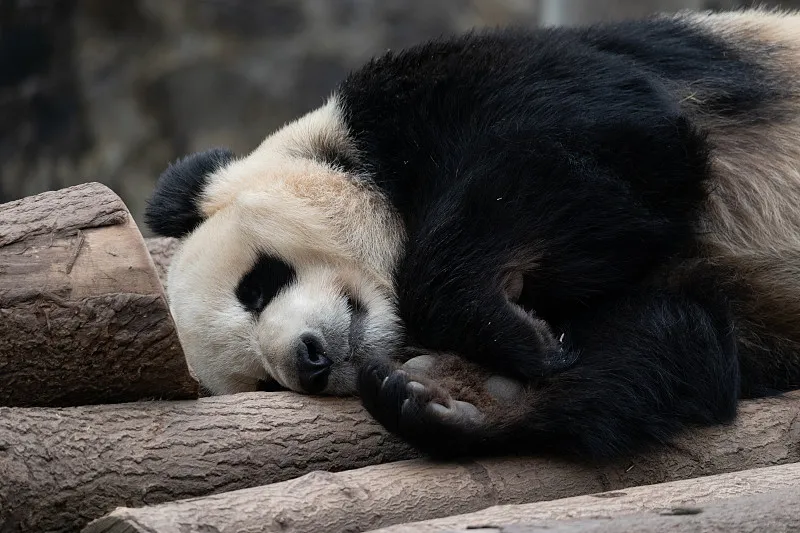
Panda Poo Facts: The Fun Truth About Giant Panda Poop 💩
💩 Key Fact: A giant panda poops between 30 and 40 times every single day — and unlike most animal poop, panda droppings don’t smell bad! Because pandas eat 99% bamboo, their poop smells more like fresh-cut grass or dried hay than like typical animal waste. Scientists collect panda poop to identify individual pandas by their DNA, check their health, and even count how many wild pandas live in a forest. Panda poop is one of the most important research tools in panda conservation!
Key Takeaways
-
📊 Pandas poop 30-40 times daily because bamboo is very hard to digest — only about 17-20% gets absorbed.
-
🔬 Panda poop is a scientific goldmine. Researchers extract DNA from droppings to identify individual wild pandas, check their health, and track populations — all without ever seeing the panda!
-
♻️ Panda poop can be recycled into paper! The undigested bamboo fibers make a rough, natural paper used for souvenirs and art projects.
Hello, young poop detective! 🕵️ You’re about to discover the funniest, most surprising facts about one of the most important — and least smelly — topics in panda science: panda poop!
I know what you’re thinking: “Eww, poop!” But stick with me — by the end of this article, you’ll be a panda poop expert, and you’ll understand why scientists get SO excited about panda droppings. Ready? Let’s dive in!
Fact #1: Panda Poop Doesn’t Smell Bad! 👃
This is the biggest surprise about panda poop. Most animal poop smells terrible because meat and rich food create strong-smelling waste. But pandas eat almost nothing but bamboo — no meat, no fish, no burgers!
The result? Fresh panda droppings smell a bit like:
- 🌿 Fresh-cut grass
- 🍂 Dried hay
- 🍵 Green tea
- 🌲 Damp forest leaves
Keepers at panda bases say panda poop has a faint, earthy smell that’s actually quite pleasant. Some compare it to the smell of a garden after rain. No other large animal produces poop that smells this nice!
Why does this matter? Because panda poop doesn’t smell bad, scientists can collect it without wearing gas masks or holding their noses. This makes fieldwork much more pleasant — imagine hiking through a beautiful bamboo forest, collecting samples that smell like fresh grass instead of like… well, poop!
Fact #2: Pandas Poop 30-40 Times a Day! 🚽
Let’s do the math:
- You probably poop once a day. Maybe twice.
- A cow poops about 15 times a day.
- A panda poops 30 to 40 times a day!
That’s almost once every 30 minutes while they’re awake! Why so much? Because bamboo is extremely hard to digest. A panda’s digestive system can only extract about 17-20% of the nutrients from bamboo. The other 80% passes right through — and out — as poop.
Think of it this way: if you ate a whole pizza but your body could only absorb the cheese from one slice, you’d have to eat a LOT of pizza to get enough energy. That’s what pandas do — except with bamboo instead of pizza, and 30-40 bathroom trips instead of one!
The poop itself looks like compressed sawdust or dried grass clippings. It’s fibrous, greenish-yellow, and shaped into oval pellets about the size of a kiwi fruit. Wild panda droppings often contain visible bamboo fragments — you can literally see the undigested plant material.
Fact #3: Scientists LOVE Panda Poop 🔬
Panda poop is one of the most valuable research tools in wildlife science. A single dropping contains:
DNA: By extracting DNA from poop cells, scientists can identify exactly which panda left the dropping — like a fingerprint, but smellier! This is how researchers count wild panda populations without ever seeing the animals themselves. Our article on scat DNA and panda census methods explains the whole amazing process.
Health information: The bacteria in panda poop reveal whether the panda is healthy, stressed, or sick. Different bacterial communities — the panda gut microbiome — grow in healthy versus sick pandas, and scientists can detect these differences by analyzing droppings.
Diet details: By looking at the bamboo fragments in the poop under a microscope, researchers can identify exactly which bamboo species the panda ate — and even which parts of the bamboo (shoots, leaves, or stalks).
Hormones: Panda poop contains hormones that indicate whether a female is pregnant, whether a panda is stressed, and whether the animal is ready to mate. This information is critical for managing the captive breeding program.
Counter-intuitive fact! 🧠 Most people think studying wild animals requires seeing them — catching them, tagging them, following them. But panda researchers have learned MORE about wild pandas from their poop than from direct observation. Infrared cameras and radio collars help, but poop is the one data source that’s available for every panda, every day, without disturbing the animal at all.
Fact #4: Panda Poop Can Be Recycled Into Paper! ♻️
This might be the coolest panda poop fact of all. Because panda poop is mostly undigested bamboo fiber, the material can be processed into paper!
At research centers in Sichuan, panda droppings are collected, sterilized (cleaned of bacteria), pressed, and dried to create a rough, natural paper with a beautiful speckled texture. This “panda poop paper” is used for:
- 📝 Souvenir notebooks
- 🎨 Art projects
- 🖼️ Handmade greeting cards
- 🏷️ Special certificates
Yes — you can literally write a letter on recycled panda poop! The paper has a warm, natural tone and a slightly textured surface that makes every sheet unique. It’s one of the most unusual recycled products in the world, and it’s a great example of how nothing in nature is truly wasted.
[Image: A sheet of handmade panda poop paper next to a fresh bamboo stalk, showing the speckled texture and natural color of the recycled material]
Fact #5: Panda Poop Changes With the Seasons 🍂
Just like pandas eat different parts of bamboo in different seasons, their poop changes appearance throughout the year:
| Season | What Pandas Eat | What the Poop Looks Like |
|---|---|---|
| 🌸 Spring | Tender bamboo shoots | Darker green, softer, higher water content |
| ☀️ Summer | Bamboo leaves | Medium green, leafy texture |
| 🍂 Autumn | Mix of leaves and stalks | Yellowish-green, more fibrous |
| ❄️ Winter | Tough bamboo stalks | Pale yellow, very fibrous and dry |
Seasoned researchers can tell what time of year a poop sample comes from just by looking at it — no lab analysis needed! This seasonal variation also helps scientists understand how panda diets shift through the year and whether wild pandas have enough bamboo diversity to survive.
Fact #6: Panda Cubs Poop Differently! 🍼
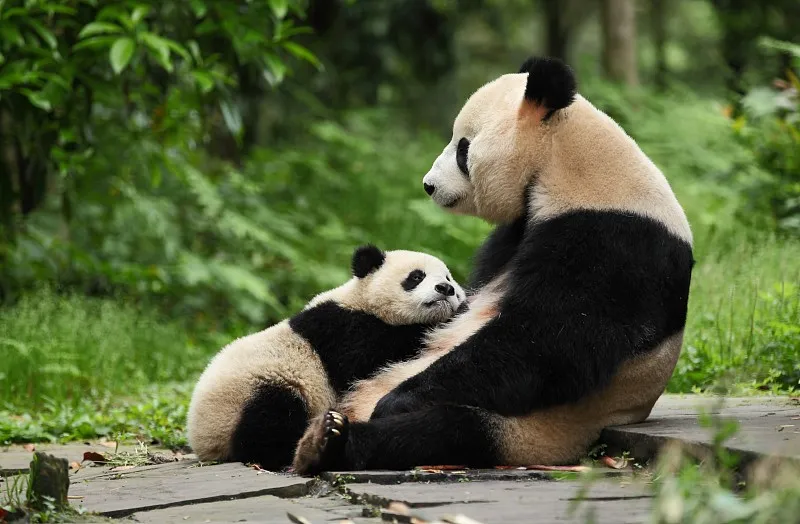
Baby pandas don’t poop on their own for the first few weeks of life! Newborn cubs can’t eliminate waste without help, so the mother panda licks the cub’s belly and bottom to stimulate pooping and peeing. This is common in many baby mammals — puppies and kittens need the same help from their mothers.
The mother panda also eats the cub’s waste during the first few weeks. This might sound gross, but it serves an important purpose: keeping the den clean and preventing the smell from attracting predators. In the wild, a pile of poop outside a den is basically a sign saying “VULNERABLE BABY PANDA HERE” — and mother pandas instinctively prevent that from happening.
By about 2-3 months old, panda cubs can poop on their own, and their droppings start looking more like adult panda poop — just smaller!
Frequently Asked Questions
Is panda poop dangerous to touch?
In the wild, researchers wear gloves when collecting panda poop — not because the poop itself is dangerous, but because wild panda droppings can contain parasites or bacteria that could make humans sick. In captivity, where pandas receive regular veterinary care and deworming, the poop is much safer — though keepers still wear gloves as a standard hygiene practice.
How big is a single panda poop?
A single dropping is about the size of a kiwi fruit or a small potato — roughly 5-8 centimeters (2-3 inches) long. Considering how much pandas eat (12-38 kilograms per day), the individual droppings are surprisingly small. The secret is quantity: many small droppings rather than a few large ones.
Do pandas ever eat their own poop?
No — unlike rabbits and some other herbivores, pandas do not practice coprophagy (eating their own droppings to extract more nutrients). This is actually surprising, because many animals with inefficient digestion DO eat their poop to get a second pass at the nutrients. Pandas apparently find their bamboo sufficiently nutritious with just one trip through the system.
Key Takeaways
-
💩 Panda poop is uniquely un-smelly because pandas eat 99% bamboo, producing droppings that smell more like fresh grass than typical animal waste.
-
🔬 Panda poop is a scientific treasure. A single dropping contains DNA, health data, diet information, and hormone levels — everything scientists need to study wild pandas without disturbing them.
-
♻️ Panda poop gets a second life as recycled paper, proving that even the least glamorous part of panda biology can be useful and interesting.
Next time you’re in a garden or park, find some fresh grass clippings and give them a sniff — that’s approximately what panda poop smells like! And if you ever get the chance to visit a panda base, ask about their poop-recycling program. You might just see panda poop paper being made! 🐼📄