๐Ÿผ Kids

Nature Detective: How to Spot Panda Tracks in the Wild

Become a panda detective! Learn to read the clues pandas leave behind โ€” footprints in the mud, scratch marks on trees, half-eaten bamboo stalks, and the famous panda poop that scientists use to track wild pandas. Every forest is full of animal clues if you know what to look for!

โฑ๏ธ 4 min read
kids level
5 tags
Cover image for Nature Detective: How to Spot Panda Tracks in the Wild โ€” a giant panda related article on Pandacommon
๐Ÿ“‘ Table of Contents (6 sections)

Key Takeaways

  • 1 Panda footprints have a special extra toe print โ€” from their pseudo-thumb!
  • 2 Chewed bamboo tells a story โ€” the angle of the bite marks reveals which direction the panda was facing!
  • 3 Panda poop is the BEST clue โ€” scientists can even identify WHICH panda left it by DNA!

Nature Detective: How to Spot Panda Tracks in the Wild ๐Ÿ”๐Ÿผ

๐Ÿ” Put on your detective hat! Weโ€™re going into the bamboo forest to find clues left behind by giant pandas. Pandas are shy and hard to see in the wild โ€” but they leave LOTS of evidence! Letโ€™s learn to be panda detectives!

Key Takeaways

  1. ๐Ÿพ Panda footprints have a special extra toe print โ€” from their pseudo-thumb!

  2. ๐ŸŽ‹ Chewed bamboo tells a story โ€” the angle of the bite marks reveals which direction the panda was facing!

  3. ๐Ÿ’ฉ Panda poop is the BEST clue โ€” scientists can even identify WHICH panda left it by DNA!

Clue #1: Footprints in the Mud ๐Ÿพ

After rain, the forest floor is soft and muddy โ€” perfect for leaving footprints! A panda track looks like this:

Front paw: Five round toe pads arranged in an arc, with a large kidney-shaped main pad. On the INSIDE of the print, thereโ€™s a small extra mark โ€” this is where the pandaโ€™s special pseudo-thumb pressed into the mud! No other bear leaves this extra thumb print. Our article on the pandaโ€™s pseudo-thumb explains how this amazing โ€œsixth fingerโ€ works!

Back paw: Longer and narrower than the front paw, with five toe pads and a longer main pad. The back paw print doesnโ€™t have the pseudo-thumb mark.

Size: About 10-15 centimeters wide โ€” as big as a grown-upโ€™s hand! If you find tracks this big, youโ€™ve found panda prints!

Detective tip: Look at the spacing between footprints. Short spacing (close together) means the panda was walking slowly, probably eating. Long spacing means the panda was moving faster โ€” maybe heading somewhere specific!

Clue #2: Bamboo Bite Marks ๐ŸŽ‹

Pandas are MESSY eaters! They leave behind chewed bamboo stalks that tell a story:

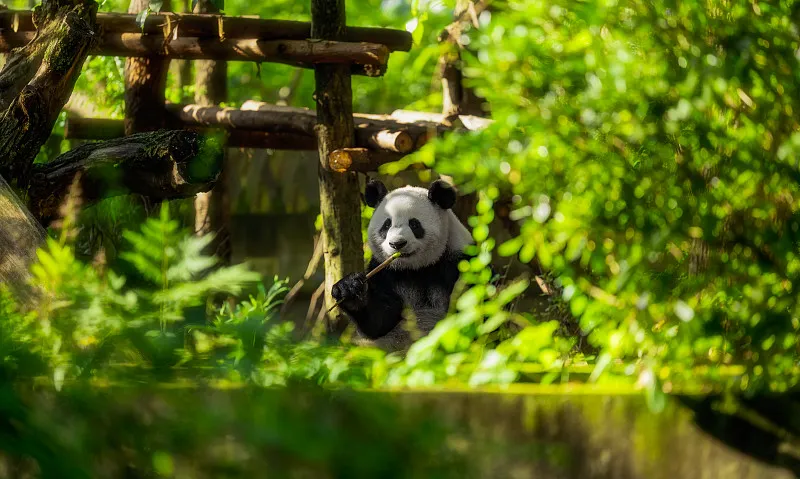
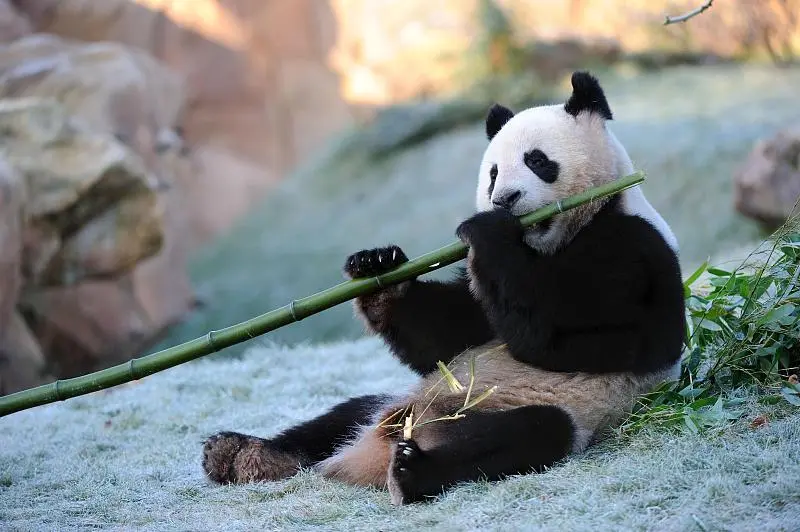
Striped stalks: Pandas use their front teeth to strip the tough outer layer off bamboo before eating the tender inside. Half-eaten stalks with the outer layer peeled away are a SURE sign a panda has been eating here!

Angle of the bite: The angle of the bite marks shows which direction the panda was facing while eating. Pandas hold bamboo diagonally across their mouths, so the bite marks are at an angle!

Freshness: Fresh bamboo bites are bright green and moist. Older bites turn brown and dry. Very fresh bites mean a panda might be nearby!

Detective tip: Count how many half-eaten stalks you find. Lots of stalks = a panda spent a long time eating here. Just a few = the panda was just passing through!

Clue #3: Panda Poop! ๐Ÿ’ฉ

Yes, poop is a clue โ€” and itโ€™s the BEST one! Our article on panda poop facts has the full story, but hereโ€™s what a panda detective needs to know:

What to look for: Oval pellets about the size of a kiwi fruit, greenish-yellow, full of bamboo fibers. They donโ€™t smell bad โ€” pandas eat only bamboo, so their poop smells a bit like fresh-cut grass!

What it tells you: Fresh poop (still moist and warm-ish) means a panda was here very recently. Dry poop means the panda was here days ago. The COLOR of the poop tells you what the panda was eating โ€” dark green = bamboo shoots (spring!), yellowish = bamboo stalks (winter!).

DNA detective work: Scientists can extract DNA from panda poop to identify exactly WHICH panda left it! One dropping contains the pandaโ€™s complete genetic identity โ€” like a fingerprint, but smellier!

Detective tip: Wild pandas poop 30-40 times a day โ€” so if youโ€™re in panda territory, youโ€™ll find LOTS of clues!

Clue #4: Scratch Marks on Trees ๐ŸŒณ

Pandas use trees as message boards! They leave scratch marks and scent marks to communicate with other pandas:

Scratch marks: Deep claw grooves in tree bark, usually 1-2 meters above the ground โ€” about chest-height for a panda standing on its hind legs. These marks say โ€œI was here!โ€

Scent marks: Dark, waxy stains on tree trunks โ€” pandas rub their scent glands against trees to leave chemical messages. Our article on panda senses and smell explains how pandas read these โ€œscent-messagesโ€!

Detective tip: Measure the height of the scratch marks. Higher marks usually mean a bigger panda โ€” adult males leave the highest marks, especially when they do the famous โ€œhandstandโ€ scent-marking!

Your Panda Detective Checklist โœ…

When youโ€™re searching for panda clues, look for:

  • ๐Ÿพ Footprints with the extra thumb mark
  • ๐ŸŽ‹ Bamboo stalks with peeled outer layers
  • ๐Ÿ’ฉ Oval greenish droppings (donโ€™t touch โ€” just look!)
  • ๐ŸŒณ Scratch marks on tree trunks at panda-chest-height
  • ๐Ÿฆจ Dark scent marks on trees

Found all five? Congratulations โ€” a panda was definitely here!


Your Panda Detective Challenge: Next time youโ€™re in a park or forest, look for animal clues! Can you find footprints? Chewed plants? Animal droppings? Every animal leaves evidence โ€” and now you know how to read the pandaโ€™s clues! ๐Ÿพ๐Ÿ”๐Ÿผ

๐Ÿผ

Pandacommon Editorial Team

Pandacommon is a global knowledge project documenting giant pandas, habitats, and conservation history. We combine verified data with engaging storytelling to build the world's most comprehensive panda knowledge base.

Learn more about our mission โ†’

Article Tags

tracksdetectiveforestobservationnature

Frequently Asked Questions

What do panda footprints look like?

Panda footprints are distinctive: the front paw print shows five toe pads and a large main pad, with a small extra impression on the inside where the pseudo-thumb presses into the ground. The back paw print is longer and narrower. Panda tracks are about 10-15 centimeters wide โ€” roughly the size of an adult human hand. In soft mud or snow, the claw marks are visible at the tips of the toe impressions.

How can you tell how old a panda track is?

Fresh tracks have sharp, clean edges. After rain, the edges soften. After several days, leaf litter and debris accumulate in the impression. Very old tracks are barely visible, smoothed by weather. Rangers learn to estimate track age by feel and appearance โ€” a skill developed through years of field experience.

Related Articles

Cover image for "A Panda Cub's First Year: From Pink Mouse to Black-and-White Ball"
๐Ÿผ Kids ๐Ÿผ kids

A Panda Cub's First Year: From Pink Mouse to Black-and-White Ball

Follow the amazing journey of a baby panda through its first year of life! From a tiny, pink newborn the size of a butter stick to a fluffy, bamboo-munching one-year-old, discover all the incredible changes that happen in just 12 months.

1 panda
cub-development baby-panda growth +2
Read article
Cover image for "Meet the Berlin Twins: Meng Xiang and Meng Yuan's German Adventures"
๐Ÿผ Kids ๐Ÿผ kids

Meet the Berlin Twins: Meng Xiang and Meng Yuan's German Adventures

In 2019, Berlin Zoo celebrated the birth of its first-ever panda twins โ€” Meng Xiang and Meng Yuan! These two brothers became instant celebrities in Germany. Follow their adorable adventures from tiny pink newborns to playful, bamboo-munching youngsters!

berlin twins germany +2
Read article
Cover image for "Design Your Very Own Panda Mascot"
๐Ÿผ Kids ๐Ÿผ kids

Design Your Very Own Panda Mascot

Ever dreamed of creating the next Bing Dwen Dwen? Learn the secrets of mascot design and create YOUR own panda mascot โ€” with a name, a backstory, and a special superpower!

design mascot creative +2
Read article

Latest Articles

View all โ†’
Cover image for "How Much to Adopt a Panda? Corporate Sponsorship and CSR Guide"
Culture ๐Ÿ“š general

How Much to Adopt a Panda? Corporate Sponsorship and CSR Guide

Panda adoption and corporate sponsorship programs fund millions in conservation annually. This article explains how panda adoptions work, what they cost, what sponsors receive in return, and how corporate panda partnerships function as both conservation funding and brand strategy.

adoption sponsorship corporate +2
Read article
Cover image for "ZooParc de Beauval and Yuan Meng: France's Intimate Panda Love Affair"
Culture ๐Ÿ“š general

ZooParc de Beauval and Yuan Meng: France's Intimate Panda Love Affair

When Yuan Meng was born at ZooParc de Beauval in 2017 โ€” the first panda cub ever born in France โ€” it was a national event. First Lady Brigitte Macron became his godmother. Millions of French visitors have since made the pilgrimage to the Loire Valley to see him. This article tells the story of France's panda program and the cub who became a French cultural phenomenon.

france beauval yuan-meng +2
Read article
Cover image for "How to Become a Panda Keeper: More Than Just Shoveling Poo"
Featured
Culture ๐Ÿ“š general

How to Become a Panda Keeper: More Than Just Shoveling Poo

Becoming a panda keeper is statistically harder than gaining admission to many elite universities โ€” annual acceptance rates at the Chengdu Research Base are below 5%. This article explores the education, physical demands, emotional resilience, and daily realities of panda keeping, featuring interviews with keepers who describe their work as 'the most difficult, least glamorous, and most meaningful job in animal care.'

career keeper job +2
Read article

Explore More in the Library

Discover more articles about giant pandas, their biology, conservation, and cultural significance.