How to Build a Panda Mansion: Zoo Enclosure Design Secrets 🏠🐼
🏗️ Have you ever wondered what makes the perfect panda home? It’s not just a room with bamboo! Panda enclosures are carefully designed by architects, scientists, and keepers to keep pandas healthy, happy, and busy. Let’s take an imaginary tour of a top-quality panda enclosure and discover all the clever design secrets!
Key Takeaways
-
🏔️ A great panda enclosure mimics the wild — with climbing trees, splash pools, cool temperatures, and plenty of bamboo.
-
🎮 Pandas need puzzles and toys — enrichment items that challenge their brains and prevent boredom.
-
🏥 Behind the scenes, there’s a whole panda hospital — with keepers, veterinarians, food preparation kitchens, and medical training areas.
Rule #1: Keep It Cool! ❄️
The most important rule of panda enclosure design: pandas HATE being hot!
Remember, wild pandas live in cool, misty mountain forests at high elevations. Their thick fur is designed for COLD weather, not hot weather. When temperatures rise above 25°C (77°F), pandas get stressed, eat less, and spend all day trying to cool down.
So every good panda enclosure has:
Air-conditioned indoor areas: In warm climates — like Singapore, where it’s hot ALL year — pandas spend most of their time in climate-controlled indoor spaces kept at a perfect 18-22°C (64-72°F). Even in Sichuan, where the Chengdu Base is located, summers are hot and humid, and pandas retreat to air-conditioned indoor enclosures during the hottest hours.
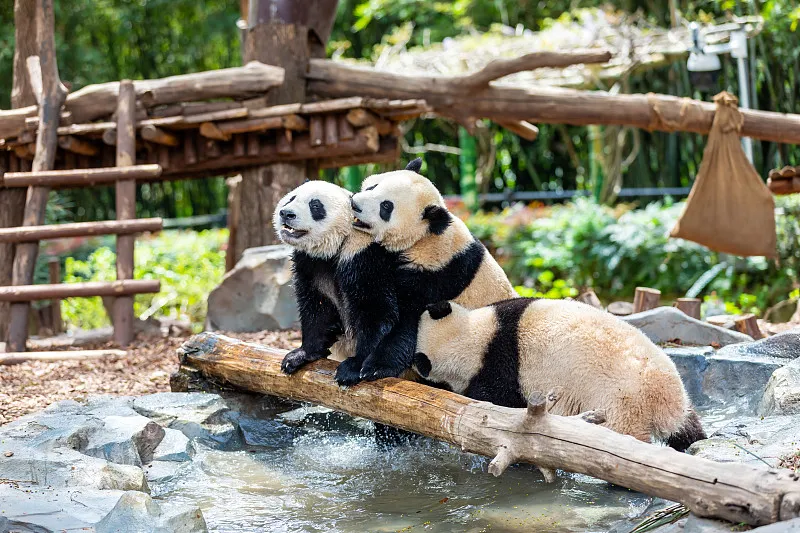
Cool pools and streams: Outdoor areas have splash pools where pandas can wade and cool off on warm days. Many pandas LOVE their pools! They’ll sit in the water, splash around, and sometimes even swim short laps.
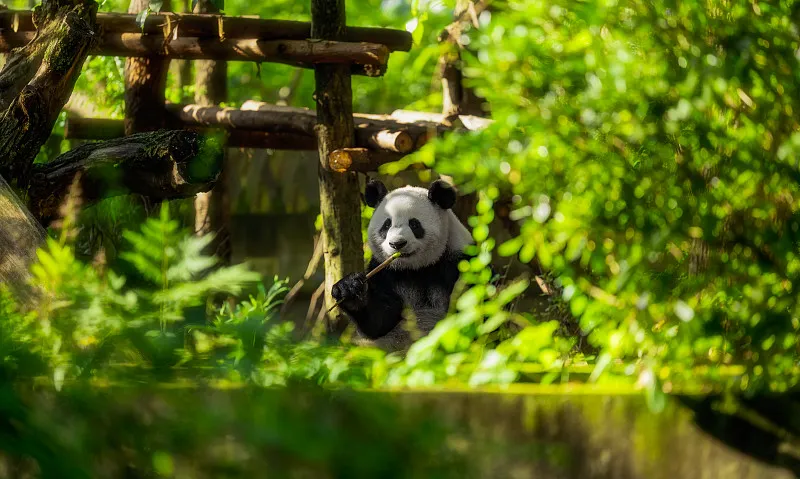
Shade, shade, and more shade: Outdoor enclosures are built with large trees, shade structures, and rocky overhangs that provide cool, dark spots for napping.
Ice treats: On the hottest days, keepers make giant ice blocks stuffed with apple slices, bamboo shoots, and other treats. The pandas lick and play with the ice blocks while cooling down!
Our article on how pandas beat the tropical heat explores these cooling strategies in detail!
[Image: A panda enclosure showing the indoor/outdoor design — a glass-walled indoor area with air conditioning visible, opening onto an outdoor area with climbing structures, a pool, and bamboo]
Rule #2: Make It a Natural Gym! 🧗
Pandas need exercise! In the wild, they climb trees, scramble up rocky slopes, and walk for hours through bamboo forests. In zoos, their enclosures need to provide similar challenges.
Climbing structures: Giant logs, wooden platforms at different heights, and sturdy tree trunks give pandas places to climb. Young pandas especially love climbing — they’ll race up a log, perch on the highest platform, and survey their kingdom!
Varied terrain: Good enclosures aren’t flat. They have gentle hills, rocky areas, and different ground surfaces — grass, dirt, wood chips — that give pandas’ feet and muscles a natural workout.
Swinging and hanging enrichments: Suspended tire swings, hanging puzzle feeders, and rope nets give pandas things to grab, pull, and climb on. At some zoos, pandas have learned to hang upside down from suspended logs!
The “panda-proof” rule: Everything in a panda enclosure must be incredibly sturdy. A 100-kilogram panda’s idea of “playing” can destroy normal zoo furniture in minutes. Panda-proof logs are bolted down. Panda-proof trees are wrapped in protective mesh at the base. Panda-proof pools have reinforced edges. Nothing in a panda enclosure is flimsy!
Rule #3: Bamboo, Bamboo, Everywhere! 🎋
A panda enclosure without bamboo is like a kitchen without food!
Fresh bamboo delivery: Pandas eat 12-38 kilograms of bamboo per day, and they’re PICKY. They prefer fresh bamboo — not wilted, not dried out. Many zoos have their own bamboo plantations or contract with local bamboo farmers to ensure daily deliveries of fresh, high-quality bamboo.
Bamboo species variety: Pandas prefer different bamboo species in different seasons, just like they would in the wild. Good zoos provide at least 2-3 bamboo species and rotate them seasonally.
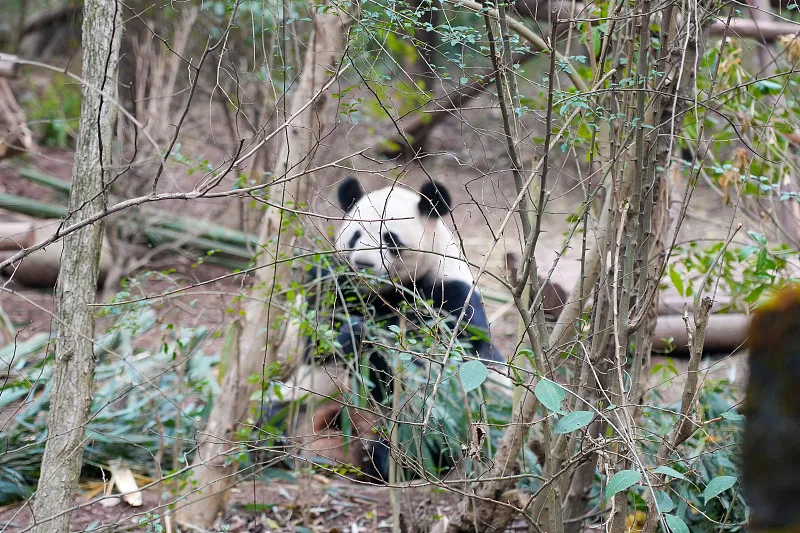
Planted bamboo in enclosures: Some enclosures have LIVE bamboo growing inside them. The pandas can eat it, hide in it, and use it for shade. It’s the closest thing to being in a real bamboo forest!
Rule #4: Toys, Puzzles, and Panda Brain Games 🧩
Pandas are SMART. In the wild, they solve problems every day — where to find the best bamboo, how to navigate their territory, how to interact with neighbors. In captivity, they need mental challenges too!
This is called environmental enrichment, and it’s a whole science explained in our article on panda enrichment and welfare.
Puzzle feeders: These are containers with hidden treats inside that pandas have to figure out how to open. A perforated plastic cylinder hanging from a rope — the panda has to rotate it with its paws to line up the holes and release the apple pieces inside. It’s like a panda Rubik’s cube!
Scent enrichment: Keepers spray different scents — cinnamon, peppermint, vanilla, dilute fruit extracts — on logs, rocks, and burlap sacks. Pandas investigate new scents with intense curiosity, sniffing and rubbing against the scented objects.
Novelty items: Boomer balls (heavy-duty rubber balls too large to bite), cardboard boxes (pandas love to destroy them), and ice blocks with embedded fruit all provide temporary entertainment. The key is ROTATION — what’s exciting today is boring tomorrow, so keepers constantly change the enrichment lineup.
Counter-intuitive fact! 🧠 A bored panda will start showing stereotypic behaviors — pacing back and forth, head-bobbing, excessive grooming. These aren’t signs of bad care — they’re signs of an intelligent animal with nothing to do. Enrichment is as important to panda welfare as food and shelter!
Rule #5: The Hidden Panda Hospital 🏥
Behind the scenes — in areas visitors never see — every panda enclosure connects to a whole medical facility:
The training wall: A section of the enclosure barrier with a small opening at panda-chest-height. Here, keepers use positive reinforcement training to teach pandas to voluntarily present body parts for examination — a paw for blood pressure checks, an ear for temperature taking, an open mouth for dental inspection. The panda’s reward? Apple slices! Our article on a day in the life of a panda keeper shows this training in action.
The food preparation kitchen: Where keepers wash and cut bamboo, prepare wowotou (panda cakes), and portion out apples, carrots, and supplements for each panda’s daily menu.
The veterinary suite: A fully equipped animal hospital with examination rooms, X-ray equipment, a laboratory for blood and fecal testing, and recovery areas for pandas recovering from illness or injury.
The nursery: Climate-controlled incubators for newborn cubs, with 24-hour keeper monitoring and specialized feeding equipment.
Design your own panda enclosure! Get a piece of paper and draw your dream panda home. Include: a cool indoor area, a splash pool, at least three climbing structures, a puzzle feeder, a shady nap spot, and LOTS of bamboo. Label each feature. Congratulations — you’re now a panda enclosure architect! 🏗️🐼