Bing Xing
冰星
26 years old
chengdu_base
Bing Xing is a male giant panda born on September 1, 2000 at Chengdu Research Base. He lived at Hangzhou Wildlife Park (...
View profilePanda archive
苏琳
Su Lin (苏琳, studbook 001) was the first giant panda ever brought to the United States. Captured in the wilds of Wenchuan, Sichuan in 1936 by American socialite Ruth Harkness, she was smuggled out of China disguised as a "peculiar Pekingese dog." After public exhibition at Chicago's Brookfield Zoo, she died in 1938 from pneumonia after swallowing a stick. Her mounted specimen is displayed at the Field Museum of Natural History in Chicago.
How to use this page
This page brings together the core facts, timeline, family graph, media, place journey, and related reading for Su Lin.
Profile snapshot
Birth date
January 1, 1936
Birth place
Unknown
Current location
Unknown
Status
Deceased
Studbook
#1Archive activity
2 updates · 0 media
Narrative
Start with a concise summary, then continue into the full narrative record for Su Lin.
Short version
Su Lin (苏琳, studbook 001) was the first giant panda ever brought to the United States. Captured in the wilds of Wenchuan, Sichuan in 1936 by American socialite Ruth Harkness, she was smuggled out of China disguised as a "peculiar Pekingese dog." After public exhibition at Chicago's Brookfield Zoo, she died in 1938 from pneumonia after swallowing a stick. Her mounted specimen is displayed at the Field Museum of Natural History in Chicago.
Su Lin (Chinese name: 苏琳, studbook number 001) is the name given to the first giant panda ever brought to the United States. This historic individual was a male cub captured in the wilds of Wenchuan County, Sichuan Province, China in 1936.
In 1936, American explorer Ruth Harkness traveled to China, determined to bring a live giant panda back to the United States — a feat her late husband William Harkness had attempted but failed to achieve. With the help of Chinese-American guide Quentin Young (杨昆廷) and his brother, Harkness’s expedition reached the mountainous forests of Wenchuan. There, on an expedition in November 1936, they discovered a newborn panda cub in a hollow tree, abandoned by its mother.
The cub, estimated to be less than 10 days old and weighing only 2.5 pounds (1,134 grams), was named “Su Lin” after Quentin Young’s wife. Harkness falsely declared the cub as a “peculiar-shaped Pekingese dog” on her travel documents, bribing海关 officials for just $2 to smuggle the animal out of China. She departed Shanghai aboard the SS McKinley President and arrived in San Francisco on December 18, 1936.
After quarantining in New York, Su Lin was sold to the Chicago Brookfield Zoo for $8,750 — a substantial sum that Harkness used to fund a return trip to China to find Su Lin a companion. The zoo exhibited Su Lin publicly, drawing over 40,000 visitors on opening day alone. Among the famous visitors was blind author Helen Keller, who came specifically to touch the panda.
On April 1, 1938, Su Lin died at approximately 18 months of age. The cause was pneumonia, triggered by a stick lodged in her throat. A necropsy revealed that Su Lin was male — not female as Harkness had assumed. His body was preserved as a taxidermy mount and is now housed at the Field Museum of Natural History in Chicago.
Meanwhile, Ruth Harkness had returned to China and acquired a second panda, also named “Mei Mei” (美美). When Mei Mei also died in 1942, autopsy similarly revealed it was male. Harkness later published a book about her adventures, “The Lady and the Panda,” and her pioneering expedition opened the door for Western zoos to acquire giant pandas for public exhibition.
Su Lin (studbook 001) holds the unique distinction of being the first entry in the international giant panda studbook. The 2005 San Diego-born panda Su Lin (studbook 603) was named in her honor, connecting modern conservation efforts to this historic individual.
Evidence
Key updates and milestone events tied to Su Lin.
Knowledge graph
See the core family graph first, then continue through related pandas and archive themes.
Family relationship data for Su Lin is being compiled.
Gallery
Images and video connected to Su Lin.
Images and video for Su Lin will be added later.
Connected archive
This is the next layer around the profile: place journey, current geography, reading context, and nearby panda records.
Location history information is not yet available for Su Lin.
Current location information is not available yet.
culture
The giant panda diaspora spans 58 locations across continents — from the misty bamboo forests of Sichuan to climate-controlled enclosures in Singapore, from mountain reserves that shelter free-ranging pandas to urban zoos that host celebrities. This article provides the definitive guide to panda geography: where they live, why they're there, what the distribution reveals about conservation history, and how the map has changed from 1869 to today.
culture
Panda merchandise has evolved from simple souvenirs into a sophisticated collector's market spanning vintage propaganda posters, limited-edition stamps, designer art toys, and luxury fashion collaborations. This article traces the history of panda collectibles through seven eras and explains what makes each category valuable.
culture
Long before the panda became a diplomatic tool or a conservation logo, it inhabited the Chinese imagination as a creature of mystery, virtue, and folklore. This article traces the panda's cultural journey through two millennia of Chinese history — from early textual references in the Shangshu and Shanhaijing, through Tang dynasty tribute records and Ming dynasty bestiaries, to its modern emergence as the visual shorthand for China itself.
culture
In 1936, American socialite Ruth Harkness traveled to China, captured a baby panda named Su Lin, and brought it to Brookfield Zoo — igniting the world's first 'panda fever.' This article tells the story of the woman, the cub, and the expedition that changed how the West saw pandas forever.
Browse nearby, regional, and fast-moving panda profiles related to this archive entry.
冰星
Bing Xing is a male giant panda born on September 1, 2000 at Chengdu Research Base. He lived at Hangzhou Wildlife Park (...
View profile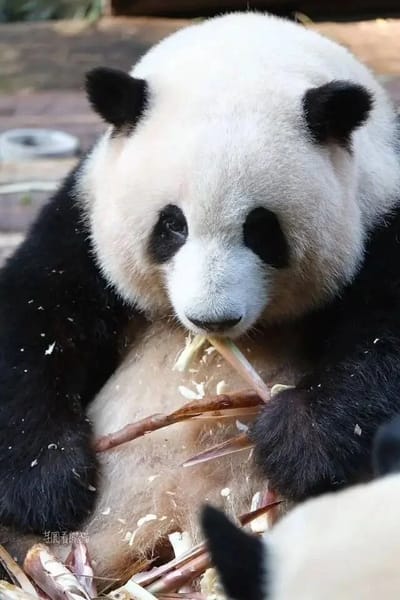
成和花
Cheng Hehua (Hua Hua, 花花), nicknamed "Fruit Lai" (果赖) because she responds to this Sichuan dialect call, is China's top...
Trust
Information on this page is compiled from conservation institutions, official panda records, media archives, and the wider PandaCommon research workflow.
No external reference links are attached yet.
Move from this profile into more pandas, place histories, and the wider library.
Explore over 762 panda profiles, place links, and archive journeys.