A Bao
阿宝
16 years old
Chengdu Research Base of Giant Panda Breeding
A Bao is a male giant panda born on September 7, 2010 at Madrid Zoo, the first giant panda conceived through artificial ...
View profilePlace archive
The Chengdu Research Base of Giant Panda Breeding, located in Chenghua District, Chengdu, Sichuan Province, is a world-leading ex situ conservation institution for *Ailuropoda melanoleuca* (giant panda) and *Ailurus fulgens* (red panda). Nestled at the eastern foothill of the Qionglai Mountains, a core giant panda habitat listed as a UNESCO World Heritage Site, the base works closely with Wolong National Nature Reserve, Qinling Giant Panda National Park, and the Chinese Academy of Sciences to implement species recovery programs aligned with IUCN Red List guidelines and CITES regulatory frameworks. As of 2024, the base hosts over 240 captive giant pandas, accounting for nearly 15% of the global captive population of the species. The base has established long-term research collaborations with global institutions including the Smithsonian Conservation Biology Institute, University of Edinburgh, San Diego Zoo, and Berlin Zoological Garden, focusing on areas such as panda reproductive biology, genetic diversity management,
Chengdu Research Base of Giant Panda Breeding is a CCRCGP-affiliated ex-situ conservation facility contributing to the coordinated captive breeding program that maintains genetic diversity across the global giant panda population.
How this page is organized
This page gathers the residents linked to Chengdu Research Base of Giant Panda Breeding, the key moments recorded here, nearby institutions, and the articles that add context.
Planning a visit
Opening hours
Mar–Oct 07:30–17:00 (morning tickets 07:30–12:00, afternoon 12:00–17:00, park clears 18:00); Nov–Feb 08:00–16:30 (morning 08:00–12:00, afternoon 12:00–16:30, clears 17:30)
Open year-round with no statutory closure. The No. 6 Giant Panda Villa, home to the well-known panda He Hua, is trialling Monday closures (national holidays excepted). The Panda Art Museum closes Mondays for maintenance.
Tickets
Full price CNY 55; students CNY 27; children aged 6 or under, or under 1.3 m, free; visitors 60 and over free (all with valid ID). Single-visitor annual pass CNY 168
Official bookingWhen to go
The first one to two hours after opening, roughly 07:30–10:00, when feeding makes the pandas most active. By afternoon they have mostly retreated indoors.
Allow about 3–4 hours.
Fully online, real-name reservation, bookable up to 14 days ahead. Visitors 60+ and children 6 or under (or under 1.3 m) do not need a reservation and enter directly on their ID. There is no ordinary walk-up ticket window — only a cash desk at the gate when tickets remain. Passports are accepted. Unused tickets can be refunded through the original channel for 30 days from 17:00 on the visit date; used tickets are not refundable
Hours and prices verified 28 October 2026. Opening times and ticket prices can change without notice — confirm on the official site before you travel.
Resident archive
157 pandas recorded
The pandas currently recorded at this institution.
阿宝
A Bao is a male giant panda born on September 7, 2010 at Madrid Zoo, the first giant panda conceived through artificial ...
View profile阿宝
A Bao is a male giant panda born on 2011-09-04 at the Chengdu Research Base of Giant Panda Breeding. He is the offspring...
View profile阿宝
A Bao (also known as Bao Lan) is a female giant panda born on November 3, 2010 at Atlanta Zoo. Initially mistaken for ma...
View profile爱浜
Ai Hin (爱浜, studbook #663) is a female giant panda born on December 23, 2006 at Adventure World, Japan — the only docume...
View profile艾玖
Ai Jiu is a female giant panda born on June 5, 2020 at Chengdu Base. Nicknamed "Jiu Jiu", she was the heaviest newborn i...
View profile爱兰
Ai Lan is a female giant panda born on 2015-07-04 at the Chengdu Research Base of Giant Panda Breeding. She is recorded ...
View profilePandas whose birth place is recorded as Chengdu Research Base of Giant Panda Breeding.
阿宝
A Bao is a male giant panda born on 2011-09-04 at the Chengdu Research Base of Giant Panda Breeding. He is the offspring...
View profile艾玖
Ai Jiu is a female giant panda born on June 5, 2020 at Chengdu Base. Nicknamed "Jiu Jiu", she was the heaviest newborn i...
View profile爱兰
Ai Lan is a female giant panda born on 2015-07-04 at the Chengdu Research Base of Giant Panda Breeding. She is recorded ...
View profilePandas that were once linked to this institution.
宝新
Bao Xin (宝新) was a male giant panda born on June 24, 2021 at the Moon Nursery of the Chengdu Research Base, with the cub...
冰冰
Bing Bing (冰冰, studbook #314) was a female giant panda born August 6, 1986 at Chengdu Zoo. Known as the "round face gene...
View profile成功
Cheng Gong (成功), nicknamed "Clean Freak Princess" (洁癖公主), was a female giant panda born September 11, 2000 at Chengdu Ba...
View profileGallery
Images and video connected to Chengdu Research Base of Giant Panda Breeding.
Recorded moments
On September 27, 2026 at 02:55, Ping Ping (#1230) and Fu Shuang (#1250) boarded a charter flight at Chengdu Shuangliu Airport for Zoo Atlanta, beginning a 10-year conservation stay after a Chengdu Base send-off ceremony.
Read updateOn April 24, 2026, Zoo Atlanta announced that a new Giant Panda Conservation International Cooperative Research Agreement with the China Wildlife Conservation Association had been formally launched; Fu Shuang and Ping Ping will begin a 10-year conservation partnership at Zoo Atlanta.
Read updateHuan Huan and Yuan Zi arrived back in Chengdu on 26 November 2025 after thirteen years at Beauval Zoo, their stay cut short by Huan Huan's kidney impairment.
Read updateCheng Hehua is appointed "Pet Experience Officer" for Hilton Group's "No Matter the Size, We Love You" summer campaign.
Read updateRau Hin (良浜) returned to Chengdu Giant Panda Breeding Research Base with three daughters after 24 years at Adventure World.
Read updateRau Hin returned to China with her daughters Saihin (彩浜), Yui Hin (结浜), and Fuhin (枫浜) after 25 years in Japan.
Read updateYui Hin returned to China with 3 other pandas from Adventure World, departing Japan after a farewell ceremony with 3,500 visitors. The flight arrived at Chengdu at 18:51.
Read updateYui Hin departed Adventure World alongside her mother Rau Hin and sisters Saihin and Fuhin, with 3,500 fans attending the farewell. She arrived in Chengdu at 18:51, completing the Hama Family's repatriation.
Read updateEi Mei (Yong Ming), legendary father of the Ham Family, passed away at age 32.
Read updateIn the library
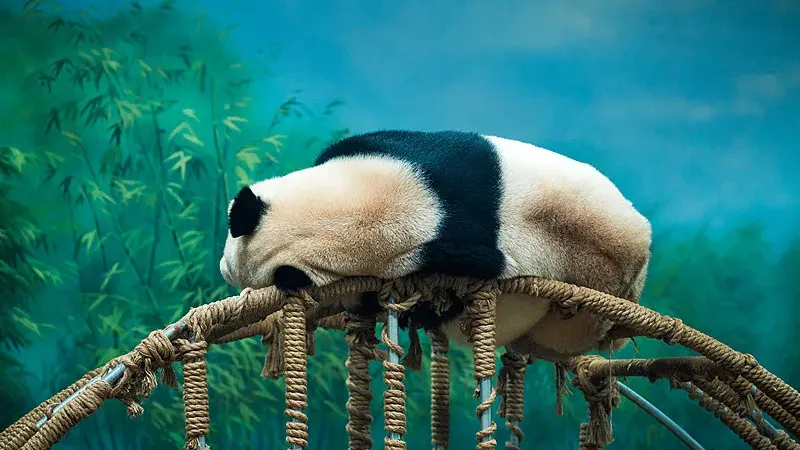
A planning guide to seeing giant pandas in China, centred on Chengdu. Compare the main panda bases — Chengdu, Dujiangyan Panda Valley, Wolong Shenshuping, Ya'an Bifengxia, Qinling and Beijing Zoo — with ticket types, booking windows and travel times, then plan around the animals' own schedule: when to go, how to book with a passport, realistic itineraries, and what responsible panda tourism actually looks like.
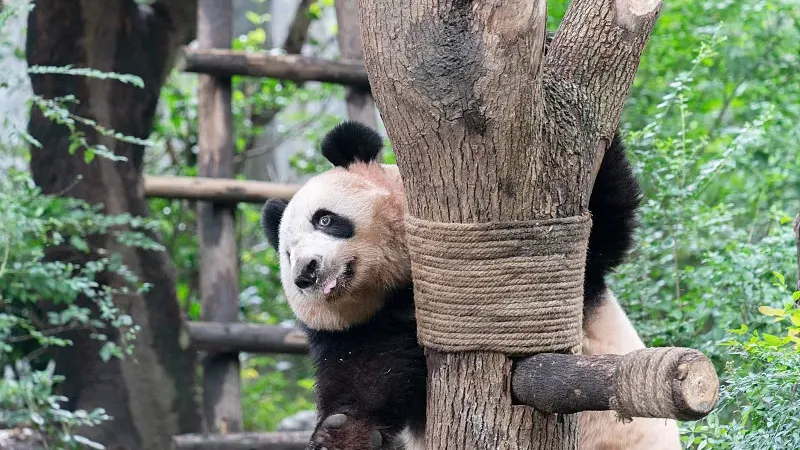
In 2009, an international team led by BGI-Shenzhen published the first complete giant panda genome — a 2.4 billion base-pair blueprint that revealed why pandas lost the taste for meat, how they digest bamboo with bacterial help, and why their genetic diversity offers hope for survival. This article follows the science from Jing Jing's blood sample to today's conservation genomics, covering TAS1R1 umami pseudogenization, the Illumina sequencing revolution, and what the genome means for the species' future.
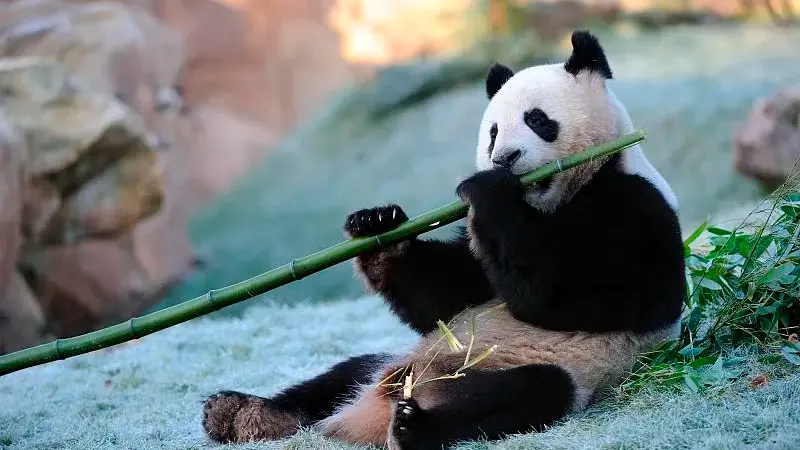
Becoming a panda keeper is statistically harder than gaining admission to many elite universities — annual acceptance rates at the Chengdu Research Base are below 5%. This article explores the education, physical demands, emotional resilience, and daily realities of panda keeping, featuring profiles of keepers who describe their work as 'the most difficult, least glamorous, and most meaningful job in animal care.'
Nearby context
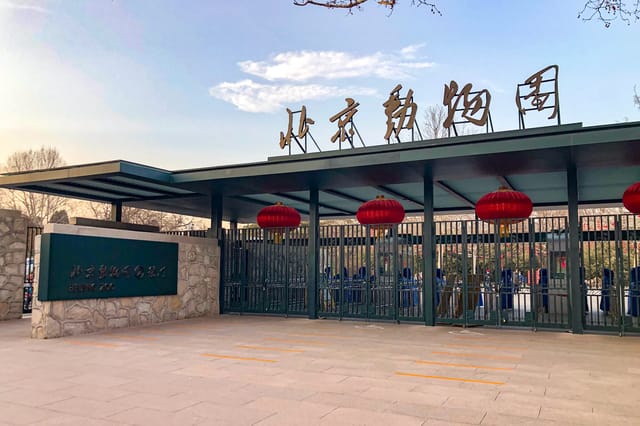
A Beijing Municipal Parks Administration notice confirms the new giant panda house opened on 2026-07-16, and lists panda-house opening hours and ticket prices. This is an open facility, not a planned one. · verified 2026-10-28
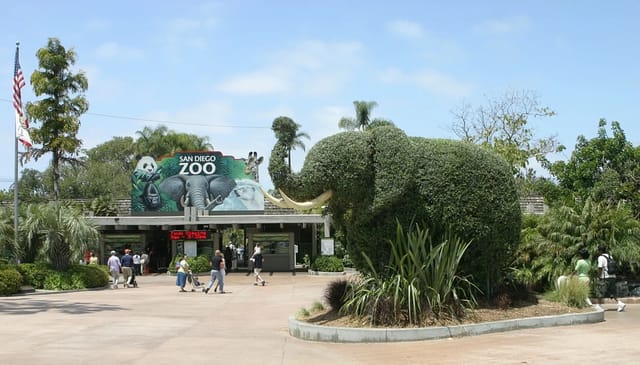
The official site marks the Giant Pandas exhibit as Now Open and names Yun Chuan and Xin Bao. The absence of pandas after the 2019 departures no longer applies. · verified 2026-10-28
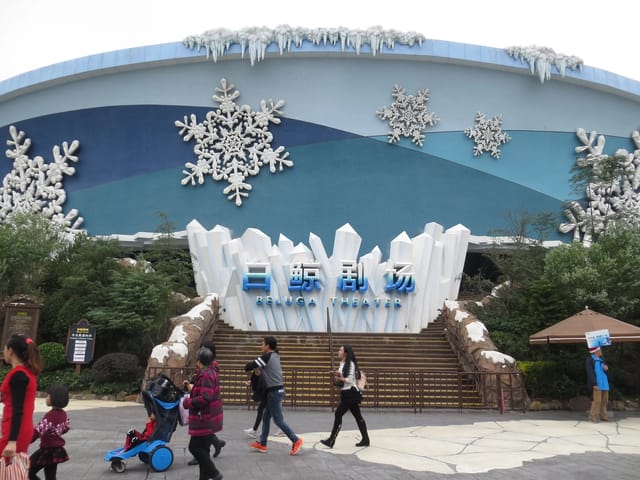
Chimelong's pandas are at the Guangzhou safari park, not the Zhuhai ocean park. · verified 2026-10-28
Wider geography
Move from this institution into the country view for more locations, pandas, and archive context tied to China.
World map
Coordinates: 30.7333 N, 104.1442 E
Archive notes
The Chengdu Research Base of Giant Panda Breeding, located in Chenghua District, Chengdu, Sichuan Province, is a world-leading ex situ conservation institution for Ailuropoda melanoleuca (giant panda) and Ailurus fulgens (red panda). Nestled at the eastern foothill of the Qionglai Mountains, a core giant panda habitat listed as a UNESCO World Heritage Site, the base works closely with Wolong National Nature Reserve, Qinling Giant Panda National Park, and the Chinese Academy of Sciences to implement species recovery programs aligned with IUCN Red List guidelines and CITES regulatory frameworks. As of 2024, the base hosts over 240 captive giant pandas, accounting for nearly 15% of the global captive population of the species.
The base has established long-term research collaborations with global institutions including the Smithsonian Conservation Biology Institute, University of Edinburgh, San Diego Zoo, and Berlin Zoological Garden, focusing on areas such as panda reproductive biology, genetic diversity management,