Table of contents (8 sections)
Ping Ping and Fu Shuang: The 2026 Return of Giant Pandas to Atlanta
Key Fact: At 02:55 on September 27, 2026, giant pandas Ping Ping and Fu Shuang boarded a charter flight at Chengdu Shuangliu Airport, and at 08:55 US Eastern time (20:55 Beijing time) that same day they landed safely at Zoo Atlanta — opening a 10-year conservation stay that began with quarantine, three days after China’s September 24 White House announcement and five months after Zoo Atlanta unveiled its new cooperation agreement in April 2026.
A New Chapter for Zoo Atlanta
The announcement was brief. Speaking at the arrival ceremony at the White House on September 24, 2026, Xi Jinping said that “in a few days, two pandas, Ping Ping and Fu Shuang, will come to their new home in Zoo Atlanta,” and described giant pandas as envoys of friendship between the Chinese and American peoples. The Ministry of Foreign Affairs of the People’s Republic of China published the official English text of the remarks the same day.
For PandaCommon, the significance of the sentence is not the venue — it is the timestamp. Until September 24, the 2026 Atlanta transfer had a start date but no arrival date. Zoo Atlanta’s April 2026 announcement confirmed which pandas were coming and under what agreement; the White House remarks supplied the first concrete when. The event has been recorded in our timeline as a transfer event linking both pandas to Zoo Atlanta.
The Two Pandas
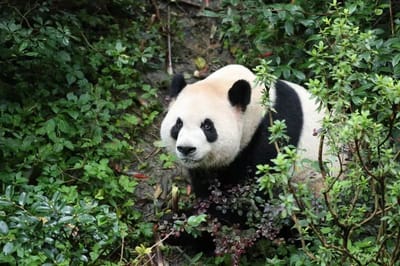
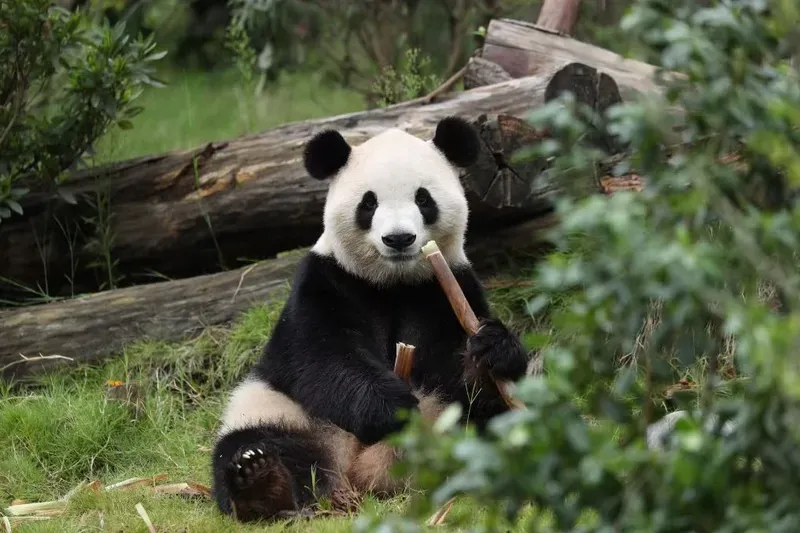
The pair heading to Atlanta is Ping Ping (平平, studbook 1230) and Fu Shuang (福双, studbook 1250) — both born at the Chengdu Research Base of Giant Panda Breeding.
Ping Ping is a male giant panda born on March 17, 2020, nicknamed Re Gan Mian (热干面) — named at one month old, alongside his twin brother Dan Hong Gao (蛋烘糕), as a tribute to the medical teams who had worked in Wuhan, pairing the two cities’ signature snacks. Fu Shuang is a female giant panda of Chengdu’s “Five Dudu” cub cohort, nicknamed Huluwa (葫芦娃). Both were selected for the China-US conservation program, and both profile pages now cross-link to each other — the archive’s way of saying these two individuals are one story, not two.
Their profiles carry the full biography: lineage, keepers, quirks. This article only needs to place them in Atlanta’s timeline.
From the 2026 Agreement to the Arrival Announcement
The story of their move has three dates, and they should not be confused:
- 2026-04-24 — Zoo Atlanta announces a new Giant Panda Conservation International Cooperative Research Agreement with the China Wildlife Conservation Association. Ping Ping and Fu Shuang named as the Atlanta pair. No arrival date yet.
- 2026-09-24 — White House arrival ceremony: Ping Ping and Fu Shuang will arrive at Zoo Atlanta “in a few days.”
- 2026-09-27, 02:55 — The pair departs Chengdu Shuangliu Airport by charter flight for Zoo Atlanta. Send-off ceremony held by the Chengdu Base beforehand.
- 2026-09-27, 08:55 US time — The charter lands safely at Zoo Atlanta. Joint Chinese-American inspection finds both pandas in good health; after quarantine-clearance and customs they enter quarantine.
- Quarantine — Chinese staff on station for three months; public debut follows.
The April announcement launched a 10-year conservation partnership. The September 24 announcement converted that partnership from an agreement into a schedule; the September 27 charter turned the schedule into a departure, and the same day it turned into an arrival. The event record for each panda carries all four nodes.
The Departure
The full departure chronicle — the send-off, the loading aboard the charter, and everyday moments of Ping Ping and Fu Shuang (source: CGTN JAPANESE, September 27, 2026).
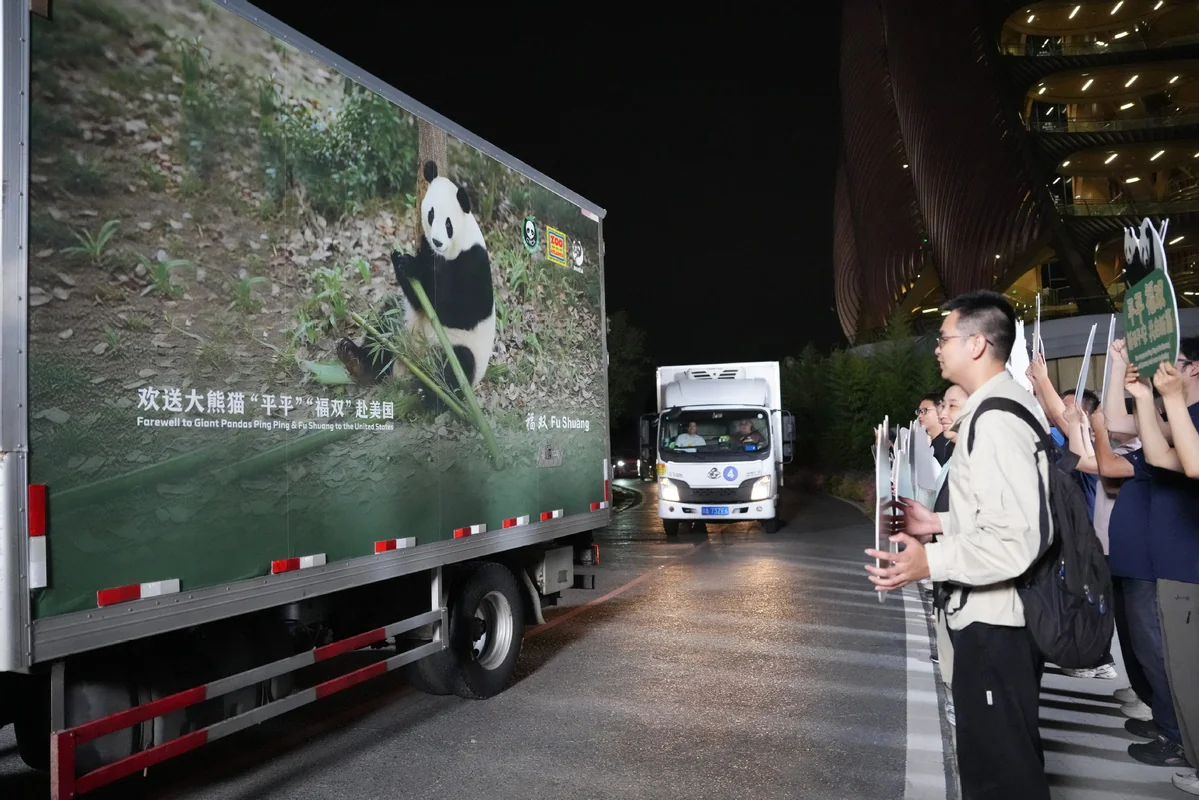
Chinese staff wave farewell as the transport truck carrying the panda crates leaves for the aircraft (September 27, 2026).
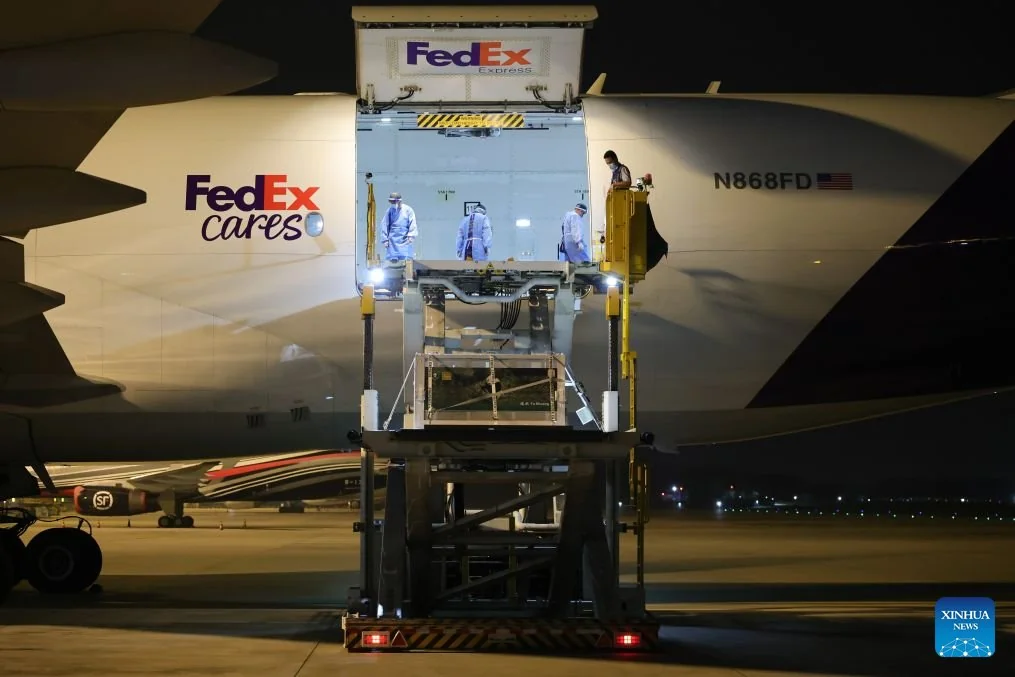
Loading the two pandas aboard the FedEx charter at Chengdu Shuangliu Airport (September 27, 2026).
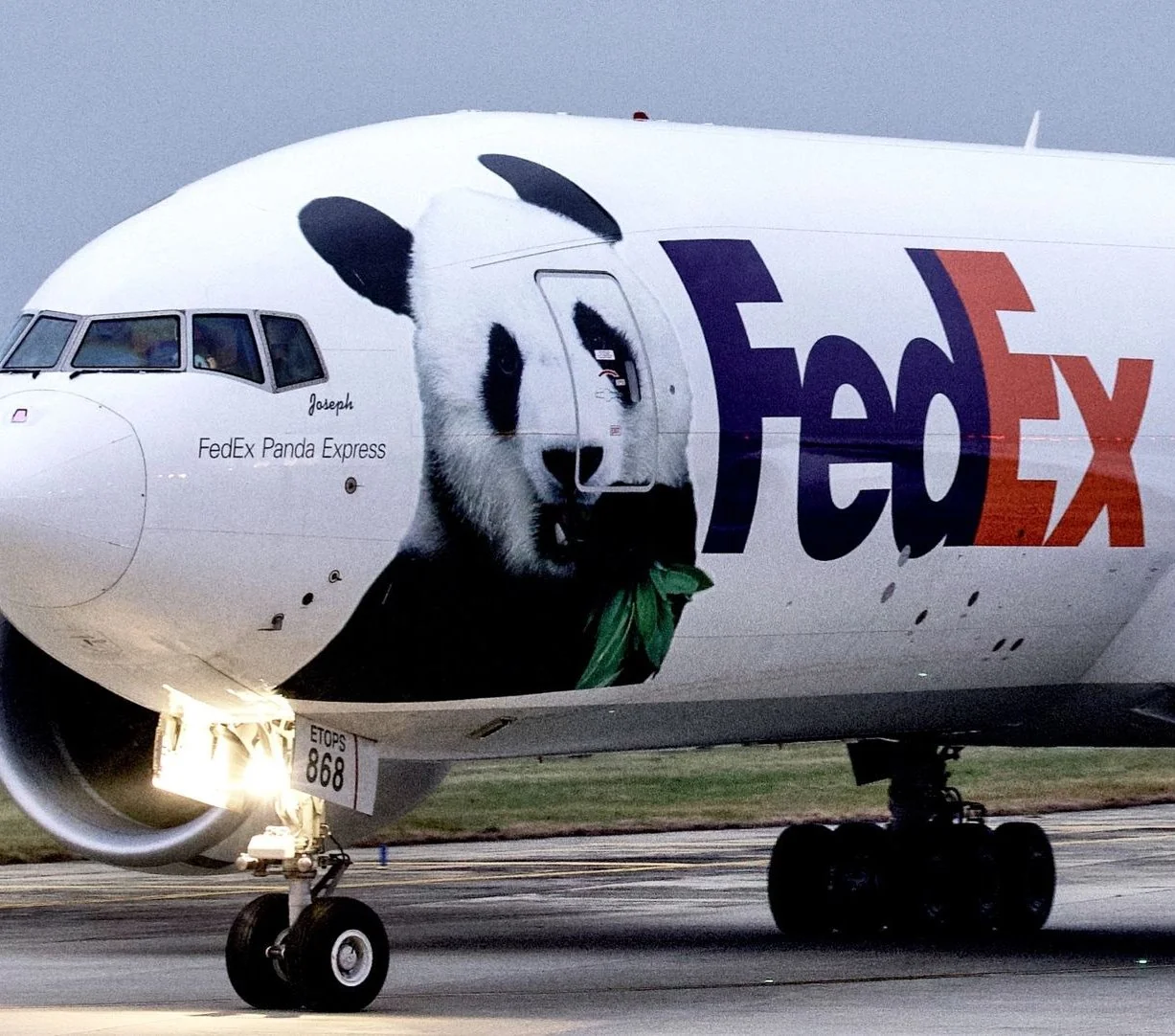
The flight was planned down to the details. The Chinese team loaded fresh bamboo shoots, bamboo, apples and emergency medicines, and the two pandas had completed transport-acclimation training beforehand to blunt the stress of the journey. Through the flight, cabin temperature and humidity were held within the pandas’ comfort range. A senior American veterinarian and keeper flew with the pair, monitoring their condition in real time, while two batches of Chinese veterinarians and keepers had already gone ahead to the zoo.
On arrival, Ping Ping and Fu Shuang enter quarantine and inspection, with Chinese personnel stationed at the zoo through the period to run stress-adaptation and behavior training.
The pair also arrive in a home built for them. Since December 2025, Chinese experts and Zoo Atlanta had held repeated online and offline meetings on upgrading the panda enclosures — Chinese technical guidance defining standards for facilities, husbandry, food supply and health care, with the American side implementing them. In mid-September 2026, Chinese experts carried out on-site acceptance of the finished works: significantly expanded indoor activity space, new climbing frames, rock platforms and pools, and an upgraded monitoring system. And because Atlanta’s climate resembles Chengdu’s, the zoo can harvest a variety of edible bamboo locally, year-round.
Ping Ping — male, born March 17, 2020 — has large, dark, boldly defined eye rings, a stocky build, and a climber’s habit of resting in tree forks. Fu Shuang — female, born October 18, 2020 — has a fluffy crown tuft and a full, slightly protruding forehead; she is round, quick-reacting, and unusually good at finding the enrichment food keepers hide.
The two also inherit a statistical legacy: more than 20 years of China–Zoo Atlanta cooperation, over 30 joint research projects, 50+ papers, and 5 litters with 7 cubs surviving — the best result achieved by China’s giant panda breeding cooperation with Europe and the United States.
The Arrival
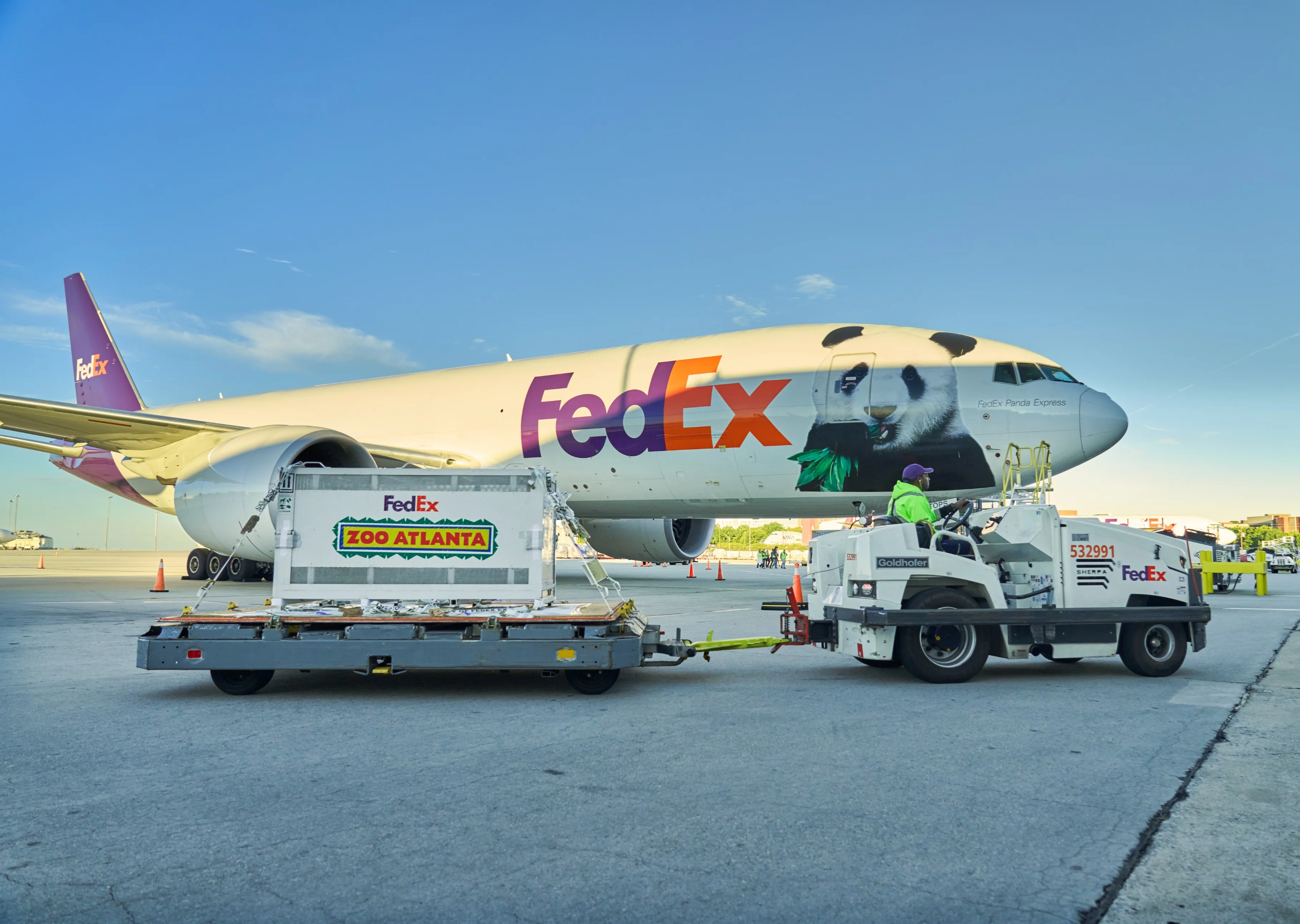
The flight lasted barely half a day. At 08:55 US Eastern time on September 27, 2026 (20:55 Beijing time) — just hours after the 02:55 departure from Chengdu — the charter landed at Zoo Atlanta, and Ping Ping and Fu Shuang touched down on American soil.
Immediately after landing, Chinese and American veterinarians and keepers carried out a joint inspection: both pandas were in good health. Following quarantine-clearance and customs formalities, the pair was transferred into the zoo to begin quarantine and inspection.
Chinese veterinarians and keepers will remain stationed at the zoo for three months, caring for the pair through the quarantine period, running stress-adaptation and behavior training, and helping them adapt to their new environment as quickly as possible.
Returning to a Familiar Home
Zoo Atlanta is not a new host learning a new species. The zoo’s first giant panda agreement began in 1999 and ran until 2024 — a 25-year continuous partnership.
During those decades:
- 1999 — Lun Lun and Yang Yang arrive as the first pair.
- 2006–2016 — They produce seven cubs: Mei Lan, Xi Lan, Po, Mei Lun, Mei Huan, Ya Lun, and Xi Lun.
- October 2024 — Lun Lun, Yang Yang, Ya Lun, and Xi Lun return to China, and the panda era in Atlanta pauses.
- April 2026 — Zoo Atlanta announces the new cooperation agreement with the China Wildlife Conservation Association.
- September 24, 2026 — The arrival of Ping Ping and Fu Shuang is announced from the White House.
- September 27, 2026 — The pair departs Chengdu by charter flight at 02:55 and lands safely at Zoo Atlanta at 08:55 US time the same day.
Ping Ping and Fu Shuang therefore land in a city that already knows what a panda looks like — and an institution that already knows how to keep one. For the longer arc behind this relationship, from the 1972 Ling-Ling and Hsing-Hsing exchange to the modern loan era, see 80 Years of Panda Diplomacy.
A New Conservation Partnership
It is worth being precise about what the new agreement is. Zoo Atlanta describes it as a Giant Panda Conservation International Cooperative Research Agreement — not a gift, not a rental headline, but a cooperation framework. Its stated priorities are:
- professional care and study
- conservation research
- habitat restoration
- nature-reserve management
- ranger support
These are the same levers described in How Giant Pandas Are Being Saved — protected areas, restored habitat, connected corridors, and the people who patrol them. The Atlanta agreement is one more place where international cooperation pays for that work.
What Comes Next
Ping Ping and Fu Shuang have begun a new chapter of Zoo Atlanta’s panda program, reconnecting an Atlanta institution with a partnership that began more than 25 years ago. They are now inside their quarantine and inspection period, with Chinese veterinarians and keepers staying three months to run stress-adaptation and behavior training; the public debut follows the end of quarantine, and the 10-year stay runs from there.
What is already certain is the shape of the record: two panda entities, one Zoo Atlanta timeline node, four transfer events (announcement, schedule, departure, arrival), and this article as the explanatory layer above them. When the pair steps out of quarantine, the chain — 1999, 2024, April 2026, September 24, September 27 (departure and arrival), 2026 — closes its latest loop.
Pandacommon Editorial Team
Pandacommon is a global knowledge project documenting giant pandas, habitats, and conservation history. We combine verified data with engaging storytelling to build a deeper archive of the panda world.
Learn more about our mission →Tags in this article
Questions readers often ask
When will Ping Ping and Fu Shuang arrive at Zoo Atlanta?
They already have. Ping Ping and Fu Shuang departed Chengdu Shuangliu Airport at 02:55 on September 27, 2026 and landed safely at Zoo Atlanta at 08:55 US Eastern time (20:55 Beijing time) the same day. A joint Chinese-American inspection found both in good health; after quarantine-clearance and customs they began their quarantine and inspection period, with Chinese staff staying at the zoo for three months. The public debut follows the quarantine.
Which giant pandas are going to Zoo Atlanta in 2026?
Two giant pandas were selected for Zoo Atlanta's new program: Ping Ping (平平, studbook 1230, male, nicknamed Re Gan Mian / 热干面, born March 17, 2020 at the Chengdu Research Base) and Fu Shuang (福双, studbook 1250, female, born October 18, 2020 at the Chengdu Research Base). They were named in Zoo Atlanta's April 2026 announcement of a new Giant Panda Conservation International Cooperative Research Agreement with the China Wildlife Conservation Association.
What happened to Zoo Atlanta's previous pandas?
Zoo Atlanta's first panda agreement ran from 1999 to 2024. Lun Lun and Yang Yang produced seven cubs between 2006 and 2016. In October 2024, Lun Lun, Yang Yang, and their two youngest cubs, Ya Lun and Xi Lun, returned to China, ending the zoo's first panda era.
What does the new panda cooperation agreement cover?
According to Zoo Atlanta, the new 10-year agreement with the China Wildlife Conservation Association focuses on professional care, study, conservation, habitat restoration, nature-reserve management, and ranger support — continuing the cooperative framework the zoo built during its 1999–2024 program.