Meet the Giant Panda: The World’s Most Beloved Bear 🐼
🐼 Welcome, young panda explorer! You’re about to meet one of the most amazing animals on Earth — the giant panda. These black-and-white bears have captured the hearts of people all around the world. They climb trees, swim across rivers, munch bamboo all day long, and — believe it or not — their babies are born PINK and smaller than a stick of butter! Ready to discover everything that makes pandas special? Let’s go!
Key Takeaways
-
🎋 Pandas are bamboo-eating bears that live only in the mountain forests of China. They spend 10-16 hours a day eating and the rest sleeping!
-
🐻 They’re full of surprises — pandas can swim, climb trees, sprint fast when they need to, and their babies look nothing like adult pandas.
-
🌏 Pandas are a conservation success story. Thanks to decades of hard work by scientists, keepers, and governments, wild panda numbers are actually INCREASING — which is rare and wonderful news for an endangered species!
What IS a Giant Panda? 🤔
First things first: a giant panda is a BEAR. A big, beautiful, black-and-white bear that belongs to the same animal family as brown bears, black bears, and polar bears. But pandas are different from all other bears in one huge way: their diet.
While other bears hunt fish, eat berries, and catch small animals, pandas eat almost nothing but BAMBOO — a type of giant grass that grows in the mountain forests of China. In fact, 99% of what a panda eats is bamboo. The other 1%? Maybe an apple, a carrot, or a special vitamin-packed biscuit called wowotou that keepers give them as a treat!
Here’s a fun way to think about it: if a brown bear is like a person who eats steak, fish, and salad, a panda is like a person who eats salad, salad, and more salad — all day, every day!
What Does a Panda Look Like? 🎨
You probably already know pandas are black and white. But did you know that every panda’s pattern is slightly DIFFERENT?
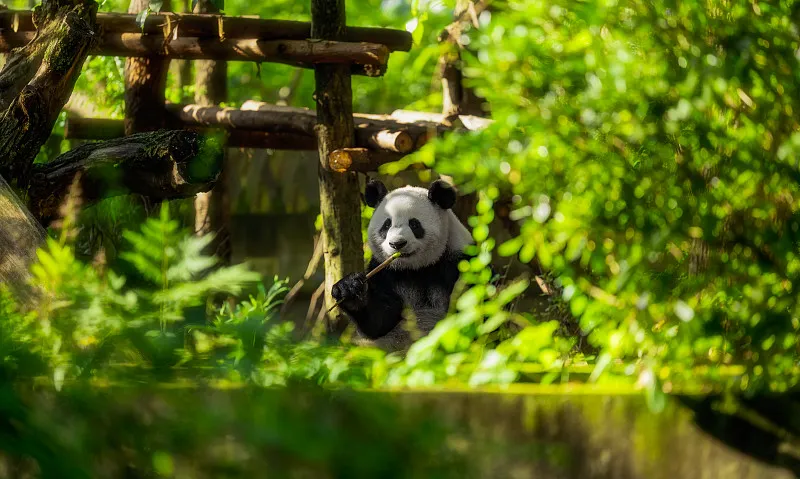
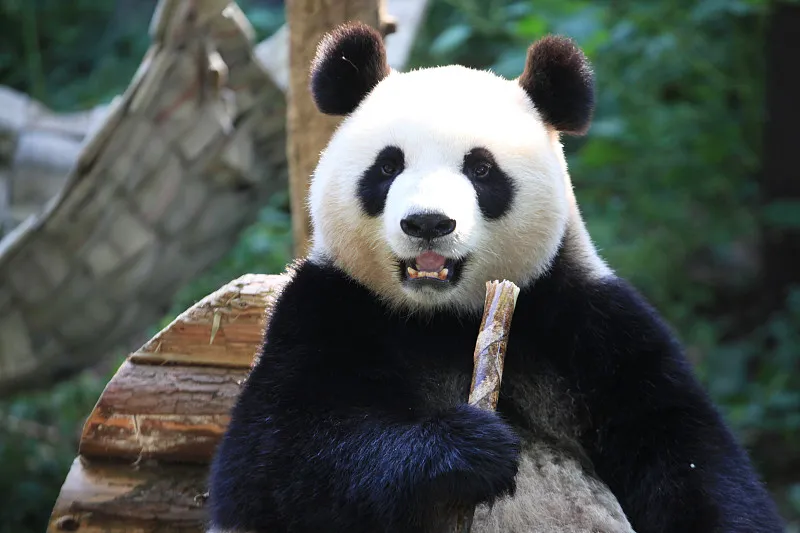
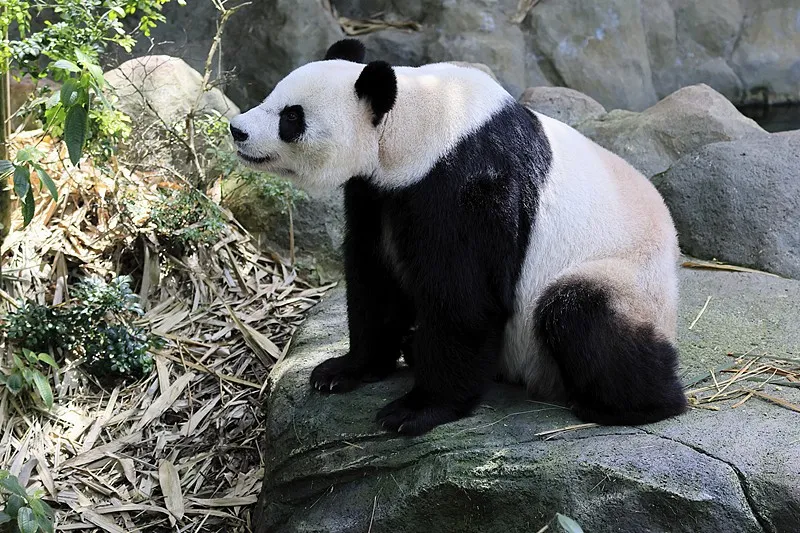
The white parts: Face, belly, and neck — these are white to help pandas blend in with snow in winter!
The black parts: Shoulders, legs, ears, and the famous eye patches — these are black to help pandas hide in the dark shadows of the forest!
The eye patches: These are the coolest part! No two pandas have exactly the same eye patches. They’re like natural name tags that help pandas recognize each other. Our article on why pandas are black and white for kids has the full color-camouflage story!
Adult pandas are BIG — about 1.2 to 1.9 meters long (as long as a grown-up lying down) and weighing 100-135 kilograms (about as heavy as two grown-ups!). But their fur feels rougher than you might expect — it’s thick and slightly oily, which helps keep them dry in the rainy, misty mountain forests where they live.
[Image: A friendly giant panda sitting and eating bamboo, clearly showing the black eye patches, black ears, black shoulder band, and white face and belly]
A Day in the Life of a Panda ☀️
What does a panda DO all day? Two things, mostly: EAT and SLEEP!
Morning (when the sun comes up): Wake up and eat bamboo. A panda’s morning meal can last 2-3 hours!
Late morning: Find a comfy spot — maybe against a tree, maybe on a rock, maybe just on the soft forest floor — and take a nap.
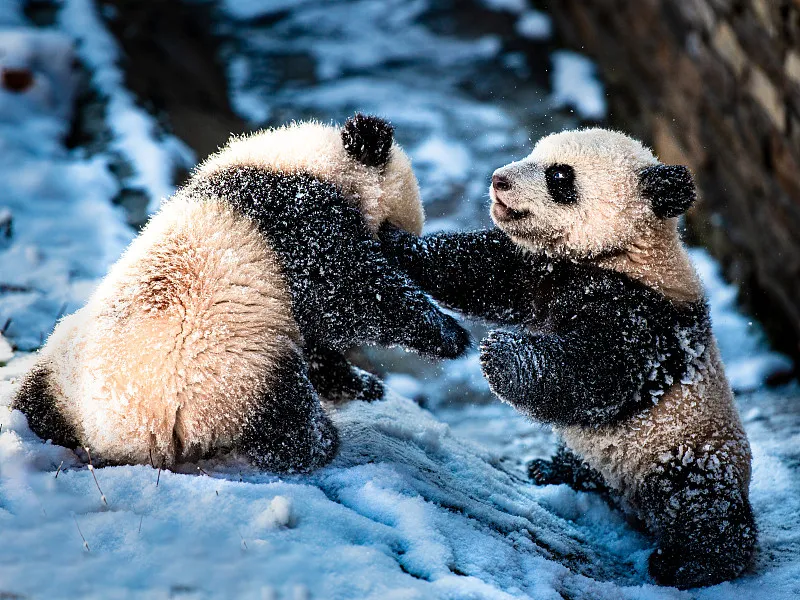
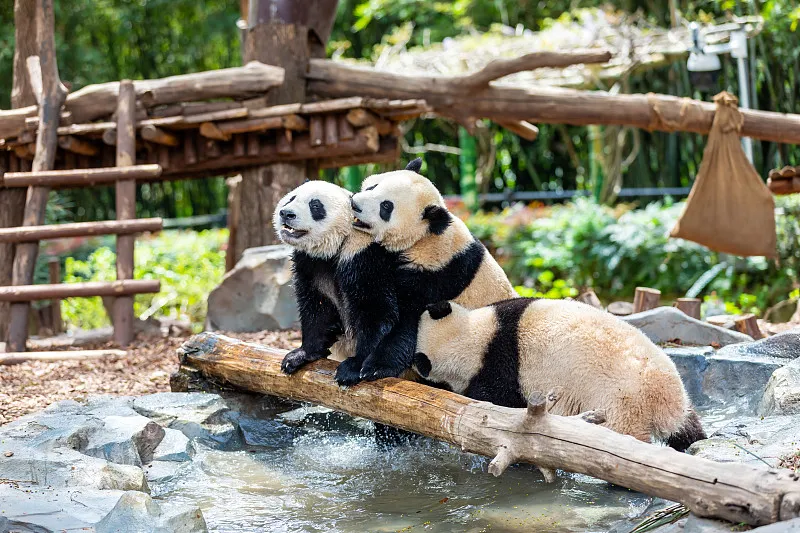
Afternoon: Wake up, eat more bamboo, maybe play a little (especially if you’re a young panda!), and take another nap.
Evening: Eat more bamboo as the sun goes down, then find a good sleeping spot for the night.
Middle of the night: Wake up, eat a midnight bamboo snack, go back to sleep!
All that eating and sleeping isn’t laziness — it’s a smart survival strategy! Bamboo doesn’t give pandas much energy, so they save their energy by sleeping a lot and moving slowly. Smart, right? Our article on 10 quirky panda habits explores more of these clever survival tricks!
Panda Superpowers! 💪
Don’t let the slow waddle fool you — pandas have hidden talents!
🧗 Climbing: Pandas are EXCELLENT tree climbers! Baby pandas start learning to climb at just 5-6 months old. They practice on tree trunks, slipping and sliding and tumbling back down until they finally figure it out. By 8-10 months, most cubs can climb high into the branches to escape danger or just enjoy the view.
🏊 Swimming: Yes, pandas can swim! They paddle across rivers using their powerful front legs. During the 2008 earthquake in China, a wild panda was seen swimming across a flooded river to escape — proving that pandas are tougher than they look!
🏃 Running: A panda can sprint at up to 32 kilometers per hour (20 miles per hour) — about as fast as a running human! They don’t run often (it wastes bamboo energy!), but when they need to, they’re fast.
👃 Super-smelling: A panda’s sense of smell is INCREDIBLE. They can learn about other pandas by sniffing scent marks left on trees — like reading a social media message, but with their nose!
Our article on panda climbing and swimming skills has the full story of these hidden athletic talents.
How Do Baby Pandas Grow Up? 🍼
Baby pandas are one of nature’s biggest surprises. When a panda cub is born:
- It weighs only 100-150 grams — about as much as a stick of butter! That’s 1/900th of its mother’s weight, making panda cubs the tiniest newborns relative to mother size of almost any mammal.
- It’s completely PINK with almost no fur — not black and white at all!
- Its eyes are sealed shut and won’t open for 6-8 weeks.
- It can’t walk, can’t see, and can barely even crawl.
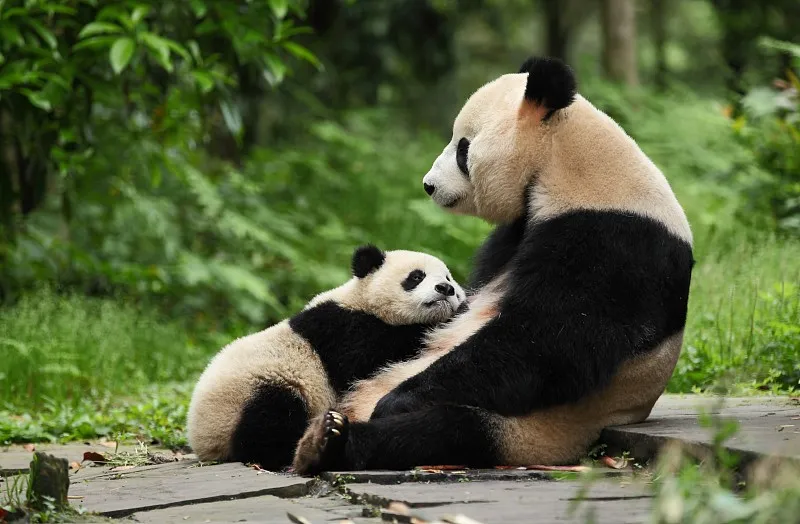
For the first few months, the baby does only three things: drink mother’s milk, sleep, and squeak for more milk. Mother panda cradles the tiny cub against her warm belly almost constantly, never leaving to eat or drink. She is the most dedicated mother in the bear family!
By the time a cub turns one year old, it has transformed from a blind, pink, butter-sized newborn into a fully furred, tree-climbing, bamboo-eating young panda. Our article on a panda cub’s first year follows the entire amazing journey week by week!
Where Do Pandas Live? 🏔️
Wild giant pandas live in ONLY one place on Earth: the cool, misty bamboo forests in the mountains of central China. Specifically, in three provinces:
- 🗺️ Sichuan (where most pandas live)
- 🗺️ Shaanxi (home to a special brown-colored panda subspecies)
- 🗺️ Gansu (the northern edge of panda habitat)
They live high up in the mountains — between 1,500 and 3,500 meters above sea level. That’s higher than most clouds! The air is cool and damp, the bamboo grows thick and tall, and in winter, everything gets covered in snow. Pandas are perfectly adapted to this chilly, misty world.
In captivity, pandas also live at special research bases and zoos around the world — from the Chengdu Research Base in China to the Smithsonian National Zoo in Washington DC, from Ueno Zoo in Tokyo to Zoo Berlin in Germany. Our global panda map shows you where to find pandas everywhere!
Are Pandas Endangered? 🌍
This is a question with GOOD news!
For many years, giant pandas were listed as “Endangered” — which means they were at serious risk of disappearing from the wild forever. Hunting, habitat destruction, and the slow reproduction rate of pandas all contributed to the problem.
But in 2016, after decades of dedicated conservation work — protecting bamboo forests, establishing the Giant Panda National Park, running successful captive breeding programs, and cracking down on poaching — the wild panda population had increased enough that pandas were moved from “Endangered” to “Vulnerable.” That’s a HUGE improvement!
Today, there are approximately 1,900 wild pandas — up from about 1,100 in the 1980s. The number is still small, and pandas still need our protection, but the trend is going in the right direction. Our article on the panda’s endangered-to-vulnerable status change has the full success story!
How Can YOU Help Pandas? 🌱
Even if you don’t live anywhere near China, you can help protect pandas!
-
♻️ Use less paper. Paper comes from trees, and protecting forests protects panda habitat. Use both sides of every sheet, recycle your paper, and choose recycled paper products!
-
🌍 Save energy. Climate change threatens bamboo forests. Turn off lights when you leave a room, and encourage your family to save energy!
-
📚 Learn and share. The more people who know about pandas and care about them, the more support panda conservation gets. Share what you’ve learned with your friends and family!
-
💚 Support conservation. Some reputable organizations let you symbolically “adopt” a panda — your donation helps fund habitat protection and research.
-
🦁 Care about ALL animals. Pandas are what scientists call an “umbrella species” — protecting panda habitat also protects thousands of other animals that share the same forests, including golden monkeys, red pandas, and clouded leopards!
Welcome to the panda fan club! You now know what pandas are, where they live, what they eat, how they grow up, and why they’re so special. The best way to keep learning is to explore our PandaCommon library, watch panda cams online, and — if you ever get the chance — visit a panda base or zoo to see these amazing animals in person.
Next time you see a panda, watch closely. Notice the unique shape of its eye patches. Listen for its sheep-like bleat. Watch how it holds its bamboo with its special pseudo-thumb. The more you look, the more amazing pandas become! 🐼💚