Table of contents (10 sections)
Vienna’s Miracle: How Schönbrunn Zoo Achieves Natural Panda Mating
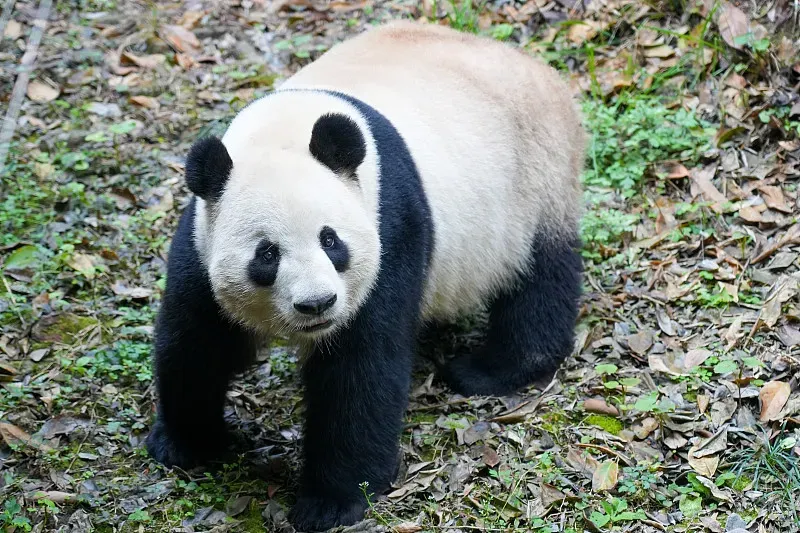
Key Fact: In a quiet corner of the Schönbrunn Zoo in Vienna, Austria, something extraordinary has been happening since 2007: giant pandas have been mating naturally — without the artificial insemination that has been necessary at nearly every other breeding facility outside China. Five cubs have been born at Schönbrunn through natural conception, a record unmatched by any European zoo. The Vienna model — spacious, quiet enclosures with seasonal light cycling, minimal keeper interference, and a keeper philosophy of patience over intervention — has become the global template for natural panda reproduction, proving that captive pandas retain the behavioral capacity for natural mating when their environment supports it.
Key Takeaways
-
Schönbrunn is the only European zoo with consistent natural panda mating — five cubs born without artificial insemination, a record unmatched in Europe.
-
The Vienna model emphasizes environmental authenticity over intervention — quiet enclosures, seasonal light cycling, and keeper patience rather than hormonal manipulation or scheduled AI.
-
The success transcends individual pandas. Long Hui’s death in 2016 could have ended the Vienna miracle — but Yang Yang mated naturally with new partner Yuan Yuan, producing twins. The environment, not the individual, is the key.
The Quiet Enclosure
The panda enclosure at Schönbrunn Zoo is not what visitors expect. It is not a glass-walled viewing gallery with constant crowds. It is quiet, set back from the main visitor paths, divided into sections that allow pandas to retreat from public view entirely. The indoor areas receive seasonal light cycling that mimics the natural photoperiod of the panda’s native habitat — a subtle environmental cue that few other zoos replicate.
In spring 2007, something happened in this enclosure that had never happened in Europe: a female panda, Yang Yang (Yang Yang, sb587), and a male, Long Hui (Long Hui, sb513), mated naturally. No artificial insemination. No hormonal manipulation. No human intervention beyond providing the space and the conditions. On August 23, 2007, Yang Yang gave birth to Fu Long (sb620) — the first panda cub ever conceived through natural mating in Europe.
The birth was a sensation. But for the Schönbrunn keepers, it was also a validation of a philosophy they had quietly pursued for years: that pandas, given the right conditions, could breed naturally — and that the global reliance on artificial insemination might reflect environmental deficiencies in captive facilities more than biological deficiencies in pandas.
The Vienna Model in Detail
What makes Schönbrunn different? The keepers point to several factors, none dramatic individually but cumulatively transformative.
Enclosure Design and Layout
The Schönbrunn panda enclosure spans approximately 1,500 square meters of indoor-outdoor space, divided into multiple interconnected sections that allow pandas to choose their distance from each other and from visitors.
| Feature | Schönbrunn Design | Typical European Zoo Design | Impact on Breeding |
|---|---|---|---|
| Visitor proximity | Set back 15-20m from main paths; partial visual barriers | Often directly adjacent to viewing areas | Reduces stress during courtship |
| Number of indoor compartments | 4 (plus 2 outdoor yards) | 2-3 | Allows female to retreat; enables gradual introductions |
| Enclosure separation during non-breeding season | Male and female housed separately with visual/olfactory contact | Often housed separately with no sensory contact | Maintains pair bond through fence-line interaction |
| Substrate variety | Soil, grass, bark, rock, concrete (mixed) | Primarily concrete or rubber | Supports natural scent-marking behaviors |
| Visual barriers | Dense vegetation, rock walls, solid panels | Glass walls, open sightlines | Reduces visitor disturbance; increases panda sense of security |
The multiple compartments serve a critical function during breeding season: the female can be given access to the male’s enclosure (scent-primed by his olfactory markings) before physical introduction, allowing her to become familiar with his presence at her own pace. When she is ready, the door between compartments is opened — but she always has the option to retreat back to her own space. This control over proximity is, keepers believe, essential for natural courtship.
Seasonal Light Cycling
The indoor enclosure lighting is programmed to simulate the natural photoperiod of the panda’s native Sichuan habitat — approximately 30°N latitude. The system transitions gradually between seasons:
| Season | Day Length (hours) | Transition Rate | Spectrum |
|---|---|---|---|
| Winter solstice (December) | 10:00 | — | Cool white (5000K) — simulates overcast winter sky |
| Spring equinox (March) | 12:00 | +2 min/day | Neutral white (4000K) |
| Summer solstice (June) | 14:00 | +2 min/day | Warm white (3500K) — simulates longer daylight |
| Autumn equinox (September) | 12:00 | -2 min/day | Neutral white (4000K) |
| Winter solstice (December) | 10:00 | -2 min/day | Cool white (5000K) |
The light intensity is also varied: summer peak illuminance reaches approximately 800-1000 lux (comparable to a partly cloudy day in Sichuan), while winter illuminance is reduced to 300-500 lux.
This system is not standard at most zoos, where indoor lighting is determined by visitor viewing hours rather than panda biology. The light cycling helps regulate melatonin and gonadotropin-releasing hormone (GnRH) — the same neuroendocrine mechanism that triggers estrus in wild pandas. Without this signal, captive females may not cycle normally, and males may not produce peak-quality sperm.
Behavioral Timing and Introduction Protocol
Rather than scheduling introductions according to a human calendar, Schönbrunn keepers monitor the female’s behavior as the primary trigger for breeding attempts:
- Pre-estrus monitoring (January-February). Fecal hormone metabolites are analyzed weekly. Female behavior is observed for early signs: increased scent-marking, vocalization changes, increased activity.
- Estrus detection (February-March). When behavioral indicators and hormone levels align, the male is introduced to an adjacent compartment through a mesh barrier. Physical introduction is not forced.
- Physical introduction. The door is opened only when the female approaches it and shows receptive behaviors — the “lordosis” posture (back arched, tail raised) and distinctive vocalizations (chirps and bleats rather than the aggressive honks of rejection).
- Post-mating separation. After mating, pandas are separated again. The female’s compartment doors are left open so she can choose her post-mating location.
- Pregnancy monitoring. Fecal progesterone is monitored for 3-5 months. If pregnancy is detected (confirmed by ultrasound at approximately 40 days), the female is given enhanced privacy and nesting materials.
This protocol respects the panda’s internal timeline rather than imposing an external schedule. It takes longer than AI — the keepers may wait weeks for the female to show readiness — but when it works, it works without any medical intervention.
Keeper Philosophy
The Schönbrunn keepers describe their approach as “patient observation rather than active intervention.” They watch. They wait. They provide. They do not push.
This philosophy extends to every aspect of panda management:
- During non-breeding season, pandas are given maximum autonomy over their daily routine — the choice between indoor and outdoor access, feeding times that align with their natural activity peaks, and enrichment that challenges rather than dictates.
- During breeding season, keeper entry is limited to essential cleaning and feeding only. Cameras provide remote monitoring. The pandas experience the breeding season as their own private event rather than a public performance.
- Cub rearing follows the same principle. When Fu Feng and Fu Ban were born as twins in 2016, keepers observed the cub-swapping protocol described in our article on twin survival techniques — but with minimal hands-on involvement. Yang Yang was allowed to manage her own cubs as much as possible, with keeper intervention only when absolutely necessary for twin welfare.
Did You Know?
The five Schönbrunn cubs’ names all begin with “Fu” (福, meaning fortune or blessing): Fu Long (Fortune Dragon), Fu Hu (Fortune Tiger), Fu Bao (Fortune Treasure), Fu Feng (Fortune Phoenix), and Fu Ban (Fortune Companion). The naming convention is unique among European-born pandas — most European zoos choose names from the home country’s language. Vienna’s choice to use Chinese characters reflects the zoo’s close relationship with its Chinese partner institutions.
Why the Vienna Model Works — The Science
The Schönbrunn success is now supported by a growing body of scientific research on captive panda reproduction.
Hormonal evidence. Studies published in Zoo Biology and Animal Reproduction have shown that female pandas exposed to graded seasonal photoperiods — like the Schönbrunn system — exhibit more consistent estrus cycles than females in constant-day-length facilities. The melatonin rhythm regulates the timing of GnRH pulses, which in turn controls follicle development and ovulation timing.
Behavioral evidence. Observational studies comparing Schönbrunn pandas with AI-dependent populations show that Vienna pandas display a broader range of natural courtship behaviors: male “flehmen” responses to female urine, reciprocal scent-marking at introduction sites, and the distinctive vocal duets that wild pandas use during courtship. These behaviors are often absent or reduced in facilities that rely primarily on AI.
Welfare evidence. Fecal glucocorticoid (stress hormone) levels at Schönbrunn are lower during the breeding season than at comparable facilities — suggesting that the natural mating approach is less stressful for the animals than the handling and anesthesia required for AI.
Schönbrunn vs. Other European Panda Programs
| Metric | Schönbrunn (Vienna) | Edinburgh | Beauval (France) | Pairi Daiza (Belgium) | Madrid |
|---|---|---|---|---|---|
| Years with pandas | 2003-present | 2011-2023 | 2012-present | 2014-present | 1978-present |
| Total cubs born | 5 | 0 | 2 (both AI) | 2 (AI) | 5 (4 AI, 1 natural) |
| Natural mating success | 5/5 (100%) | 0 | 0 | 0 | 1 (1996, very early) |
| Primary breeding method | Natural | AI attempted, no success | AI | AI | AI |
| Enclosure size (indoor + outdoor) | ~1,500 m² | ~1,200 m² | ~2,000 m² | ~1,800 m² | ~1,000 m² |
| Seasonal light cycling | Yes (programmable LED) | No (constant visitor lighting) | Partial | Partial | No |
| Visitor proximity to enclosure | Set back 15-20m | Direct glass viewing | Direct glass viewing | Direct glass viewing | Varies |
The comparison reveals that enclosure size alone does not predict success — Beauval has the largest enclosure but relies entirely on AI. The key factors appear to be: light cycling, visitor setback, and keeper philosophy.
European Panda Reproduction at a Glance
| Panda Pair | Zoo | Years Together | Cubs | Method | Notes |
|---|---|---|---|---|---|
| Long Hui + Yang Yang | Schönbrunn | 2003-2016 | 4 litters (5 cubs) | Natural | Long Hui died 2016 |
| Yuan Yuan + Yang Yang | Schönbrunn | 2019-present | 1 litter (twins) | Natural | Proved model works with new male |
| Huan Huan + Yuan Zi | Beauval | 2012-present | 2 cubs | AI | Yuan Meng (2017), Huan Huan’s twin (2021) |
| Hao Hao + Xing Hui | Pairi Daiza | 2014-present | 2 cubs | AI | Tian Bao (2016), Bao Di (2019) |
| Tian Tian + Yang Guang | Edinburgh | 2011-2023 | 0 | AI | Returned to China 2023 |
| Shao Shao + Claro de Luna | Madrid | 1978-2000s | Multiple | Mixed | Spain’s panda program ended |
The Pandas Behind the Success
The Schönbrunn story is inseparable from the individual pandas who made it possible.
Yang Yang (sb587). Born at the Chengdu Research Base in 2000, Yang Yang arrived in Vienna in 2003 as part of a 10-year research loan agreement. She is the female at the center of all Schönbrunn’s breeding success — she has been the mother of all five cubs. Now in her mid-20s, Yang Yang is one of the most accomplished breeding females in the global captive population.
Long Hui (sb513). Born at the Chengdu Research Base, Long Hui arrived in Vienna alongside Yang Yang in 2003. He was the father of three litters (Fu Long, Fu Hu, Fu Bao) before his death on December 9, 2016 from heart complications. His genetic contribution to the European panda population is unmatched.
Yuan Yuan (sb702). Yuan Yuan arrived in Vienna in 2019 as Long Hui’s replacement. He achieved natural mating with Yang Yang in 2019, producing twins Fu Feng and Fu Ban — confirming that the Schönbrunn environment, not just Long Hui’s individual talents, was the key to natural mating success. Yuan Yuan’s genetic background is described in the panda studbook system.
The Legacy: What Vienna Teaches Us
The Schönbrunn success raises a profound question for captive panda management: if natural mating is possible with the right conditions, should we be satisfied with AI as the default?
The honest answer is that AI is not a failure — it is a tool. It has enabled the global panda population to grow from a few hundred in the 1990s to over 700 individuals today, as tracked by the international panda studbook. Without AI, the captive population would be smaller and less genetically diverse.
But Vienna shows that natural mating is possible — not always, not everywhere, but reliably under the right conditions. The question for the global zoo community is whether enough institutions are willing to invest in those conditions: the quiet enclosures, the seasonal lighting, the keeper patience, the acceptance that natural breeding may take longer and may not always succeed.
Frequently Asked Questions
What happened to the Schönbrunn cubs?
All five cubs returned to China under the terms of the loan agreement. Fu Long returned in 2009, Fu Hu in 2013, Fu Bao in 2019, and Fu Feng and Fu Ban in 2019. Their returns followed the standard protocol for internationally born pandas.
Does natural mating work for every panda pair?
No. Even at Schönbrunn, not every breeding attempt is successful. The key is that natural mating is attempted as the primary method, with AI available as a backup. In contrast, most zoos use AI as the primary method from the start, never attempting natural introduction at all.
Can Schönbrunn’s success be measured objectively?
Yes, through multiple metrics: consistent pregnancy rates across multiple litters, behavioral indicators (natural courtship rituals, mounting behavior, postpartum maternal care), and hormonal profiles (normal estrus cycles, appropriate progesterone elevations). The cumulative evidence is strong that Schönbrunn’s environment supports natural reproduction.
What role does luck play in the Schönbrunn success?
Luck is a factor in any biological system — Yang Yang and Long Hui were clearly a compatible pair. But the fact that Yang Yang successfully mated with Yuan Yuan after Long Hui’s death suggests that the environment, not just individual compatibility, is driving the result. You cannot eliminate chance from biology, but you can create conditions that make success more likely.
Are there pandas at Schönbrunn today?
Yes. Yang Yang and Yuan Yuan remain at the Schönbrunn Zoo as of 2026. After the twins Fu Feng and Fu Ban returned to China in 2019, the pair has not produced additional cubs, but the zoo has not ruled out future breeding attempts if conditions permit.
Your Turn
The Schönbrunn story asks a simple question with complex implications: if we give pandas the space, the quiet, and the time to be pandas — can they do what evolution designed them to do?
The answer, demonstrated across two decades and five cubs, is yes. The question is whether the global zoo community will invest in the conditions that make natural mating possible — or continue to rely on the intervention that has become the default. Read our article on panda twin survival and swapping techniques to understand the full picture of captive panda reproduction, and explore our genetic management article to see how the studbook tracks the offspring of both natural and assisted breeding.
Dr. Mei Zhang
Spatial Ecology & Conservation Editor
Spatial ecologist using GIS, remote sensing, and satellite imagery to study panda population dynamics, habitat connectivity, and conservation effectiveness at landscape scales.
View full profile →Tags in this article
Questions readers often ask
Why is natural panda mating so rare in captivity?
Natural mating is rare because captive pandas often lack the environmental cues, space, and behavioral repertoire that wild pandas use during courtship. Males may not know how to mount correctly; females may not present properly. Most captive breeding relies on artificial insemination (AI). Vienna's success suggests that when pandas are provided with sufficiently naturalistic conditions — quiet, spacious enclosures, seasonal light cycling, and minimal keeper interference — their natural mating instincts can emerge.
How many cubs have been born through natural mating at Schönbrunn?
Five cubs have been born at Schönbrunn through natural mating: Fu Long (2007, the first naturally conceived panda in Europe), Fu Hu (2010), Fu Bao (2013), and twins Fu Feng and Fu Ban (2016). All were conceived without artificial insemination, a record unmatched by any other European zoo.
What exactly is seasonal light cycling and why does it matter?
Seasonal light cycling means adjusting the duration and intensity of indoor enclosure lighting to simulate the natural photoperiod of the panda's native habitat. In Sichuan, spring days are longer (13-14 hours of daylight) than winter days (10-11 hours). This day-length change triggers hormonal cascades — including melatonin suppression, gonadotropin release, and ultimately estrus in females and sperm production in males. Many zoos maintain constant indoor lighting for visitor convenience, which deprives pandas of this critical seasonal cue. Schönbrunn's programmable lighting system gradually transitions between seasons over weeks, providing the natural signal that panda bodies evolved to respond to.
Could other European zoos replicate the Vienna model?
Elements of it can be replicated, but full replication requires zoos to prioritize panda privacy over public display during breeding season — a difficult trade-off for revenue-dependent institutions. Zoos that have adopted elements of the Vienna model — quieter enclosures, seasonal light cycling, behavior-based introduction timing — have reported improved breeding outcomes. However, not all programs succeed: Edinburgh Zoo's 12-year program, documented in our article on the Tian Tian and Yang Guang farewell, never produced cubs despite similar attempts.
Did Schönbrunn succeed because of the specific pandas or the environment?
Both. Long Hui and Yang Yang were an exceptionally compatible pair — but compatibility alone does not explain the sustained success across two decades. Since Long Hui's death in 2016, Yang Yang was paired with Yuan Yuan, and the pair still achieved natural mating, producing twins Fu Feng and Fu Ban in 2016. This proves the environment matters more than any individual panda pairing.
Why does natural mating matter? Artificial insemination works.
Natural mating matters for three reasons. First, it preserves the behavioral repertoire of the species — pandas that mate naturally maintain courtship and breeding behaviors that could be lost if AI becomes the only reproduction method. Second, natural mating is less invasive — it requires no anesthesia, no hormonal manipulation, no veterinary intervention. Third, the behavioral indicators of natural estrus (vocalizing, scent-marking, lordosis posture) provide richer welfare data than AI scheduling alone. The studbook system can manage a population that includes both naturally and artificially conceived individuals, but maintaining natural breeding capacity is a conservation goal in itself.
What happened to the Schönbrunn cubs?
All five cubs eventually returned to China under the terms of the loan agreement. Fu Long returned in 2009, Fu Hu in 2013, Fu Bao in 2019, and Fu Feng and Fu Ban in 2019. Their transfers are consistent with the standard international panda loan protocol described in our article on panda diplomacy.
Has Schönbrunn's success continued since Long Hui's death?
Yes — and this is the strongest evidence that the Vienna model works independent of individual panda personalities. After Long Hui died in 2016 from heart complications, Yang Yang was paired with Yuan Yuan. The pair produced Fu Feng and Fu Ban, confirming that the environment, not just the individual, drives the breeding success.