My Home Is in the Deep Mountains: A Tour of Wild Panda Forests 🏔️
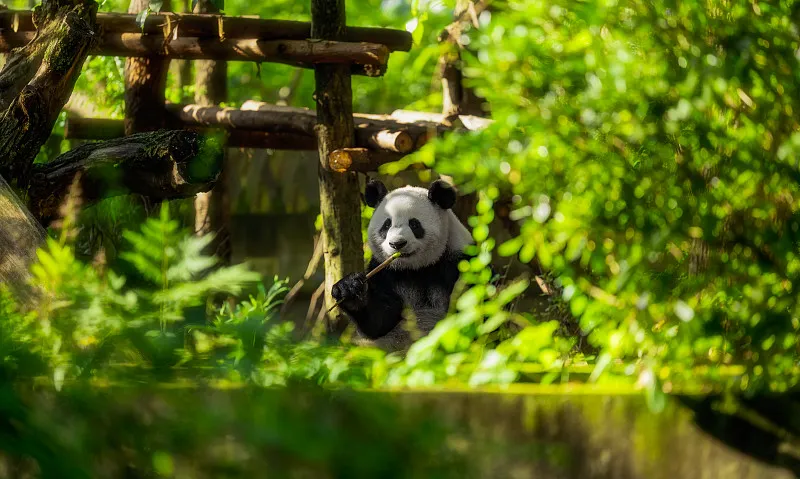
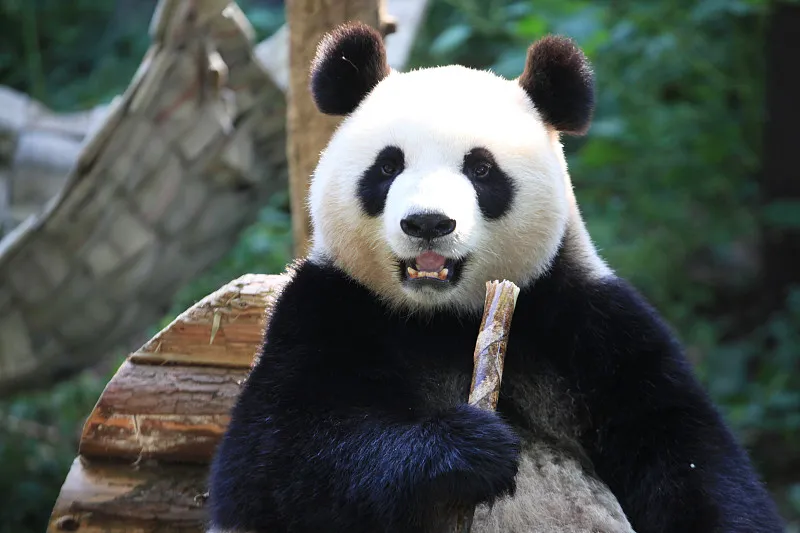
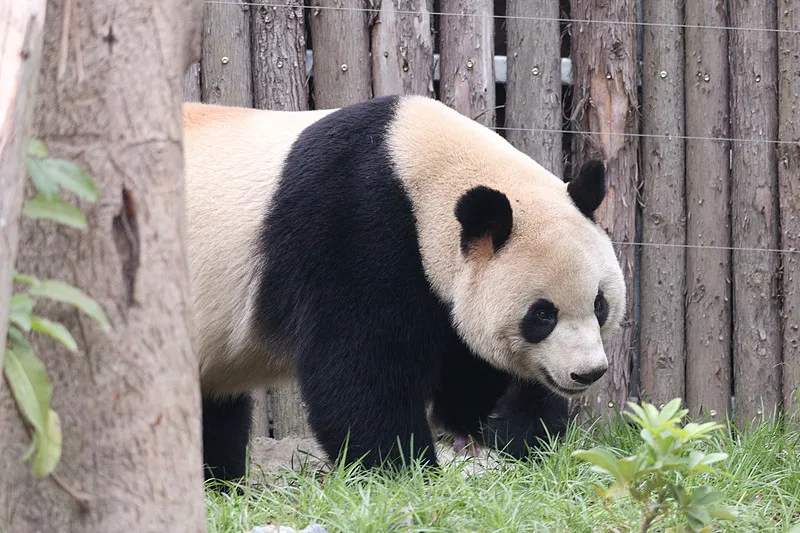
🎋 Welcome to my home! I’m a wild giant panda, and I’m going to take you on a tour of the most beautiful forest in the world — the misty, magical bamboo forests of central China. Put on your imaginary hiking boots, breathe in the cool mountain air, and follow me into the green!
Key Takeaways
-
🏔️ Wild pandas live only in the mountain forests of China — cool, wet, misty places filled with bamboo, fir trees, and moss.
-
🌿 The bamboo forest is like a giant salad bar — pandas eat different bamboo parts in different seasons, moving up and down the mountain all year.
-
🐒 Pandas have amazing neighbors — golden monkeys, red pandas, takin, and colorful pheasants share the forest, making it one of the most special animal neighborhoods on Earth!
Step Into the Forest 🌲
Close your eyes and imagine…
The first thing you notice is the air. It’s COOL — never hot, even in summer — and DAMP, like the feeling after a rain shower. The temperature hovers around 8-15°C (46-59°F). You’re so high up — 2,500 meters above sea level — that clouds drift through the forest around you, wrapping everything in a soft, silvery mist.
The next thing you notice is the SMELL. It’s a mix of wet earth, old leaves, fresh bamboo, and the faint, sweet scent of fir trees. Take a deep breath — this is what a healthy wild forest smells like!
Now open your eyes. Towering above you are ancient fir and spruce trees, their trunks thick with moss. Sunlight filters through the canopy in green-gold shafts. The forest floor is a thick carpet of fallen leaves and bamboo litter. Everything is green — emerald, jade, olive, moss — every shade of green you can imagine.
And everywhere, EVERYWHERE, is bamboo. It grows in thick, shoulder-high thickets, thousands of stalks swaying gently in the mountain breeze. The stalks clack against each other with a hollow, musical sound — tok-tok-tok.
[Image: A misty bamboo forest in the Minshan Mountains at dawn, with sunlight filtering through the canopy and thick bamboo covering the forest floor]
This is a wild panda’s home. There is nowhere else on Earth quite like it.
The Seasons of the Forest 🍂
My forest changes with the seasons, and so do I!
🌸 Spring (March-May): The snow melts, and tender green bamboo shoots push up through the wet soil. This is my FAVORITE time of year! The shoots are sweet and juicy and packed with energy. I descend to lower elevations — about 1,800-2,200 meters — where the shoots emerge first. The forest is noisy with birdsong and the dripping of melting snow.
☀️ Summer (June-August): The bamboo shoots have grown into tall stalks, so I move higher up the mountain — 2,500-3,000 meters — following the “green wave” of new growth. I switch to eating bamboo leaves, which are less sweet than shoots but still nutritious. The forest is thick and green, and I spend hot afternoons napping in the coolest, shadiest spots I can find.
🍂 Autumn (September-November): The leaves begin to change color, and the air gets crisp. I eat a mix of leaves and stalks as I slowly start moving back down the mountain. The forest smells like mushrooms and fallen leaves.
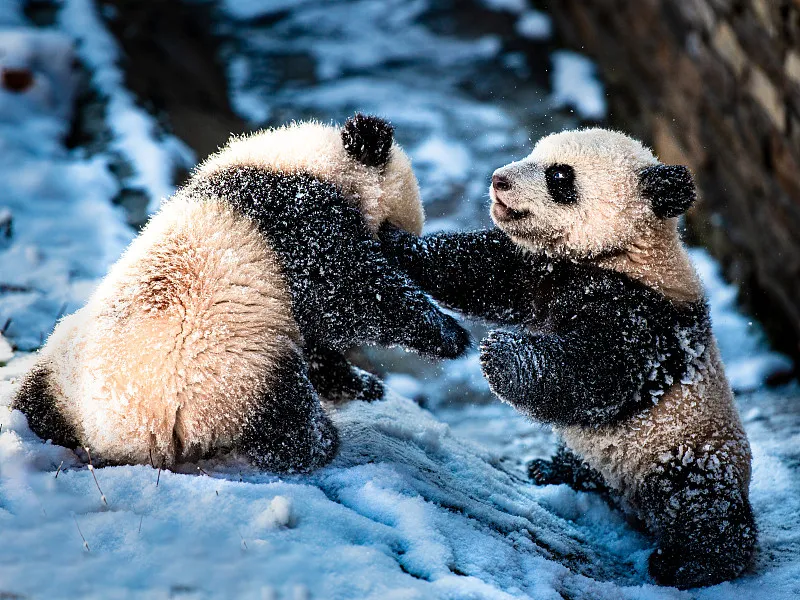
❄️ Winter (December-February): Snow covers everything! I descend to my lowest elevations — 1,800-2,200 meters — where there’s less snow and the bamboo stalks are still accessible. The stalks contain extra sugar in winter, which gives me energy to stay warm. My thick, wooly winter fur keeps me cozy even when temperatures drop to -15°C!
This seasonal journey — moving up and down the mountain to find the best bamboo — is called vertical migration, and it’s one of the secrets to my survival. Our article on why pandas don’t hibernate explains how this replaces the winter sleep that other bears need. And you can tag along on this snowy journey in our panda winter migration adventure!
Meet My Neighbors! 🐒🦌🐦
I may be the most famous animal in this forest, but I’m not the only one! Let me introduce you to my neighbors:
Golden Snub-Nosed Monkey 🐒: These monkeys have bright golden-orange fur and the most amazing sky-blue faces! They live in the treetops above my bamboo, leaping from branch to branch in big family groups. They eat leaves, fruit, and lichen — and they’re one of the most beautiful monkeys in the world.
Takin 🐂: These big, shaggy animals look like a cross between a goat, a cow, and a bison. They have thick golden fur and curved horns, and they wander through the forest in small herds. They’re gentle giants, like me!
Red Panda 🦊: This is my little namesake! Red pandas are much smaller than me — about the size of a house cat — with rusty red fur, a striped tail, and a masked face like a raccoon. They also eat bamboo, but they live mostly in the trees. Our article on red panda vs giant panda explores how we’re related — and how we’re not!
Golden Pheasant 🐦: This bird looks like it was painted by an artist! Males have brilliant golden-yellow crests, red bodies, and long striped tails. They scratch through the forest floor for seeds and insects.
Clouded Leopard 🐆 (very rare!): These beautiful spotted cats used to be common in my forest, but now they’re extremely rare. They’re one of the reasons I learned to climb trees as a cub!
All of these animals — and thousands more plants and insects — are protected when the panda’s forest is protected. That’s why pandas are called an umbrella species — our protection shelters everyone underneath. Learn more in our article on the umbrella species effect!
The Sounds of the Forest 👂
If you sit quietly in my forest, here’s what you’ll hear:
- 🎋 Tok-tok-tok — bamboo stalks tapping together in the wind
- 💧 Drip-drip-drip — water falling from moss-covered branches
- 🐦 Cheep-chirp-whistle — forest birds calling to each other
- 🐒 Chatter-chatter — golden monkeys talking in the treetops
- 🌬️ Whoooosh — wind moving through the fir canopy
- 🎋 Crunch-munch — that’s me, eating bamboo!
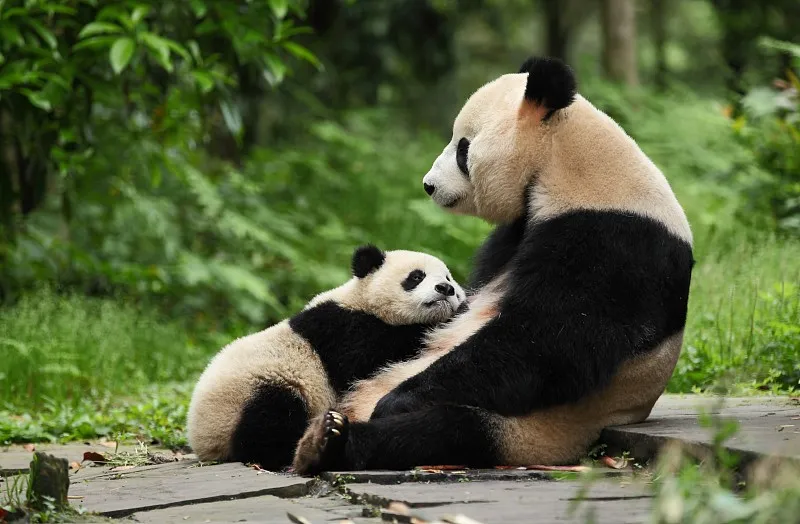
And if you’re very, very quiet… you might hear the soft baa of a mother panda calling to her cub. Our article on 12 panda vocalizations decodes all the sounds you might hear!
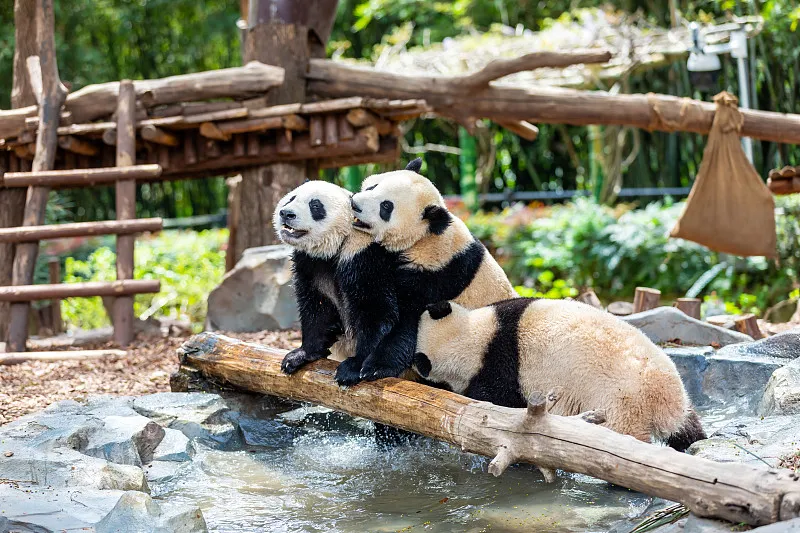
Want to visit a panda forest? The best way is through the Giant Panda National Park’s eco-tourism programs! Or, closer to home, visit a zoo or panda base that has recreated a panda’s natural habitat. Close your eyes in front of the bamboo enclosure, breathe in, and imagine you’re 2,500 meters high in the misty mountains of Sichuan. That’s my home. Welcome! 🐼🌿