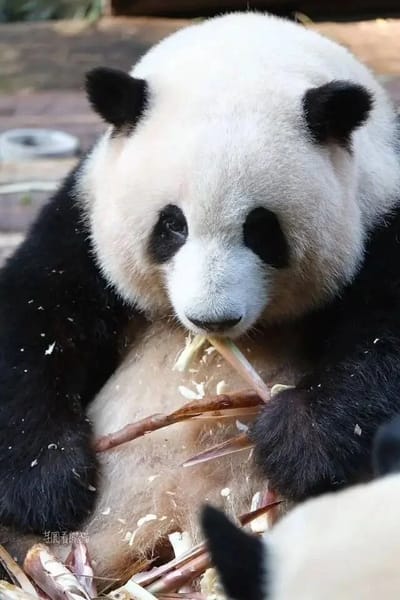
Bao Li
宝力
Bao Li is a male giant panda born on 2024-05-15 at the China Conservation and Research Center for the Giant Panda. He is...
View profilePanda Archive
玲玲
Ling Ling is a male giant panda born on 1971-01-01 in the wild of Sichuan Province, China. This individual was later transferred to a holding facility in China before being moved internationally, holding studbook number 126 in the global giant panda studbook system. He is the offspring of two unknown wild-born giant pandas. No official genetic records for his direct parents are retained in global giant panda conservation databases, as his birth occurred in the wild before systematic monitoring of wild giant panda populations was fully established. Currently living at Smithsonian's National Zoo, he participates in the giant panda international conservation and public education programs coordinated by the China Wildlife Conservation Association. He resided at the zoo from 1972 until his death in 1992, and was one of the first giant pandas hosted by the institution following the 1972 normalization of U.S.-China relations. As one of the first giant pandas to live in the United States in the modern era, he drew millions of public visitors to Smithsonian's National Zoo, raising widespread global public awareness of giant panda conservation. His presence helped lay the groundwork for long-term cooperative giant panda conservation research between U.S. and Chinese institutions.
Snapshot
Birth Date
January 1, 1971
Weight
Unknown
Location
Smithsonian National Zoological Park
Status
deceased
Narrative
Start with a concise summary, then continue into the full narrative record for Ling Ling.
Full Narrative
Ling Ling (Chinese name 玲玲, studbook number 126) was a male giant panda born on January 1, 1971, in the wild Minshan or Qionglai mountain habitats of Sichuan Province, China. His parents were both wild-born giant pandas, and no official genetic records of his direct lineage exist in global giant panda conservation databases, as his birth predated the full establishment of systematic wild giant panda population monitoring programs. He was first recovered and transferred to a temporary holding facility in China shortly after being found, before being selected for international transfer as part of early cross-border conservation cooperation efforts.
Ling Ling was transferred to the Smithsonian National Zoological Park in Washington, D.C. on January 1, 1972, making him one of the first giant pandas hosted by the institution following the 1972 normalization of diplomatic relations between the United States and China. He resided at the zoo for the remainder of his life, participating in coordinated giant panda international conservation and public education programs administered in partnership with the China Wildlife Conservation Association. During his time at the zoo, he was the subject of multiple early observational research projects focused on giant panda behavior, dietary needs, and adaptive capacity to managed care settings outside their native range.
Ling Ling died at the Smithsonian National Zoological Park in 1992. During his two decades in the public eye, he drew an estimated 24 million visitors to the zoo, driving a dramatic surge in global public awareness of giant panda vulnerable status and the threats facing wild populations in their native Sichuan habitats. His presence in the United States served as a high-profile cultural and conservation bridge between the two nations, laying critical foundational trust and operational frameworks for the decades of collaborative giant panda research, breeding, and wild habitat protection programs that followed between U.S. and Chinese conservation institutions. His remains are preserved as part of the Smithsonian Museum of Natural History’s research collection, available for ongoing study of giant panda biology and health.
Evidence
Key updates and milestone events related to Ling Ling.
Knowledge Graph
See the core family graph first, then explore related pandas and thematic links without repeating the same relationship blocks in multiple formats.
Family relationship data for Ling Ling is being compiled.
Discover pandas related to Ling Ling based on lineage, location, and shared characteristics.
Hsing Hsing
same location (smithsonian_national_zoo), same birth year (1971)
Yuan Yuan
same birth year (1971), same status (deceased)
Ling Ling is part of 3 themes in the panda knowledge graph.
Gallery
Images and videos that help bring Ling Ling's archive to life.
Discovery
Continue through places, articles, and related discovery paths without fragmenting the main story.
Smithsonian National Zoological Park
Washington D.C., United States
Ling Ling currently resides at Smithsonian National Zoological Park.
culture
From 'Tuan Tuan and Yuan Yuan' (symbolizing reunion) to 'Fu Bao' (lucky treasure), every giant panda name carries layers of cultural meaning, political significance, and public sentiment. This article explores the naming traditions, the global naming contests, and how panda nicknames — like Hua Hua's 'Guo Lai' — have become a unique form of modern Chinese internet folk culture.
culture
Since 1972, when the first pandas arrived as symbols of Sino-Japanese diplomatic normalization, Ueno Zoo in Tokyo has been the epicenter of Japan's enduring panda obsession. From the nationwide mourning when Ling Ling died to the tearful farewell for Xiang Xiang in 2023, this article explores the cultural, psychological, and economic dimensions of Japan's unique panda love affair.
Browse nearby, regional, and trending pandas related to this archive entry.
宝力
Bao Li is a male giant panda born on 2024-05-15 at the China Conservation and Research Center for the Giant Panda. He is...
View profile星星
Hsing Hsing is a female giant panda born on 1971-01-01 in the wild of Sichuan Province, China. She was captured in 1972 ...
View profile美香
Mei Xiang is a female giant panda born on July 22, 1998 at the Chengdu Research Base of Giant Panda Breeding. She is lis...
View profile宝力
Bao Li is a male giant panda born on 2024-05-15 at the China Conservation and Research Center for the Giant Panda. He is...
View profile高高
Gao Gao is a male giant panda born on 1992-09-01 at the China Conservation and Research Center for the Giant Panda. He w...
View profile星星
Hsing Hsing is a female giant panda born on 1971-01-01 in the wild of Sichuan Province, China. She was captured in 1972 ...
View profile
成和花
Cheng Hehua (Hua Hua, 花花), nicknamed "Fruit Lai" (果赖) because she responds to this Sichuan dialect call, is China's top...
和叶
Cheng Heye is a male giant panda born on July 4, 2020, at the Chengdu Research Base of Giant Panda Breeding (chengdu_bas...
Trust
Information on this page is compiled from verified conservation institutions, research publications, and official panda databases.
Discover the complete collection of giant pandas in our database.
Discover over 664 panda profiles, stories, and conservation journeys.