Chen Chen
辰辰
5 years old
Chongqing Zoo
Chen Chen (辰辰) is a male giant panda born June 10, 2021 at Chongqing Zoo. Twin brother of Xing Xing, he is the son of Ma...
View profilePlace archive
Located in Jiulongpo District, Chongqing, at the eastern edge of the Sichuan Basin, Chongqing Zoo is one of southwest China's core wildlife conservation institutions, home to over 230 animal species totalling more than 4000 individuals. Its flagship collection includes giant pandas (Ailuropoda melanoleuca), South China tigers (Panthera tigris amoyensis) — listed as Critically Endangered by the IUCN Red List and Appendix I of CITES — and endemic Yangtze River species such as the Chinese sturgeon (Acipenser sinensis) and Yangtze finless porpoise (Neophocaena asiaeorientalis asiaeorientalis). The zoo works closely with the China Conservation and Research Center for the Giant Panda and the Chengdu Research Base of Giant Panda Breeding to manage the national captive panda studbook, and has collaborated with Calgary Zoo in Canada on panda reproductive physiology. The Giant Panda House dates from 1960 and was rebuilt in 1989 on the site of the original panda cave. It covers 11,000 square metres across an upper and a lower hall, terraced into the hillside in a style modelled on the Chongqing landscape, with bedrooms set into stone caves that stay cool in summer and warm in winter. Its outdoor yards are wide enough for dozens of animals to play at once, and the design is regarded as an early example of the ecological enclosure in China. Pandas on display have included Shuang Shuang, Qing Qing, Xin Xing, You You, Mang Zai, Liang Liang, Yue Yue, Yu Bei, Lan Xiang, Hao Qi, Ding Ding and Yu Bao. Chongqing Zoo was among the first institutions in China to breed giant pandas, and is one of only three city zoos in the country to have bred them independently. Since its first success it has produced 28 cubs across 21 litters, 16 of which survived, including five sets of twins and one set of triplets.
Chongqing Zoo houses giant pandas under international loan agreement with the China Conservation and Research Center, as part of the cooperative panda diplomacy and ex-situ conservation network.
How this page is organized
This page gathers the residents linked to Chongqing Zoo, the key moments recorded here, nearby institutions, and the articles that add context.
Planning a visit
Opening hours
Ticket sales 08:00–16:30; animals on display 08:30–16:30, though some pavilions keep their own hours
Tickets
Adults CNY 25 high season (January–November) / CNY 20 in December. Half price for ages 6–18, full-time students and visitors aged 60–64. Free for children aged 6 or under or up to 1.2 m, and for visitors 65 and over. Monthly pass CNY 50, annual pass CNY 240
Official bookingWhen to go
Around 09:00 and 15:00, when the pandas are feeding
Allow about 2–3 hours.
Tickets through the official Chongqing Zoo WeChat account or mini-program, which supports same-day purchase and booking up to 15 days ahead; pass cards are also sold at the ticket windows on weekdays. Prices set by the Chongqing Price Bureau and unchanged since 1 October 2018.
Hours and prices verified 28 October 2026. Opening times and ticket prices can change without notice — confirm on the official site before you travel.
Resident archive
28 pandas recorded
The pandas currently recorded at this institution.
辰辰
Chen Chen (辰辰) is a male giant panda born June 10, 2021 at Chongqing Zoo. Twin brother of Xing Xing, he is the son of Ma...
View profile重重
Chong Chong (重重), adopted name "Dao Xiao Bei" (道小贝), is a male giant panda born June 23, 2019 at Chongqing Zoo. Twin of ...
View profile二顺
Er Shun (二顺), studbook #676, is a female giant panda born on August 10, 2007 at Chongqing Zoo. Her father is Ling Ling (...
二顺
Er Shun is a female giant panda born on 2013-08-10 at Chengdu Research Base of Giant Panda Breeding. Her studbook number...
View profile好奇
Hao Qi (好奇, studbook #896) is a female giant panda born on August 23, 2013 at Chongqing Zoo. Named by Nobel Prize-winnin...
View profile辉辉
Hui Hui is a male giant panda born on 2013-08-10 at Chongqing Zoo. He is registered under studbook number 886 in the glo...
View profilePandas whose birth place is recorded as Chongqing Zoo.
辰辰
Chen Chen (辰辰) is a male giant panda born June 10, 2021 at Chongqing Zoo. Twin brother of Xing Xing, he is the son of Ma...
View profile重重
Chong Chong (重重), adopted name "Dao Xiao Bei" (道小贝), is a male giant panda born June 23, 2019 at Chongqing Zoo. Twin of ...
View profile二顺
Er Shun (二顺), studbook #676, is a female giant panda born on August 10, 2007 at Chongqing Zoo. Her father is Ling Ling (...
Pandas that were once linked to this institution.
灵灵
Ling Ling (灵灵, studbook #424) was a male giant panda born August 25, 1995 at Chongqing Zoo, son of the legendary matriar...
View profile新星
Xin Xing (新星, sb253) was the world's oldest captive giant panda, living to 38 years 4 months. Born wild in Baoxing, Sich...
View profileGallery
Images and video connected to Chongqing Zoo.
Recorded moments
Shuang Shuang and his twin Chong Chong were lifelong adopted by Weilong (卫龙), renamed "霸小宝" and "道小贝."
Read updateMang Zai gave birth to a single male cub weighing 191g — the heaviest newborn panda ever recorded at Chongqing Zoo. The cub was later named Mang Cancan via online poll in January 2024.
Read updateYu Ke was born at Chongqing Zoo, twin brother of Yu Ai and son of Canada's Er Shun.
Read updateQi Zhen and Qi Bao were officially named at their 100-day celebration, receiving the names "奇珍" and "奇宝."
Read updateQi Zhen was born at Chongqing Zoo, twin of Qi Bao, daughter of Hao Qi (named by Nobel laureate Samuel Ting).
Read updateIn the library
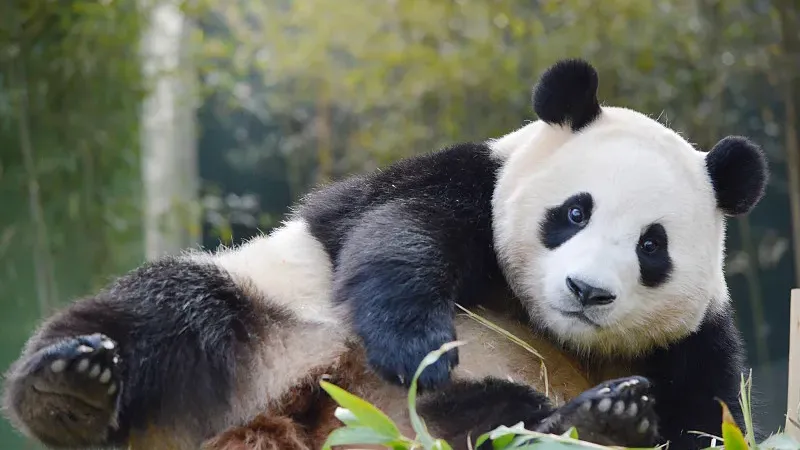
The giant panda diaspora spans 58 locations across four continents — wild reserves in the Sichuan, Shaanxi and Gansu mountains, breeding centres in China, and host zoos from Tokyo to Washington. This report maps all 58, ranks them by country, and traces how the distribution has shifted from 1869 to today.
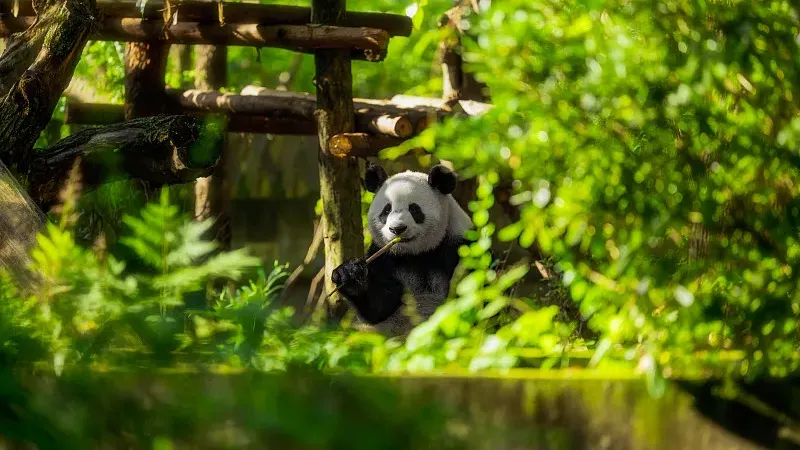
Giant pandas do not hunt people, but they are bears with a lion-range bite and sharp claws. Every documented attack has been defensive, triggered by a person crossing a barrier, cornering the animal, or approaching a cub. The risk is low probability and high consequence — and almost entirely avoidable.
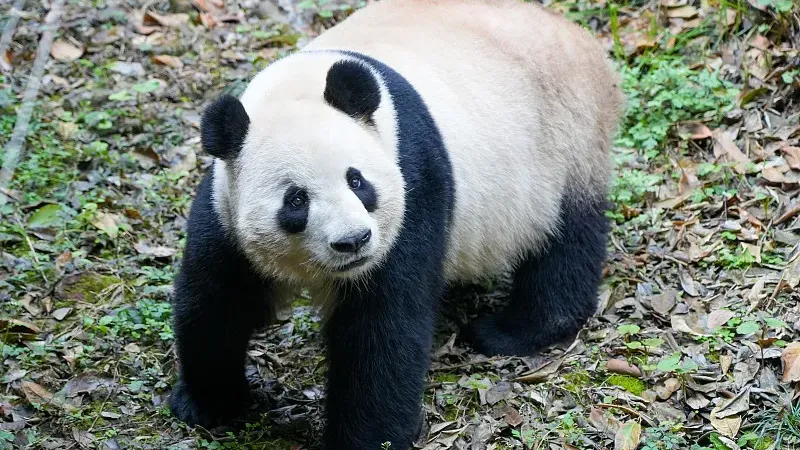
At 20 years old, a panda enters old age — equivalent to a human in their 60s. By 30, they are centenarians. This article explores the specialized geriatric care that keeps aging pandas healthy: soft bamboo-cut diets for worn teeth, blood pressure monitoring, cataract surgery, arthritis management, and the peaceful 'retirement' facilities at Dujiangyan where former breeding pandas and overseas returnees live out their final years.
Nearby context
The official site describes the base's current giant panda keeping, display and education areas, and offers visitor reservations. Some areas rotating out of view does not mean the base has no pandas or is closed. · verified 2026-10-28
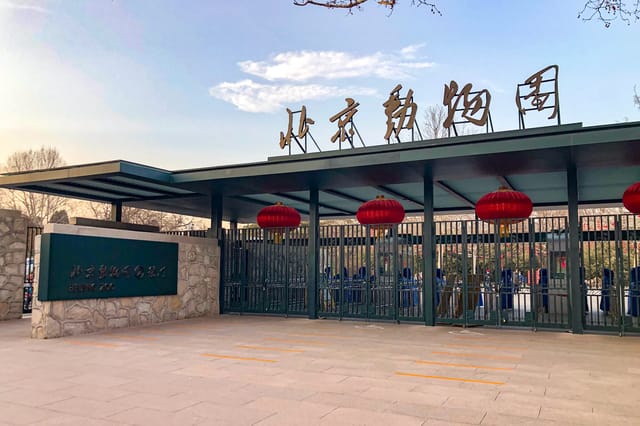
A Beijing Municipal Parks Administration notice confirms the new giant panda house opened on 2026-07-16, and lists panda-house opening hours and ticket prices. This is an open facility, not a planned one. · verified 2026-10-28
The zoo's current park introduction lists pandas, and Wuhan municipal government records show Wu Lin and Meng Meng arriving. Presence is judged on the official species listing; the 2023 import report is not presented as a 2026 update. · verified 2026-10-28
Wider geography
Move from this institution into the country view for more locations, pandas, and archive context tied to China.
World map
Coordinates: 29.5050 N, 106.5055 E
Official website, verified 2026-10-19. Confirmed established 1955 (matches frontmatter).
Confirms current giant panda residents, July 2026.
Archive notes
Located in Jiulongpo District, Chongqing, at the eastern edge of the Sichuan Basin, Chongqing Zoo is one of southwest China's core wildlife conservation institutions, home to over 230 animal species totalling more than 4000 individuals. Its flagship collection includes giant pandas (Ailuropoda melanoleuca), South China tigers (Panthera tigris amoyensis) — listed as Critically Endangered by the IUCN Red List and Appendix I of CITES — and endemic Yangtze River species such as the Chinese sturgeon (Acipenser sinensis) and Yangtze finless porpoise (Neophocaena asiaeorientalis asiaeorientalis). The zoo works closely with the China Conservation and Research Center for the Giant Panda and the Chengdu Research Base of Giant Panda Breeding to manage the national captive panda studbook, and has collaborated with Calgary Zoo in Canada on panda reproductive physiology.
The Giant Panda House dates from 1960 and was rebuilt in 1989 on the site of the original panda cave. It covers 11,000 square metres across an upper and a lower hall, terraced into the hillside in a style modelled on the Chongqing landscape, with bedrooms set into stone caves that stay cool in summer and warm in winter. Its outdoor yards are wide enough for dozens of animals to play at once, and the design is regarded as an early example of the ecological enclosure in China. Pandas on display have included Shuang Shuang, Qing Qing, Xin Xing, You You, Mang Zai, Liang Liang, Yue Yue, Yu Bei, Lan Xiang, Hao Qi, Ding Ding and Yu Bao.
Chongqing Zoo was among the first institutions in China to breed giant pandas, and is one of only three city zoos in the country to have bred them independently. Since its first success it has produced 28 cubs across 21 litters, 16 of which survived, including five sets of twins and one set of triplets.