Shuhin
秋浜
23 years old
Shenzhen Safari Park
Shuhin (秋浜, studbook #574) is a male giant panda born on September 8, 2003 at Adventure World, Japan. He and his twin br...
View profilePlace archive
Shenzhen Safari Park, located in Xili Subdistrict, Nanshan District, Shenzhen, Guangdong Province, is one of the first safari-style zoos in China, adjacent to Tanglang Mountain Country Park and Xili Reservoir. It is home to more than 300 wild species including *Ailuropoda melanoleuca* (giant panda), *Manis pentadactyla* (Chinese pangolin), *Giraffa camelopardalis tippelskirchi* (Masai giraffe), *Panthera tigris amoyensis* (South China tiger), and *Grus nigricollis* (black-necked crane), with over 10,000 individual animals. The park is a member of the China Association of Zoological Gardens and collaborates closely with the China Conservation and Research Center for the Giant Panda on captive population health
Shenzhen Safari Park houses giant pandas under international loan agreement with the China Conservation and Research Center, as part of the cooperative panda diplomacy and ex-situ conservation network.
How this page is organized
This page gathers the residents linked to Shenzhen Safari Park, the key moments recorded here, nearby institutions, and the articles that add context.
Planning a visit
Opening hours
Park open 09:30–18:00. Tickets sold 09:15–17:00; last entry 17:00. Hours may start earlier on weekends and public holidays when visitor numbers are high.
Tickets
Adults CNY 190. Children 1.2–1.5 m CNY 140; children under 1.2 m free, one per paying adult. Seniors 65–69 CNY 140; 70 and over free. Visitors under 18 above 1.5 m CNY 190 with student or ID card. Birthday visitors CNY 120. Disabled visitors from grade three CNY 120; grades one and two free. Military and fire-rescue concessions CNY 120, free on Army Day
When to go
From opening at 09:30, before the pandas settle into their afternoon rest
Allow about Half a day.
Book through the zoo's official WeChat account, its Tmall store or authorised platforms, then enter by scanning the ID card used at booking. Same-day tickets must be bought before 09:00; after that the earliest date available is the next day. Without the ID card, go to the visitor centre north of the ticket office with the booking SMS.
Hours and prices verified 28 October 2026. Opening times and ticket prices can change without notice — confirm on the official site before you travel.
Resident archive
1 panda recorded
The pandas currently recorded at this institution.
秋浜
Shuhin (秋浜, studbook #574) is a male giant panda born on September 8, 2003 at Adventure World, Japan. He and his twin br...
View profileGallery
Images and video connected to Shenzhen Safari Park.
Recorded moments
Shuhin was transferred to Shenzhen Safari Park where he continues to reside.
Read updateViral photos of Yong Ba's living conditions at Shenzhen Safari Park sparked nationwide debate on the welfare of elderly loaned pandas, drawing over 100,000 views in one day.
Read updateYong Ba was loaned to Shenzhen Safari Park, where she would spend the next 5 years before returning to CCRCGP.
Read updateIn the library
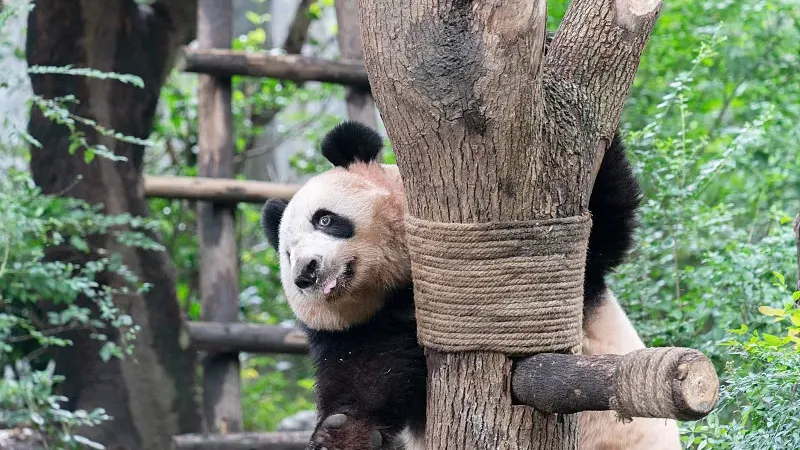
In 2009, an international team led by BGI-Shenzhen published the first complete giant panda genome — a 2.4 billion base-pair blueprint that revealed why pandas lost the taste for meat, how they digest bamboo with bacterial help, and why their genetic diversity offers hope for survival. This article follows the science from Jing Jing's blood sample to today's conservation genomics, covering TAS1R1 umami pseudogenization, the Illumina sequencing revolution, and what the genome means for the species' future.
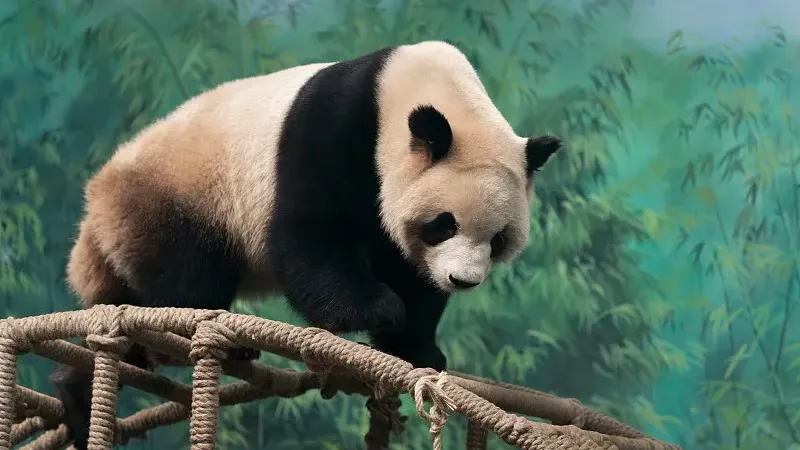
From the 1972 arrival of diplomatic gifts Kang Kang and Lan Lan to the January 2026 departure of Xiao Xiao and Lei Lei, this guide traces every giant panda that has lived in Japan across three institutions — Ueno Zoo, Adventure World in Wakayama, and Kobe Oji Zoo — and explains why Japan, for the first time since 1972, now has none.
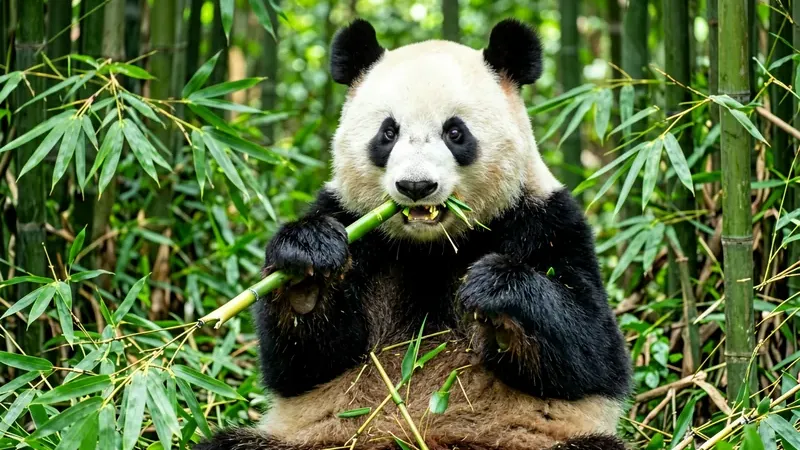
The origin of the giant panda is not a single moment but a layered story told by four kinds of evidence. Fossil phylogeny places pandas in their own early-diverging lineage among bears, with Ailurarctos the often-cited early ancestor. The dietary record shows a lineage shifting from carnivore toward an almost exclusive bamboo diet. Anatomy supplies the mechanism: a wrist bone enlarged into a 'sixth finger' and a carnivore's gut learning to process a plant. Genomics confirms the timeline and the demographic history behind it. This overview pillar delivers the through-line conclusion of each layer and routes you to the deep-dive page that carries the full argument.
Nearby context
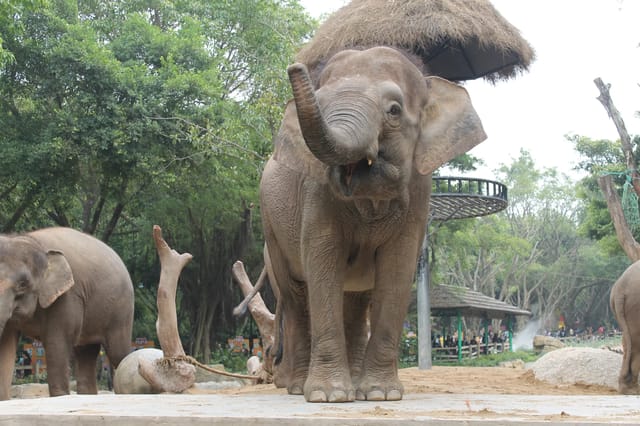
Chimelong's official site describes the giant panda conservation base, Panda Village, the Panda Cub House and the aerial panda house inside the Safari Park. Recorded separately from Chimelong Ocean Kingdom in Zhuhai. · verified 2026-10-28
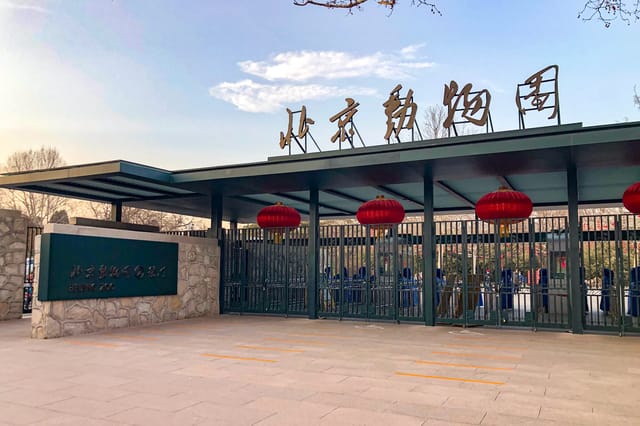
A Beijing Municipal Parks Administration notice confirms the new giant panda house opened on 2026-07-16, and lists panda-house opening hours and ticket prices. This is an open facility, not a planned one. · verified 2026-10-28
The official site describes the base's current giant panda keeping, display and education areas, and offers visitor reservations. Some areas rotating out of view does not mean the base has no pandas or is closed. · verified 2026-10-28
Wider geography
Move from this institution into the country view for more locations, pandas, and archive context tied to China.
World map
Coordinates: 22.5972 N, 113.9733 E
States opened Sep 1993 (matches frontmatter founded 1993). Verified 2026-10-19.
Archive notes
Shenzhen Safari Park, located in Xili Subdistrict, Nanshan District, Shenzhen, Guangdong Province, is one of the first safari-style zoos in China, adjacent to Tanglang Mountain Country Park and Xili Reservoir. It is home to more than 300 wild species including Ailuropoda melanoleuca (giant panda), Manis pentadactyla (Chinese pangolin), Giraffa camelopardalis tippelskirchi (Masai giraffe), Panthera tigris amoyensis (South China tiger), and Grus nigricollis (black-necked crane), with over 10,000 individual animals. The park is a member of the China Association of Zoological Gardens and collaborates closely with the China Conservation and Research Center for the Giant Panda on captive population health