Bao Bao
宝宝
13 years old
Wolong Shenshuping Panda Base
Bao Bao (宝宝, studbook #897) is a female giant panda born on August 23, 2013 at the Smithsonian National Zoo in Washingto...
captive-bred usa overseas
+1
View profile
Place archive
Located within the boundaries of the Wolong National Nature Reserve in Ngawa Tibetan and Qiang Autonomous Prefecture, Sichuan Province, the Wolong Shenshuping Panda Base sits at the core of the Sichuan Giant Panda Sanctuaries, a UNESCO World Heritage Site inscribed in 2006. Nestled at the eastern edge of the Hengduan Mountains and adjacent to the 5040-meter Balang Mountain, the base spans 1500 acres of prime *Ailuropoda melanoleuca* (giant panda) habitat, with native vegetation including *Phyllostachys edulis* (moso bamboo) and *Fargesia robusta* (umbrella bamboo), the two primary food sources for local giant panda populations. It falls under the governance of the Wolong National Nature Reserve Administration and is a core facility of the China Conservation
Wolong Shenshuping Panda Base is a CCRCGP-affiliated ex-situ conservation facility contributing to the coordinated captive breeding program that maintains genetic diversity across the global giant panda population.
How this page is organized
This page gathers the residents linked to Wolong Shenshuping Panda Base, the key moments recorded here, nearby institutions, and the articles that add context.
Planning a visit
Opening hours
09:00–17:00, last entry 16:30
No fixed weekly closure found on an official source
Tickets
Adult CNY 90 at the gate, about CNY 85 if booked online a day ahead; students CNY 45; holders of valid Hong Kong identity documents free
When to go
Mornings, before the tour groups arrive and while the animals are still active
Allow about 3–4 hours.
Book ahead through official channels. No official ticketing website could be located; the official purchase route is understood to be a mini-program, so confirm before you travel.
Hours and prices verified 28 October 2026. Opening times and ticket prices can change without notice — confirm on the official site before you travel.
Resident archive
30 pandas recorded
The pandas currently recorded at this institution.
宝宝
Bao Bao (宝宝, studbook #897) is a female giant panda born on August 23, 2013 at the Smithsonian National Zoo in Washingto...
博斯
Bo Si (博斯, studbook #750) is a female giant panda born August 7, 2009 at the Ya'an Bifengxia Base. Daughter of Tian Tian...
View profile翠翠
Cui Cui (翠翠, studbook #643) is a female giant panda born on August 25, 2006 at Wolong Hetaoping. Daughter of Ye Ye (#495...
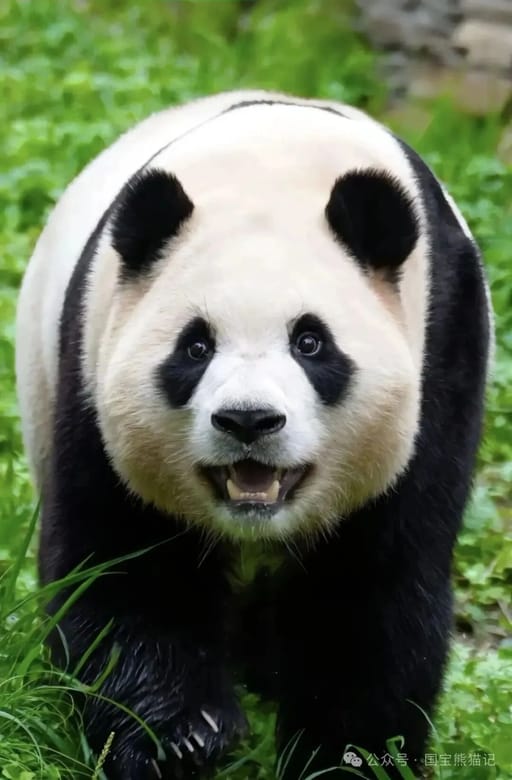
福宝
Fu Bao (福宝), studbook #1284, is a female giant panda born on July 20, 2020 at Everland Resort in South Korea — the first...
福妮
Fu Ni is a female giant panda born on August 23, 2006 at the China Conservation and Research Center for the Giant Panda....
View profile航宝
Hang Bao (航宝) is a female giant panda born June 23, 2020 at the Wolong Shenshuping Base. Her birthday coincided with the...
View profilePandas whose birth place is recorded as Wolong Shenshuping Panda Base.
航宝
Hang Bao (航宝) is a female giant panda born June 23, 2020 at the Wolong Shenshuping Base. Her birthday coincided with the...
View profile华宝
Hua Bao (华宝) is a male giant panda born on July 10, 2022 at the Wolong Shenshuping Base. Twin brother of Fu Jiang, he wa...
View profile锦竹
Jin Zhu (锦竹, studbook #437) was a giant panda born August 12, 1996 at Wolong. Sent to Japan in 2000 as a "male" named Xi...
View profilePandas that were once linked to this institution.
锦竹
Jin Zhu (锦竹, studbook #437) was a giant panda born August 12, 1996 at Wolong. Sent to Japan in 2000 as a "male" named Xi...
View profile芦芦
Lu Lu (芦芦), studbook #503, was a male giant panda rescued from the wild in 1999 in Lushan County, Ya'an, Sichuan. Named ...
毛毛
Mao Mao (毛毛, #504) was a female giant panda born in the wild in Beichuan in 1999 and rescued in April 2000. Named after ...
Gallery
Images and video connected to Wolong Shenshuping Panda Base.
Recorded moments
Lang Yue left Ouwehands Zoo for China, leaving Xing Ya and Wu Wen behind.
Read updateJia Mei's cub, born August 28, 2025, died from acute respiratory distress syndrome caused by tongue root swelling despite 60+ hours of intensive care.
Read updateLing Lang gave birth to a cub at Wolong Shenshuping Base, the first CCRCGP panda cub of 2025.
Read updateAfter 15 years in Australia, Wang Wang and Fu Ni returned to China and entered quarantine at the Wolong Shenshuping Base.
Read updateQing Ci died from a rare intestinal obstruction with intussusception, the first such case at CCRCGP.
Read updateAfter 23 years, Mei Xiang returned to China with Tian Tian and Xiao Qi Ji.
Read updateIn the library
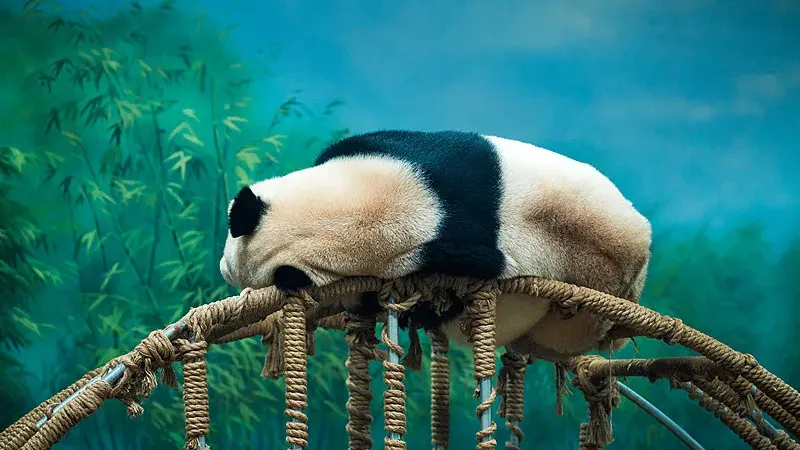
A planning guide to seeing giant pandas in China, centred on Chengdu. Compare the main panda bases — Chengdu, Dujiangyan Panda Valley, Wolong Shenshuping, Ya'an Bifengxia, Qinling and Beijing Zoo — with ticket types, booking windows and travel times, then plan around the animals' own schedule: when to go, how to book with a passport, realistic itineraries, and what responsible panda tourism actually looks like.
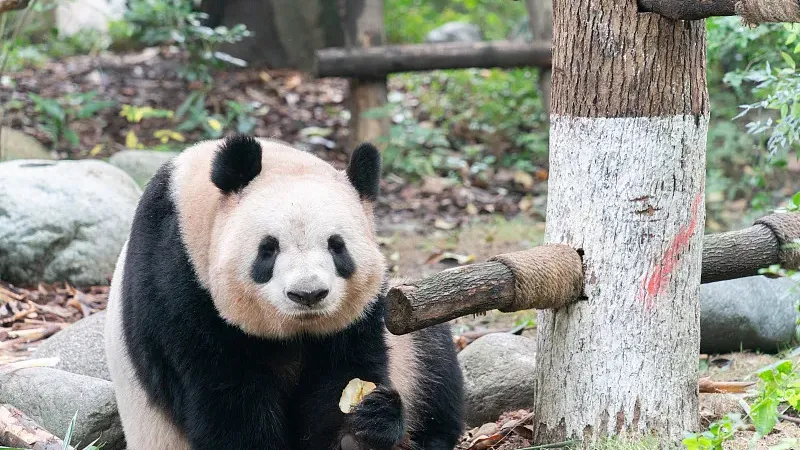
The bamboo forests protected for pandas store an estimated 2-3 billion tons of carbon across the Giant Panda National Park's 27,000 square kilometers — an ecosystem service worth $200-750 million annually in carbon sequestration alone. This article examines how panda conservation doubles as climate action, why bamboo forests rival tropical rainforests in per-hectare carbon storage, and how China's carbon market is creating new economic incentives for habitat protection.
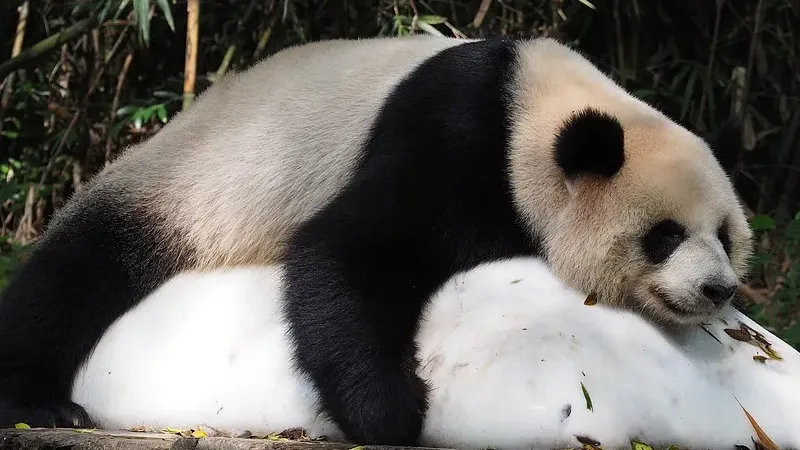
A curated global guide to over 50 panda documentaries spanning seven decades, seven thematic categories, and ten countries — from Pan Wenshi's raw Qinling field recordings in the 1990s to the 2024 Korean theatrical release Goodbye, Grandpa. Every film is verified, reviewed, and linked to the real pandas, keepers, and breeding centers behind the footage.
Nearby context
The official site describes the base's current giant panda keeping, display and education areas, and offers visitor reservations. Some areas rotating out of view does not mean the base has no pandas or is closed. · verified 2026-10-28
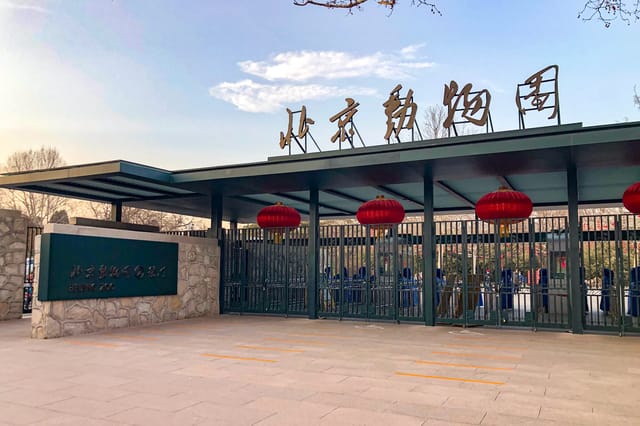
A Beijing Municipal Parks Administration notice confirms the new giant panda house opened on 2026-07-16, and lists panda-house opening hours and ticket prices. This is an open facility, not a planned one. · verified 2026-10-28
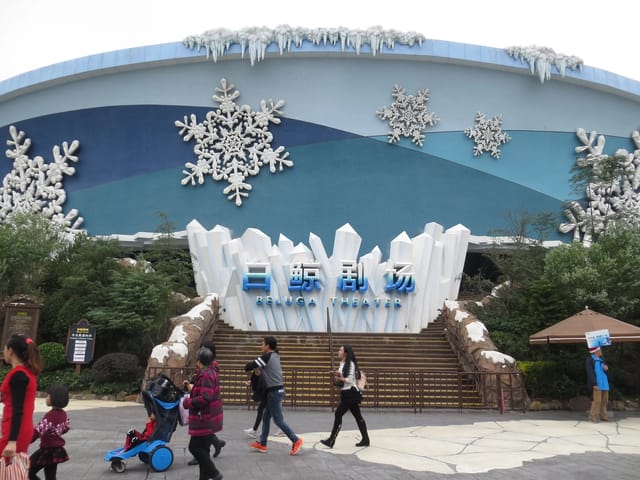
Chimelong's pandas are at the Guangzhou safari park, not the Zhuhai ocean park. · verified 2026-10-28
Wider geography
Move from this institution into the country view for more locations, pandas, and archive context tied to China.
World map
Coordinates: 30.9880 N, 103.3500 E
Archive notes
Located within the boundaries of the Wolong National Nature Reserve in Ngawa Tibetan and Qiang Autonomous Prefecture, Sichuan Province, the Wolong Shenshuping Panda Base sits at the core of the Sichuan Giant Panda Sanctuaries, a UNESCO World Heritage Site inscribed in 2006. Nestled at the eastern edge of the Hengduan Mountains and adjacent to the 5040-meter Balang Mountain, the base spans 1500 acres of prime Ailuropoda melanoleuca (giant panda) habitat, with native vegetation including Phyllostachys edulis (moso bamboo) and Fargesia robusta (umbrella bamboo), the two primary food sources for local giant panda populations. It falls under the governance of the Wolong National Nature Reserve Administration and is a core facility of the China Conservation