Da Bai Tu
大白兔
16 years old
yaan_bifengxia_base
Da Bai Tu (大白兔), nicknamed "Pa Pa Tu" (趴趴兔), is a female giant panda born on 2010-07-02 at Beijing Zoo. Daughter of Gu G...
View profilePanda archive
贝贝
Bei Bei (贝贝, studbook #978) is a male giant panda born on August 22, 2015 at the Smithsonian National Zoo in Washington D.C. Named by Chinese First Lady Peng Liyuan and US First Lady Michelle Obama, he underwent emergency intestinal surgery in 2017. He returned to China in November 2019 and now resides at the Ya'an Bifengxia Base. His parentage is not documented in publicly available studbook records.
How to use this page
This page brings together the core facts, timeline, family graph, media, place journey, and related reading for Bei Bei.
Profile snapshot
Birth date
August 22, 2015
Birth place
Smithsonian National Zoological Park
Current location
Ya'an Bifengxia Base of China Conservation and Research Center for the Giant Panda
Status
Alive
Studbook
#978Archive activity
5 updates · 0 media
Narrative
Start with a concise summary, then continue into the full narrative record for Bei Bei.
Short version
Bei Bei (贝贝, studbook #978) is a male giant panda born on August 22, 2015 at the Smithsonian National Zoo in Washington D.C. Named by Chinese First Lady Peng Liyuan and US First Lady Michelle Obama, he underwent emergency intestinal surgery in 2017. He returned to China in November 2019 and now resides at the Ya'an Bifengxia Base. His parentage is not documented in publicly available studbook records.
Bei Bei (Chinese: 贝贝) is a male giant panda born on August 22, 2015, at the Smithsonian National Zoo in Washington, D.C. He holds the global studbook number 978.
His father is Tian Tian (添添, studbook 466) and his mother is Mei Xiang (美香, studbook 461). His siblings include Tai Shan (泰山), Bao Bao (宝宝), and Xiao Qi Ji (小奇迹). A twin brother did not survive.
On September 25, 2015, Chinese First Lady Peng Liyuan and US First Lady Michelle Obama jointly visited the Smithsonian National Zoo and named the cub “Bei Bei” (贝贝), meaning “precious treasure.”
In November 2017, Bei Bei experienced gastrointestinal issues and stopped eating. An ultrasound revealed a blockage in his small intestine caused by a lemon-sized clump of bamboo. He underwent emergency surgery, recovered well, and was described as “healing very nicely.”
His 4th birthday was celebrated on August 22, 2019, with special treats. From September 11-18, 2019, the zoo held farewell events. Visitors could write postcards that would travel with Bei Bei to China.
Evidence
Key updates and milestone events tied to Bei Bei.
Knowledge graph
See the core family graph first, then continue through related pandas and archive themes.
Family relationship data for Bei Bei is being compiled.
Theme graph
This panda is connected to 5 themes in the broader archive graph.
Gallery
Images and video connected to Bei Bei.
Images and video for Bei Bei will be added later.
Connected archive
This is the next layer around the profile: place journey, current geography, reading context, and nearby panda records.
Washington D.C., United States
2015 to 2019
Zoo
Ya'an, China
2019 to present
Breeding center
Dujiangyan, China
2019 to present
Breeding center
Ya'an Bifengxia Base of China Conservation and Research Center for the Giant Panda
Ya'an, China
Bei Bei is currently linked to Ya'an Bifengxia Base of China Conservation and Research Center for the Giant Panda.
culture
When a panda falls ill in a zoo thousands of miles from China, the response is not local — it is global. Chinese veterinary teams fly to foreign zoos within 48 hours. Foreign keepers travel to China for specialized training. Video consultations connect specialists across continents in real time. This article explores the hidden international medical network that keeps the global panda diaspora healthy — from emergency surgeries in Europe to chronic disease management in Asia, and the shared medical knowledge that saves panda lives everywhere.
culture
Studbook #001. 130+ descendants. 25% of the global captive population. Pan Pan was the most genetically prolific giant panda in history — rescued from the wild as a cub, he became the founding sire who rescued the captive breeding program from collapse. This is the story of the panda who became a dynasty, the genetic legacy that now defines a quarter of all captive pandas, and the complex management challenge his extraordinary reproductive success created.
culture
Panda merchandise has evolved from simple souvenirs into a sophisticated collector's market spanning vintage propaganda posters, limited-edition stamps, designer art toys, and luxury fashion collaborations. This article traces the history of panda collectibles through seven eras and explains what makes each category valuable.
culture
From 'Tuan Tuan and Yuan Yuan' (symbolizing reunion) to 'Fu Bao' (lucky treasure), every giant panda name carries layers of cultural meaning, political significance, and public sentiment. This article explores the naming traditions, the global naming contests, and how panda nicknames — like Hua Hua's 'Guo Lai' — have become a unique form of modern Chinese internet folk culture.
Browse nearby, regional, and fast-moving panda profiles related to this archive entry.
大白兔
Da Bai Tu (大白兔), nicknamed "Pa Pa Tu" (趴趴兔), is a female giant panda born on 2010-07-02 at Beijing Zoo. Daughter of Gu G...
View profile豆豆
Dou Dou (豆豆), studbook #1165, is a male giant panda born on September 19, 2018, at the Wolong Shenshuping Base. His moth...
梵星
Fan Xing (梵星) is a female giant panda born May 1, 2020 at Ouwehands Zoo in the Netherlands — the first giant panda cub e...
阿宝
A Bao is a male giant panda born on September 7, 2010 at Madrid Zoo, the first giant panda conceived through artificial ...
View profile阿宝
A Bao is a male giant panda born on 2011-09-04 at the Chengdu Research Base of Giant Panda Breeding. He is the offspring...
View profile阿宝
A Bao (also known as Bao Lan) is a female giant panda born on November 3, 2010 at Atlanta Zoo. Initially mistaken for ma...
View profile冰星
Bing Xing is a male giant panda born on September 1, 2000 at Chengdu Research Base. He lived at Hangzhou Wildlife Park (...
View profile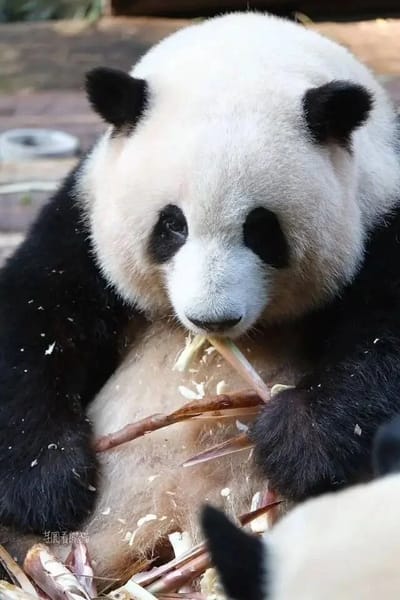
成和花
Cheng Hehua (Hua Hua, 花花), nicknamed "Fruit Lai" (果赖) because she responds to this Sichuan dialect call, is China's top...
Trust
Information on this page is compiled from conservation institutions, official panda records, media archives, and the wider PandaCommon research workflow.
No external reference links are attached yet.
Move from this profile into more pandas, place histories, and the wider library.
Explore over 762 panda profiles, place links, and archive journeys.